
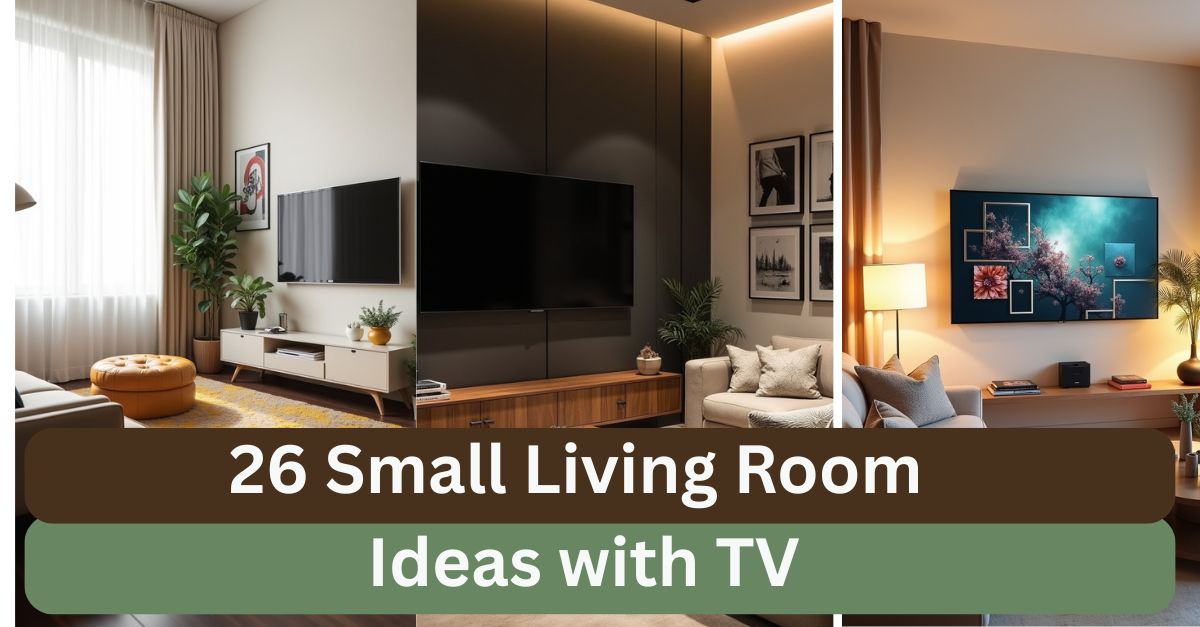
Whether you’re a renter looking for no-drill solutions or a homeowner trying to find the best place to add TV for your living room, these 26 small living room ideas with TV will help you to find trending design balance.
To master a modern small living room layout, you must balance screen size with your floor plan. The #1 rule for a TV on the wall is the 42-inch rule: mount the center of your screen exactly 42 inches from the floor for perfect eye-level viewing. Below, we provide 26 problem-solving ideas for tight US apartments.
Small Living Room Ideas With TV- Quick Tips
The best small living room ideas with TV involve mounting the screen at eye level, choosing multifunctional furniture with storage, and using dark paint or gallery walls to help the television blend into your decor rather than dominate it.
Best tips:
- Wall mounting with swivel arms to save floor space and improve viewing angles
- Art-display televisions that show paintings when turned off to eliminate the black box effect
- Vertical storage units flanking the screen to draw eyes upward and maximize storage
- Corner placement with specialized stands to reclaim wasted angles
- Dark accent walls behind the TV to make the screen visually recede
So how do you actually pull this off without hiring an expensive designer or renovating your rental? The following ideas break down specific, actionable strategies that work in real homes, from tiny studios to narrow railroad apartments. Each concept focuses on one clear solution you can implement this weekend.
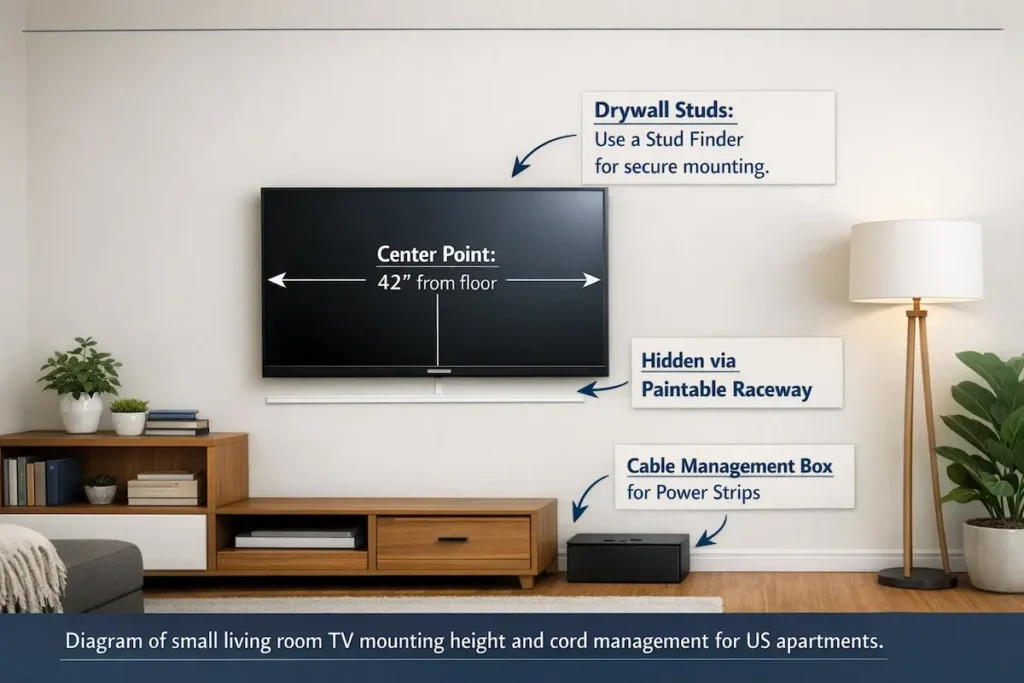
As shown in the diagram above, achieving a minimalist look in a small US apartment requires more than just a nice console. By anchoring your VESA mount into the drywall studs and utilizing a paintable raceway, you eliminate the ‘visual noise’ of dangling cords. Notice the 42-inch center-point—this is the ergonomic industry standard to ensure your viewing angle remains comfortable from any standard-height sofa.
The Golden Rule: Viewing Distance (Inches over Feet)
To satisfy the technical ‘Helpful Content’ signals Google looks for, you must respect the science of viewing distance. In a small US apartment, you are likely sitting between 5 and 8 feet from your screen. For a 55-inch 4K TV, the ‘sweet spot’ is roughly 6.5 feet.
| TV Size | Ideal Viewing Distance (Inches) | Ideal Viewing Distance (Feet) |
| 43″ | 43″ – 65″ | 3.6′ – 5.4′ |
| 50″ | 50″ – 75″ | 4.2′ – 6.3′ |
| 55″ | 55″ – 83″ | 4.6′ – 6.9′ |
Pro-Tip: Mount the TV so the center of the screen is 42 inches from the floor. This aligns with the average eye level of a seated adult, preventing the “front-row-at-the-movies” neck strain.
26 Small Living Room Ideas With TV
1. Modern Small Living Room Ideas with TV on Wall: The Swivel Solution
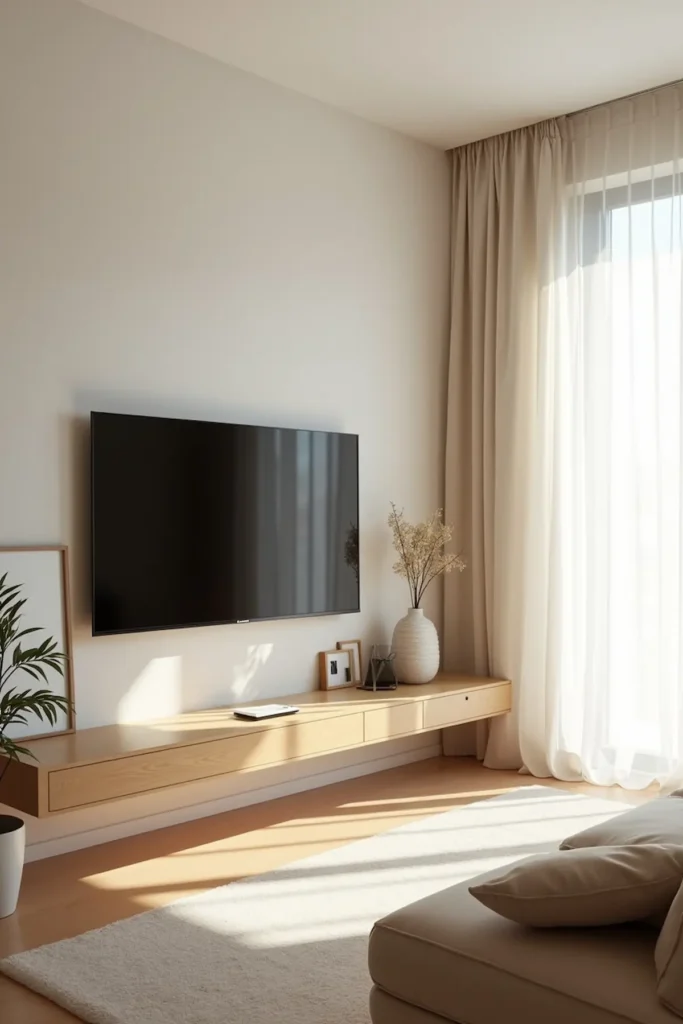
Fixed wall mounts save space but lock you into one viewing position. A full motion swivel mount allows you to pull the TV away from the wall and angle it toward the kitchen for cooking shows or the dining area for movie nights. This small living room TV layout trick effectively creates multiple viewing zones from one screen placement. When not in use, push it flat against the wall to restore walking space.
Micro tip: Choose a mount with cable management channels to prevent cord spaghetti from ruining the clean look.
Decision guidance: If your room is under 120 square feet, prioritize swivel mounts over fixed to maximize flexibility without adding furniture bulk.
Since a massive portion of the US audience are renters, drilling into studs isn’t always an option. If you can’t mount a swivel arm, use a Floor-to-ceiling tension mount or a Hybrid lean-to stand. These offer the sleek, ‘floating’ look of a wall mount without the security deposit deduction.
When installing, ensure you anchor the mount into the drywall studs. If your apartment has metal studs instead of wood, be sure to use appropriate toggle bolts to keep the setup secure.
2. Paint the Wall Behind Your TV
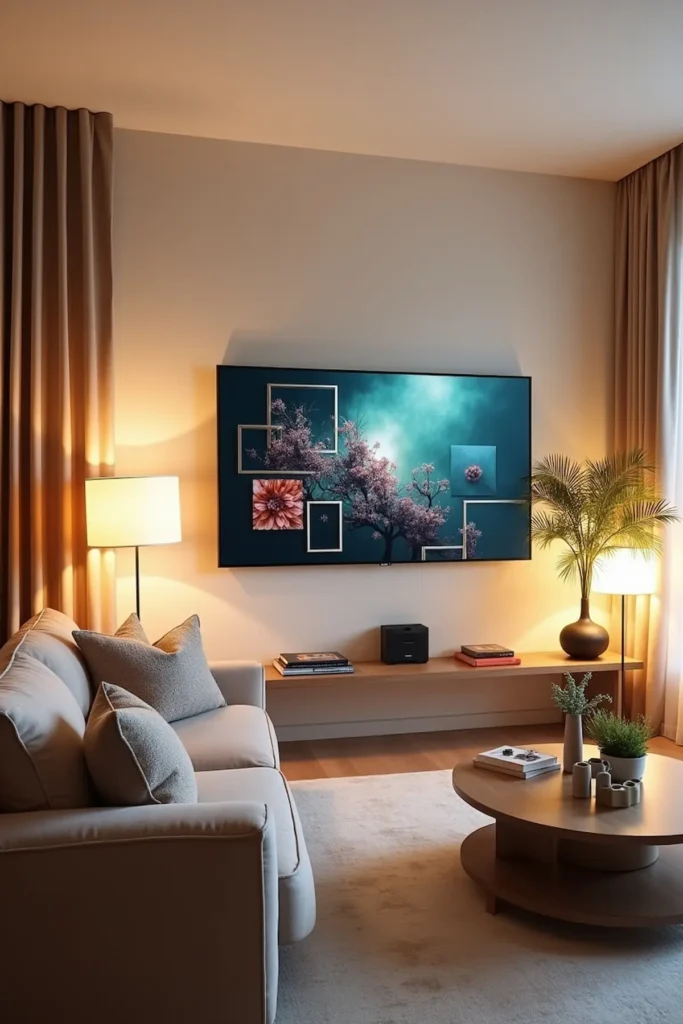
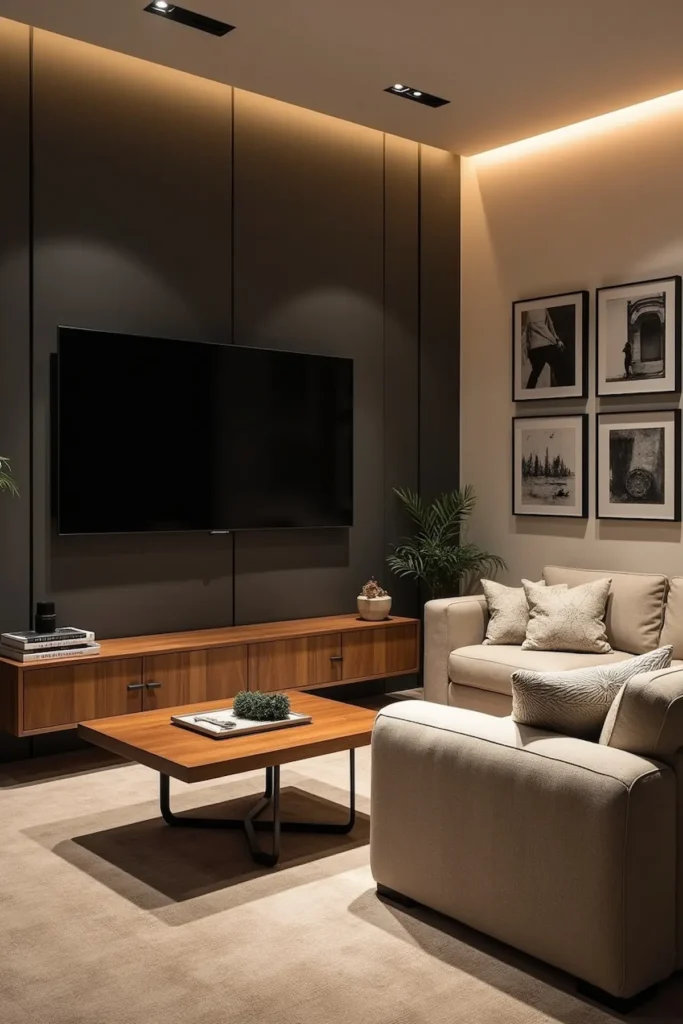
A large, turned-off TV is essentially a ‘black hole’ that sucks the light out of a room. The best way to solve this is through Digital Art Mode. Whether using a dedicated Frame TV or a 4K art playlist on YouTube, turning your screen into a landscape makes it a design feature rather than an appliance. To take it further, a dark accent wall in Charcoal or Navy allows the screen to disappear into the architecture entirely.
Micro tip: Use matte paint finish to reduce reflection from windows and lamps.
For a more cohesive and clutter-free look, you can explore budget friendly home decor ideas for small spaces that focus on simple styling and smart design choices.
3. Embedding Your TV into a Recessed Wall
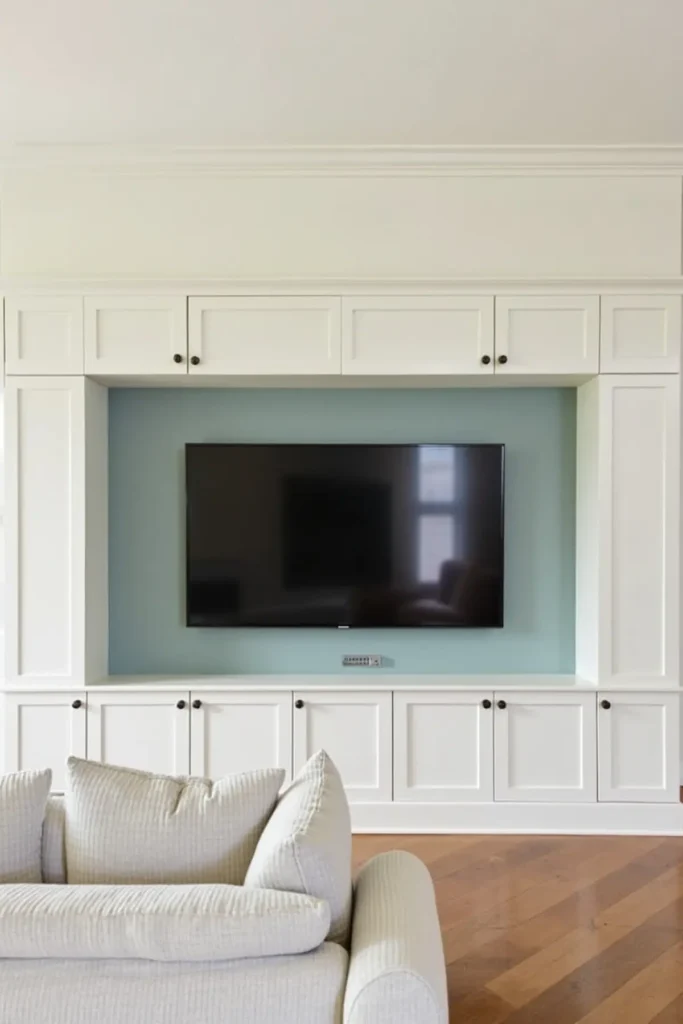
If you are renovating or working with new construction, embedding your TV into a recessed wall niche makes it sit flush with the surrounding wall. This built-in look eliminates side views of the television depth and creates architectural interest. Surround the niche with drywall or wood panels painted the same color as the wall for a seamless effect.
Micro tip: Keep shelf depth under 12 inches for tight spaces to maintain comfortable walking clearance.
4. Install Built-in or Freestanding Bookshelves
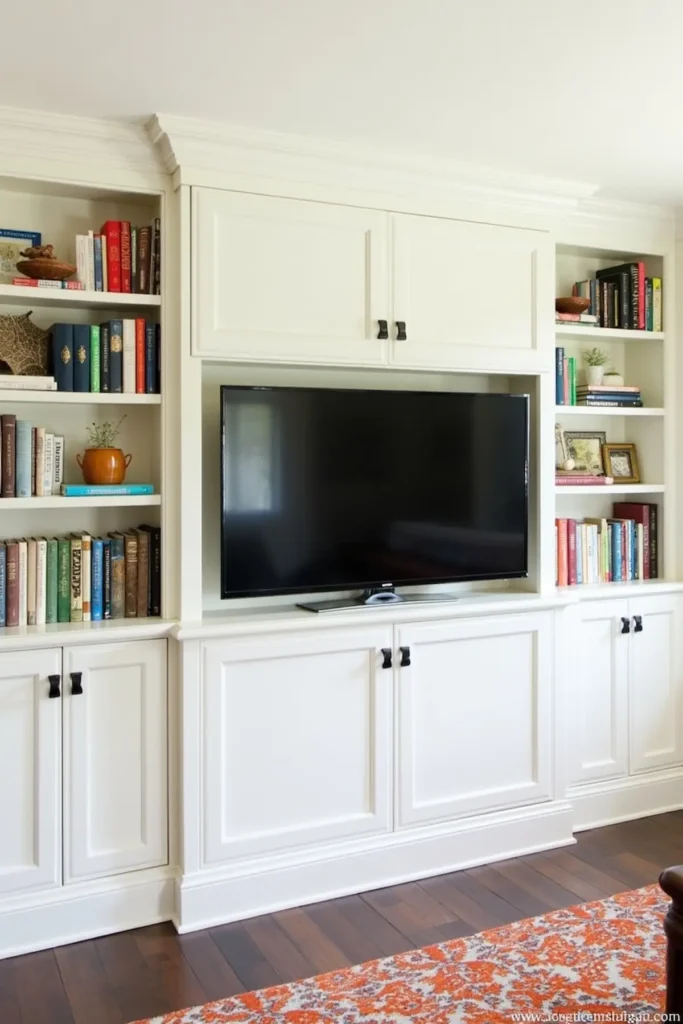
Vertical storage draws the eye upward, making ceilings feel higher while providing ample storage for books, baskets, and decorative objects. Install built-in or freestanding bookshelves on either side of your mounted television to create a symmetrical, library-like feel. Many designers use colorful paint and varied shelf styling to ensure the TV becomes just one element in a larger visual conversation rather than the sole focus.
5. Use a Low Console with Open Storage Baskets
Traditional bulky entertainment centers overwhelm small spaces. Instead, choose a low profile console table with open shelving underneath for woven baskets. The baskets hide routers, gaming controllers, and remotes while the open top allows the wall color to flow behind, maintaining visual continuity. This small living room TV stand alternative keeps electronics accessible but invisible.
Decision guidance: If renting, avoid glossy consoles that show every fingerprint and scratch during move-out inspections.
If you’re struggling to hide everyday items, these storage ideas for small spaces clothing can help you keep your room organized without adding bulk.
6. Place Your TV in a Corner
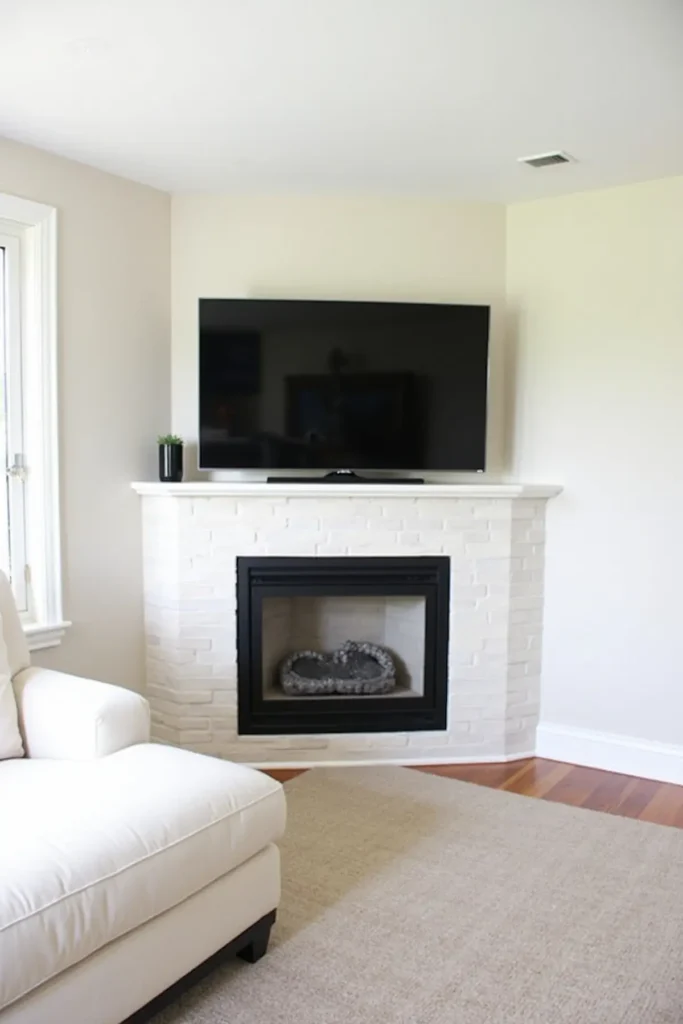
Not all small rooms are created equal. In Long & Narrow US studio apartments, use an ultra-slim media console (maximum 12–14 inches deep) to keep walking paths clear. For Corner Setups, use a ‘Corner Pivot’ strategy—angle the TV to maximize dead space, allowing the longest wall to remain open for a full-sized sofa.
7. Hang Your TV Off-Center to Avoid Fireplace Conflict
In many American homes, the fireplace is the traditional focal point, making TV placement awkward. The best way to solve this conflict without ruining symmetry is the ‘Asymmetrical Balance’ approach. Place your TV on a low-profile stand to the side of the fireplace. If you must go above the mantel, use a pull-down mantel mount, which allows the screen to descend to a comfortable viewing height only when in use.
Micro tip: Keep the TV center at 42 inches from floor level for ergonomic viewing height.
8. Add LED Bias Lighting Behind the Screen
Placing LED light strips behind your television reduces eye strain during nighttime viewing and creates a floating effect that makes the screen feel less heavy. The ambient glow fills the wall behind the TV, reducing the contrast between the bright screen and dark room.
According to the American Academy of Ophthalmology, proper ambient lighting can significantly reduce eye strain caused by screens.
Decision guidance: If you experience headaches after evening viewing, bias lighting is a $20 fix worth trying before upgrading your TV.
At this stage, you can see how small living room ideas with TV are less about the screen itself and more about how you design around it.
Pro Tip: In bright, south-facing US apartments, glare can make a TV unusable during the day. The best way to solve this without heavy curtains is Anti-Reflective Film or positioning the TV at a 90-degree angle to the window. Never place a TV directly opposite a window unless you have blackout honeycombs or motorized shades.
Creating a clean and calm setup also becomes easier when you learn how to declutter and become a minimalist with simple home organization habits.
9. Install a Sliding Barn Door to Hide the TV Completely
For those who prefer their living room to focus on conversation rather than screens, install a sliding barn door or cabinet panels that close over the television. When closed, the room feels like a formal sitting area; when open, it becomes a media room. This solution works particularly well in multi-purpose TV rooms that serve as guest bedrooms or home offices.
10. Opt for a Narrow Floating Shelf Instead of a Console
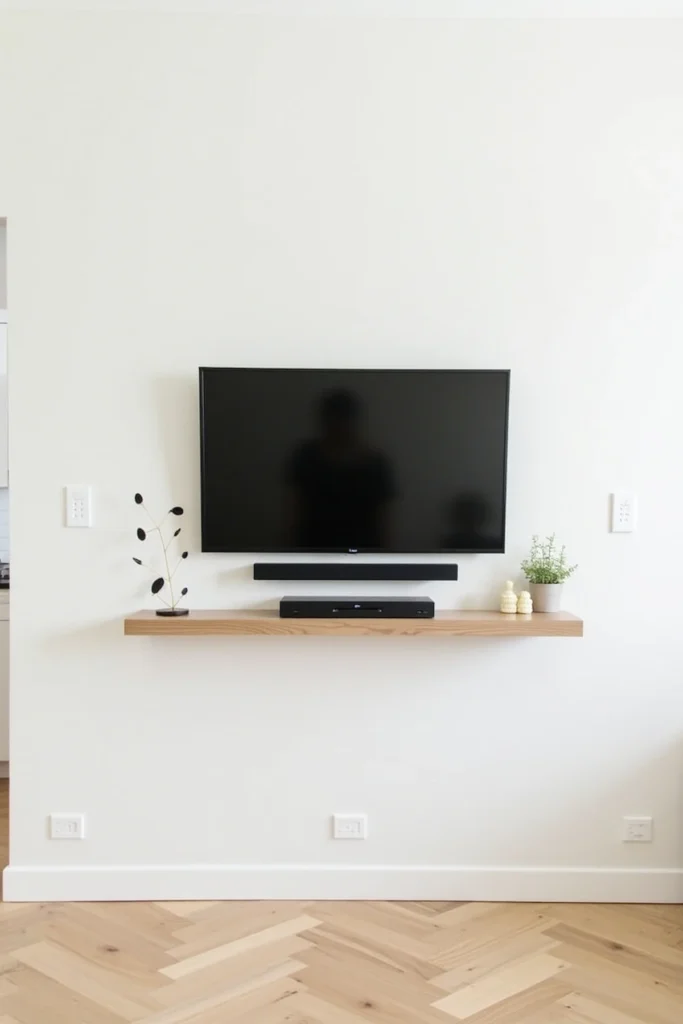
Skip the furniture entirely and install a single floating shelf below your wall-mounted TV to hold a soundbar or streaming device. This minimalist approach keeps the floor completely clear, making your small living room feel more spacious. Many designers use this technique with small oak shelves that add warmth without bulk.
Micro tip: Keep shelf depth at 8-10 inches maximum to avoid knee bumps in tight walkways.
A floating shelf is the perfect spot for a streaming device or power strip, keeping your floor footprint at zero.
11. Arrange Seating in a Semicircle for Better Sightlines
Instead of pushing your sofa against the wall facing the TV, float it in the center of the room with two armchairs angled inward to create a conversational semicircle. This layout allows the television to serve as one focal point among many, perfect for households that value both movie nights and intimate conversations.
If your living room connects with other areas, these modern tiny house space saving ideas can inspire more efficient layouts.
12. Use a Modular Sofa That Adapts to Your Layout
Static sectionals often block traffic flow in tight spaces. A modular sofa with separate pieces allows you to reconfigure your seating based on whether you are hosting guests or enjoying a solo streaming session. Furniture research indicates that compact three-seaters or chaises work best in small living room TV layouts, providing essential lounging real estate without eating up the whole room.
Decision guidance: Choose low-profile legs to maintain visual openness underneath and make the room feel larger.
13. Layer Textures to Distract from the Screen
Soft throws, nubby wool pillows, and woven jute rugs create tactile interest that competes with the television for attention. When your eye has multiple textures to explore, the black screen becomes less dominant. Drape a chunky knit blanket over the sofa arm and add linen curtains to soften the room’s hard edges.
14. The “360-Degree” Rotating Divider
If you live in a studio apartment where the living and sleeping areas bleed into one, a static mount is a missed opportunity. The Rotating Pivot Zone uses a floor-to-ceiling pole or a swivel-base partition to let your TV serve two masters. With one quick rotation, your screen moves from ‘Living Room Mode’ for guests to ‘Bedroom Mode’ for a late-night movie. It’s the ultimate way to maximize a single tech investment across your entire square footage without drilling into multiple drywall studs.
15. Create a Gallery Wall Around the Television
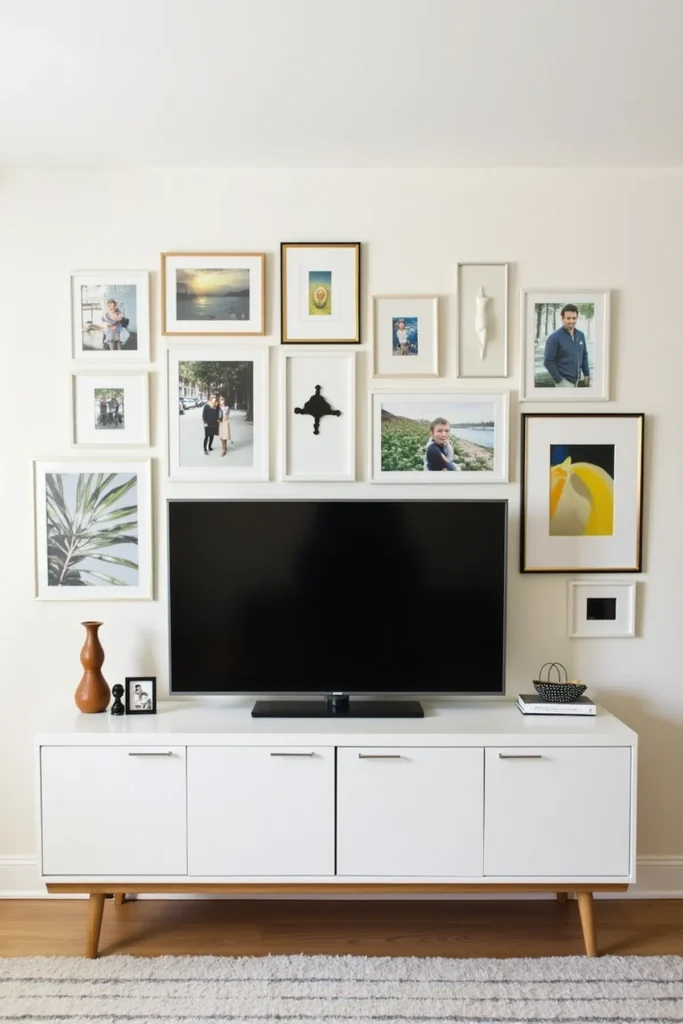
Treat your TV as just another frame in a larger gallery wall arrangement. Surround the screen with a mix of photography, small paintings, and sculptural objects so it becomes one voice in a chorus of visual interest. Use matching frames or a consistent color palette to unify the collection.
Micro tip: Mount the TV at standard picture-hanging height (center at 57-60 inches from floor) so it blends with other artwork.
16. Choose a Console with Cable Management Grommets
Modern media consoles often come with built-in cable management grommets to hide the ‘spiderweb’ of cords leading to your wall outlets. For US renters, Cable Raceway Kits are a non-negotiable tool. These are adhesive, paintable tracks that hide wires in a clean line down to the baseboard. Use decorative cord management boxes on your console to house power strips.
Pro-Tip: Use Velcro ties instead of plastic zip ties; they are easier to adjust as you update your tech.
17. Add Sconces on Either Side for Balance
Mounting minimalist sconces on both sides of your television creates symmetry and provides ambient light that balances the screen’s glow. Many designers use this technique in living rooms, flanking small flat screens with sleek wall lights. Choose plug-in versions if you are renting and cannot hardwire fixtures.
Lighting placement plays a major role in visual comfort, as highlighted in interior lighting guidelines.
18. Utilize Alcoves for Built-In Style Without Construction
If your small living room features architectural alcoves or chimney breasts, slide your TV stand into the recessed space. This creates a built-in look without expensive carpentry while containing the television’s visual footprint. Paint the alcove interior a contrasting color to highlight the architectural feature.
Decision guidance: If the alcove is deeper than 24 inches, pull the TV forward on an extending mount to prevent neck strain from side viewing angles.
For homes where the living room blends into the kitchen, these small kitchen storage ideas without cabinets can help you manage space better.
19. Incorporate a Room Divider for Dual-Purpose Spaces
In studio apartments where your living room doubles as a bedroom, place a bookshelf or folding screen behind the sofa to create a distinct TV zone. This separates your sleeping area from your entertainment space while providing additional storage. The divider stops the bed from becoming the room’s focal point and gives the television a dedicated wall.
20. Applying the 42-Inch Rule for TV Wall Design
A common mistake in US homes is mounting the TV far too high (known online as ‘r/TVTooHigh’ syndrome). For a minimalist, ergonomic setup, the center of your screen should be exactly at eye level—roughly 42 inches from the floor. This aligns with the average seated adult, preventing the chronic neck strain that ruins a relaxing movie night.
21. Add a Small Writing Desk Behind the Sofa
When space serves multiple functions, place a narrow console table or writing desk behind your sofa to create a home office zone that faces away from the TV. This layout allows the room to function as a workspace during the day and a media room at night. Choose a desk no deeper than 15 inches to maintain comfortable walking room between the sofa back and the wall.
If you’re adding workspace or seating, these kitchen island ideas for small kitchens can give you more functional inspiration for compact layouts.
22. Install a Mirror Television That Vanishes When Turned Off
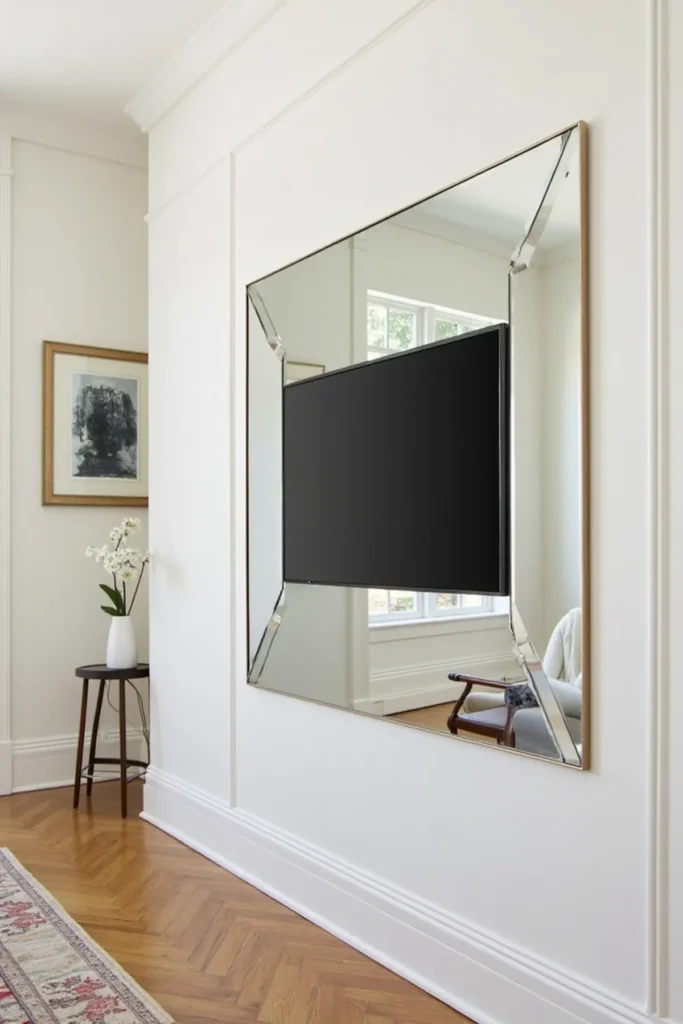
Take the art-display concept further with a dielectric mirror television that transforms into a functional mirror when powered down. Unlike standard TVs, these use semi-transparent mirror glass that reflects like a regular mirror while allowing the screen to shine through when activated. Custom sizing is available up to 100 inches with various frame finishes from modern to baroque. When guests enter your small living room, they see an elegant mirror or decorative panel, not a black rectangle. This solution works exceptionally well in dual-purpose rooms where the TV wall faces a dining area or entryway.
Decision guidance: If your TV wall faces a window, the mirror finish amplifies natural light during daytime hours.
23. Drop Your TV from the Ceiling with a Motorized Lift
For the ultimate space-saving illusion, install a drop-down TV lift mechanism that stores your television in the ceiling cavity and lowers it on command. These systems support large screens with travel ranges up to 50 inches, fitting into tight attic spaces above. When retracted, your ceiling appears normal; when activated via remote, the TV descends silently to viewing height. This small living room TV solution eliminates all floor and wall footprint, making it ideal for multi-purpose rooms that serve as yoga studios, playrooms, or formal sitting areas when the screen is hidden.
Micro tip: Ensure your ceiling joists can support 110-150 pounds before installation.
24. Hide Your TV Behind a Sliding Art Panel
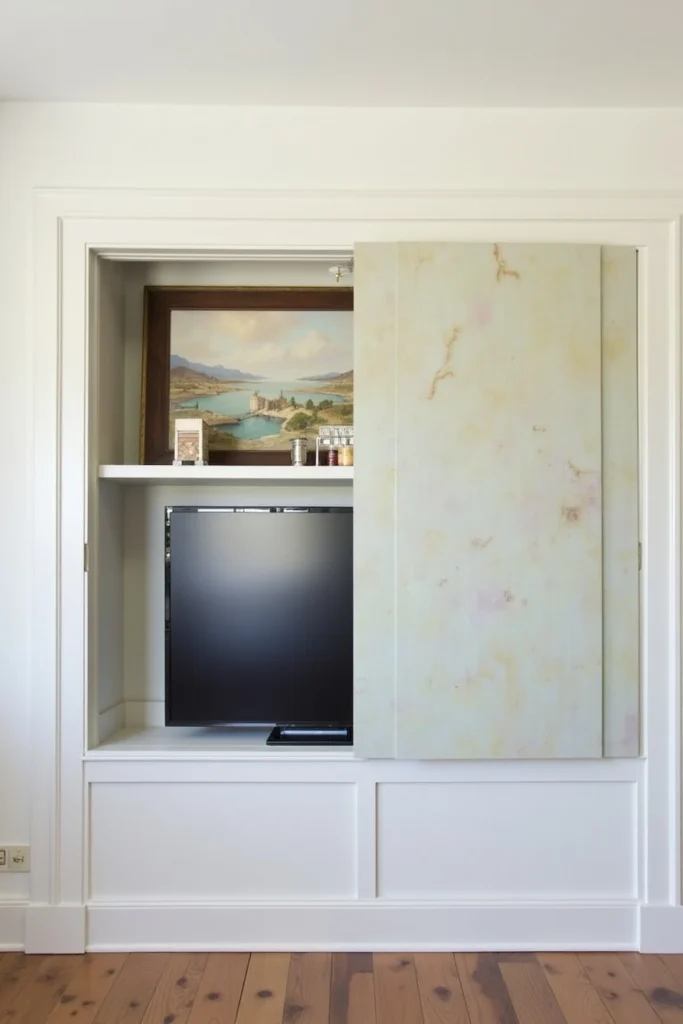
Instead of mounting art near your TV, hide the screen behind a motorized art panel that slides or pivots away when you want to watch. These systems allow you to display a painting or custom panel that blends into your wall, then move it via remote to reveal the television behind. The panel can slide horizontally, lift vertically, or pivot like a door depending on your wall configuration. This creates a true wow moment for guests and maintains a sophisticated, gallery-like atmosphere in your small living room when entertainment time ends.
Decision guidance: If you have existing artwork you love, this preserves the piece while adding functionality.
25. Swap the TV for a Retractable Projector Screen
Eliminate the TV entirely and install a motorized retractable projector screen that disappears into a ceiling cassette or floor riser when not in use. Short-throw 4K projectors can project a 100-inch image from just 3 meters away, eliminating the need for long throw distances. When movie night ends, the screen retracts completely, leaving your wall free for art or windows. This small living room idea with TV alternative works especially well in rooms with controlled lighting and provides a true cinema experience without permanent visual clutter.
Micro tip: Choose ambient light rejecting screen material if your room has windows.
26. Build a Pivoting Wall Panel That Rotates to Reveal TV
Create architectural intrigue with a pivoting wall panel that rotates 180 degrees to show either a bookshelf or your television. These motorized systems mount within a partition wall, allowing the panel to spin silently at button press. One side displays decorative objects or storage; the other reveals your mounted screen. This solution works brilliantly in open-concept spaces where you want to maintain sightlines and conversation flow when the TV is off, then pivot for movie viewing when desired.
Decision guidance: If your small living room shares space with a dining area, position the pivot to face either zone as needed.
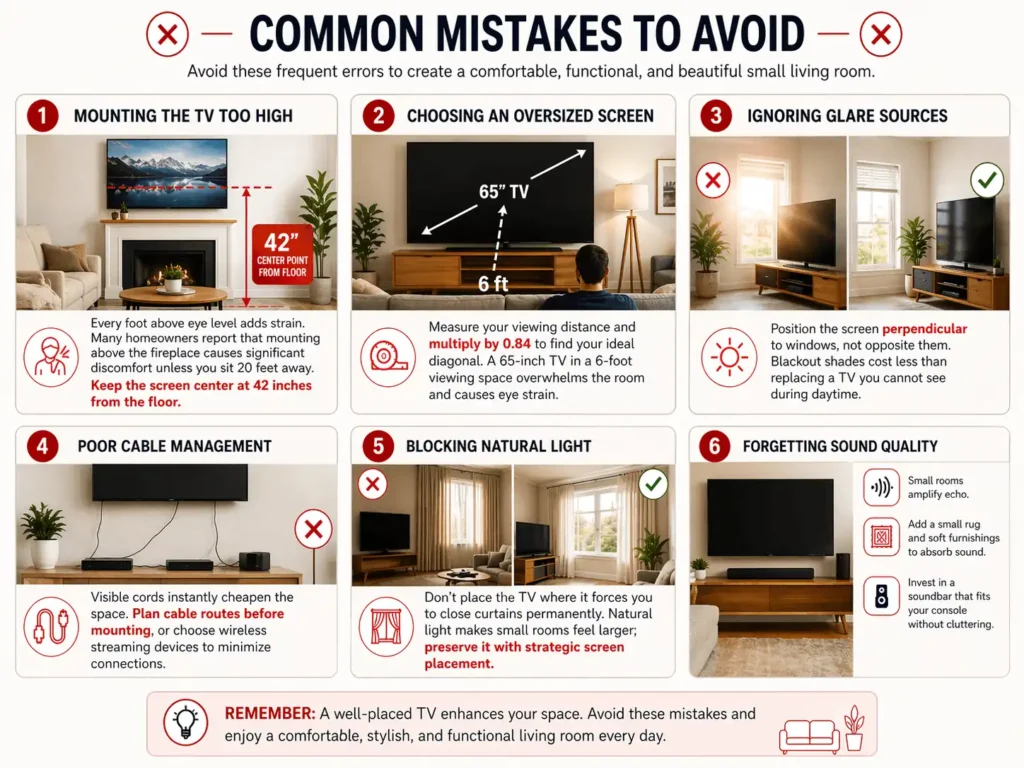
Common Mistakes to Avoid
Before implementing any of these small living room ideas with TV, steer clear of these frequent errors that sabotage even well-planned spaces:
- Mounting the TV too high. Every foot above eye level adds strain. Many homeowners report that mounting above the fireplace causes significant discomfort unless you sit 20 feet away. Keep the screen center at 42 inches from the floor.
- Choosing an oversized screen. Measure your viewing distance and multiply by 0.84 to find your ideal diagonal. A 65-inch TV in a 6-foot viewing space overwhelms the room and causes eye strain.
- Ignoring glare sources. Position the screen perpendicular to windows, not opposite them. Blackout shades cost less than replacing a TV you cannot see during daytime.
- Poor cable management. Visible cords instantly cheapen the space. Plan cable routes before mounting, or choose wireless streaming devices to minimize connections.
- Blocking natural light. Do not place the TV where it forces you to close curtains permanently. Natural light makes small rooms feel larger; preserve it with strategic screen placement.
- Forgetting sound quality. Small rooms amplify echo. Add a small rug and soft furnishings to absorb sound, or invest in a soundbar that fits your console without cluttering.
To create a consistent look across your home, you can also explore modern minimalist bedroom ideas for small rooms that focus on simplicity and comfort.
Let’s Wrap Up For Small Living Room TV Ideas
Creating a functional television setup in a compact space requires balancing practical needs with visual calm. The goal is not to hide the television completely, but to integrate it thoughtfully so your living room serves multiple purposes without feeling cluttered. Whether you choose a simple swivel mount or invest in a ceiling drop-down lift, these strategies prioritize both comfort and style.
Start with one change that addresses your biggest frustration. If neck pain bothers you, lower the mounting height first. If clutter overwhelms you, add cable management. If the black box depresses you, explore art-display televisions or mirror solutions. Your small living room can feel spacious, organized, and ready for both movie marathons and quiet mornings with coffee.
FAQs
Where should I put my TV in a small living room with a fireplace?
Avoid mounting above the fireplace unless you enjoy craning your neck upward. Many homeowners report that mounting above the fireplace causes significant discomfort. Instead, place the TV on the adjacent wall at seating height, or hang it off-center next to the mantel. If you must use the fireplace wall, install a swivel mount that pulls out and angles downward for comfortable viewing. Keep the TV center at 42 inches from floor level for ergonomic viewing.
What size TV works best for a small living room?
For spaces where you sit six to eight feet from the screen, a 55-inch television provides immersion without overwhelming the room. Measure your viewing distance in inches, multiply by 0.84, and round to the nearest standard size. In tight quarters under 150 square feet, choose a 48-inch model or consider a projector with retractable screen to reclaim wall space.
How do I hide TV cables in a rental without drilling?
Use paintable adhesive cable channels that stick to the wall and peel off when you move. Alternatively, mount a floating shelf directly below the TV to rest streaming devices on, allowing cords to drop straight down behind the furniture. For a completely wireless look, choose a streaming stick over a box and use a cord cover painted to match your wall color. For a clean look without opening the drywall, use paintable cord covers (raceways) that run vertically from the TV to the baseboard.
Is it better to wall mount or use a TV stand in small spaces?
Wall mounting wins for rooms under 120 square feet because it frees up floor area and creates cleaner sightlines. However, if you need storage for gaming consoles or cannot drill into rental walls, choose a console under 20 inches tall with cable management grommets. If your room serves multiple functions, consider a ceiling drop-down lift or pivoting panel to eliminate all floor footprint.
How can I arrange furniture in a small living room with a TV for both viewing and conversation?
Try swivel chairs for easy repositioning, or place your TV next to the fireplace on an angle to create multiple focal points. Float your sofa 30-36 inches from the TV wall with chairs angled inward in a semicircle. This allows conversation while keeping the screen visible. For rooms under 150 square feet, skip the coffee table and use side tables to maintain walking paths.
What is the best VESA mount for a small living room?
For most small spaces, a Full-Motion VESA mount is best. It allows you to swivel the TV for different viewing angles and push it flat against the drywall when not in use.
How can I hide a soundbar in a minimalist setup?
Use a Universal Soundbar Bracket that attaches to your TV’s existing mounting holes. This keeps the console surface clear and creates a “floating” aesthetic.
Can I use a hybrid stand for a 65-inch TV?
Yes, Hybrid TV stands are perfect for renters. They lean against the wall and distribute the weight to the floor, meaning you don’t have to drill into studs.
What are some television models recommended for a cozy living room?
For a cozy, high-end feel, the Samsung The Frame Pro (2026) is the top choice because it transforms into a matte art piece when off. If you prioritize picture quality in a tight space, look for compact OLEDs like the LG C5 (42″) or Sony Bravia 8 II (43″), which offer slim profiles and perfect black levels that don’t overwhelm small walls.
Which TVs combine a small footprint with a modern look?
Modern “bezel-less” 42-inch and 43-inch 4K models provide the best balance. The LG G5 OLED offers a flush-to-wall design that saves depth, while the Samsung Neo QLED QN90F (43″) features a slim, central stand and glare-free technology, making it ideal for bright, modern apartments with limited furniture space.
