
Waking up in a bedroom with no closet can feel overwhelming. Clothes pile up on chairs, shoes scatter across the floor, and finding something clean to wear becomes a daily treasure hunt. If you live in an older apartment, a converted attic, or a small rental where closet space simply does not exist, you know this struggle all too well.
Many people in this situation have already tried the basics. They have stacked bins in corners, squeezed a flimsy rack against the wall, or accepted that their bed is now half dresser. But these quick fixes rarely last. The good news is that with the right approach, a small bedroom without a closet can become surprisingly organized. These No Closet Storage Ideas for Small Bedrooms below are practical, budget-friendly, and designed for real homes where every square foot matters.
Quick Tips for No Closet Storage Ideas for Small Bedrooms:
No closet storage ideas for small bedrooms include using freestanding clothing racks, installing wall-mounted rods, utilizing under-bed storage containers, repurposing bookshelves, adding floating shelves, using storage ottomans, hanging over-door organizers, and investing in a wardrobe or armoire. The best solution depends on your room size, budget, and whether you own or rent your space.
Key storage solutions include:
• Freestanding clothing racks for hanging items
• Wall-mounted rods and hooks for vertical storage
• Under-bed bins and drawers for seasonal clothing
• Bookshelves and floating shelves for folded items
• Storage benches and ottomans for hidden organization
The most common advice you will find online lists a few obvious ideas and calls it a day. But organizing a closet-free bedroom requires more than buying a rack and hoping for the best. In the sections ahead, you will find specific strategies for different situations, whether you are working with a tiny studio, sharing a room, or renting a place where drilling into walls is not an option. Each idea includes practical details on setup, cost, and what to avoid so you can make choices that actually fit your life.
1. Start With a Freestanding Clothing Rack
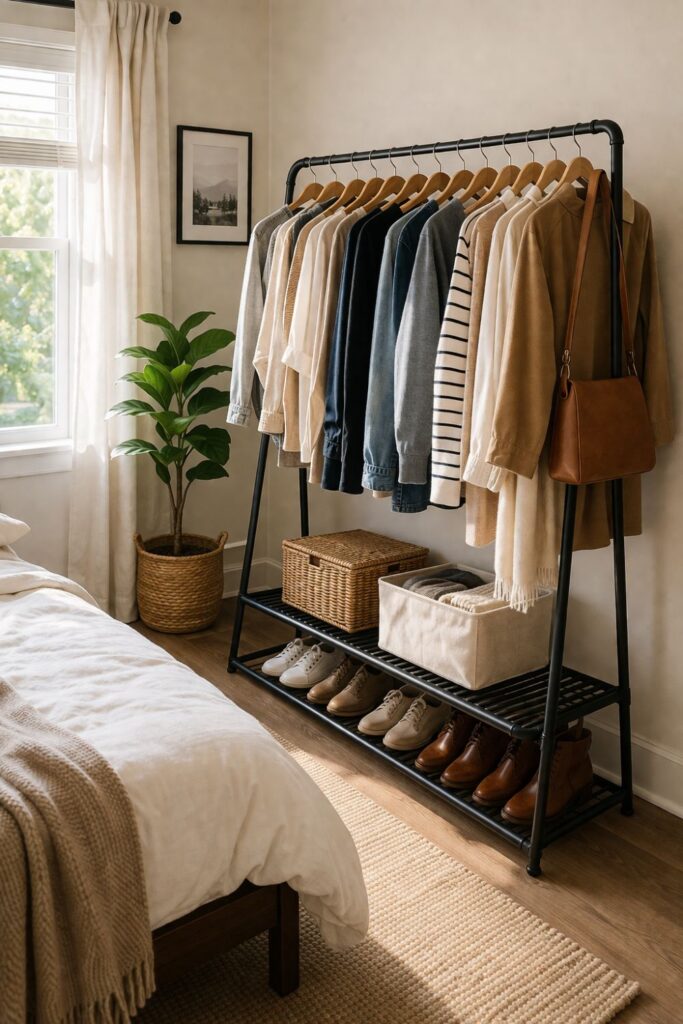
A freestanding clothing rack is often the first thing people consider when they lack a closet, and for good reason. It gives you immediate hanging space for dresses, coats, and anything that wrinkles easily. Look for racks made of metal rather than plastic, as they handle weight better and last longer. A rack with a lower shelf for shoes or baskets adds extra utility without requiring more floor space.
If your bedroom is very small, choose an adjustable rack that can expand or contract depending on your needs. Position it against the least-used wall, ideally near a window where natural light keeps clothes fresh. One common mistake is overloading the rack, which makes it look cluttered and can cause it to tip. Keep regularly worn items on the rack and store everything else elsewhere.
2. Install a Wall-Mounted Hanging Rod
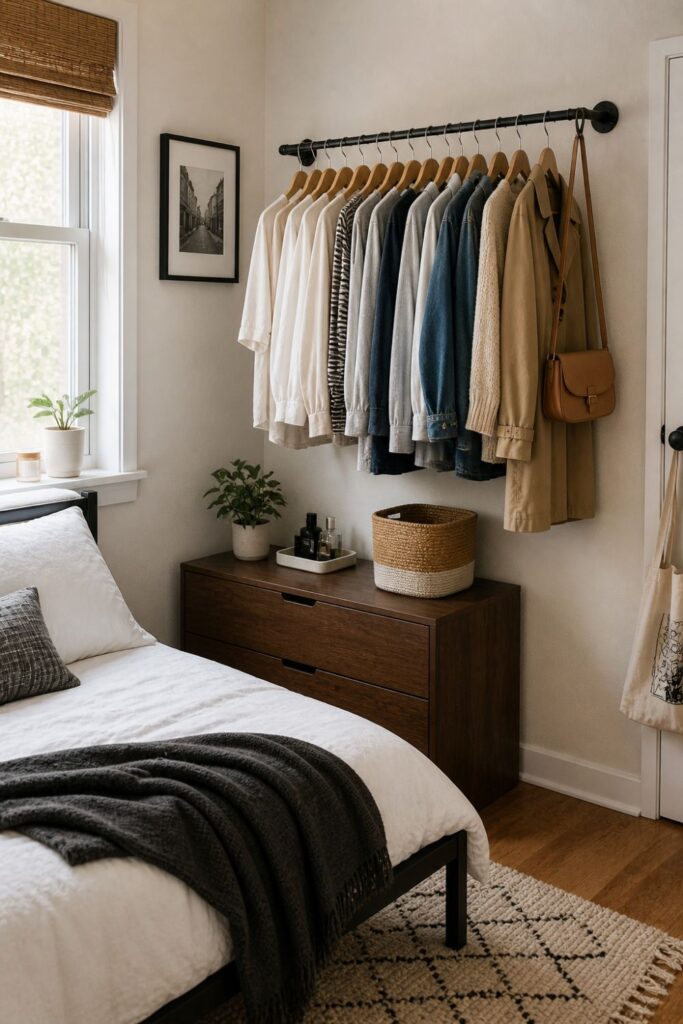
Wall-mounted rods free up floor space and create a cleaner look than freestanding units. You can install one rod at standard height for long items, or add a second rod below for shirts and folded pants. This setup works especially well above a dresser or along an empty wall behind a door.
For renters worried about damage, tension rods mounted between two walls offer a drill-free alternative, though they support less weight. If you do use wall brackets, make sure to anchor them into studs rather than drywall. A rod that pulls out of the wall at midnight is a problem nobody wants to deal with.
3. Use the Space Under Your Bed
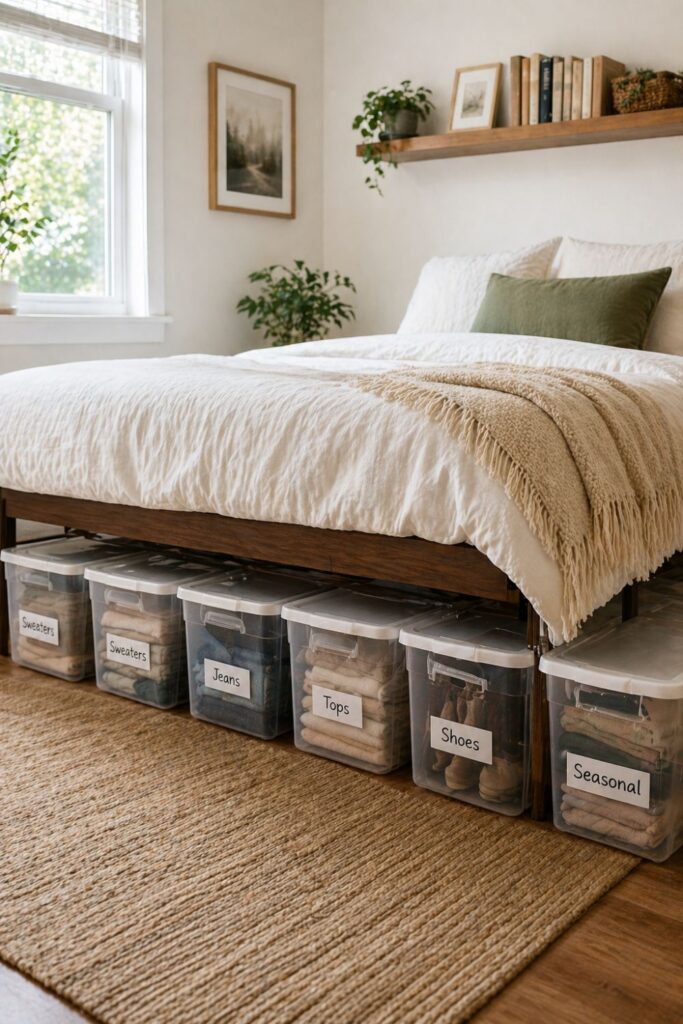
The area under your bed is prime storage real estate in a small bedroom. Clear plastic bins with lids protect clothes from dust while letting you see what is inside. If your bed sits low, consider bed risers to create extra height, or invest in a bed frame with built-in drawers.
Store off-season clothing, extra linens, and shoes you rarely wear under the bed. Label each container on the end facing out so you can find items without pulling everything into the middle of the room. Fabric bins work well for a softer look, but make sure they have sturdy sides that do not collapse when stacked.
4. Add Floating Shelves for Folded Clothes
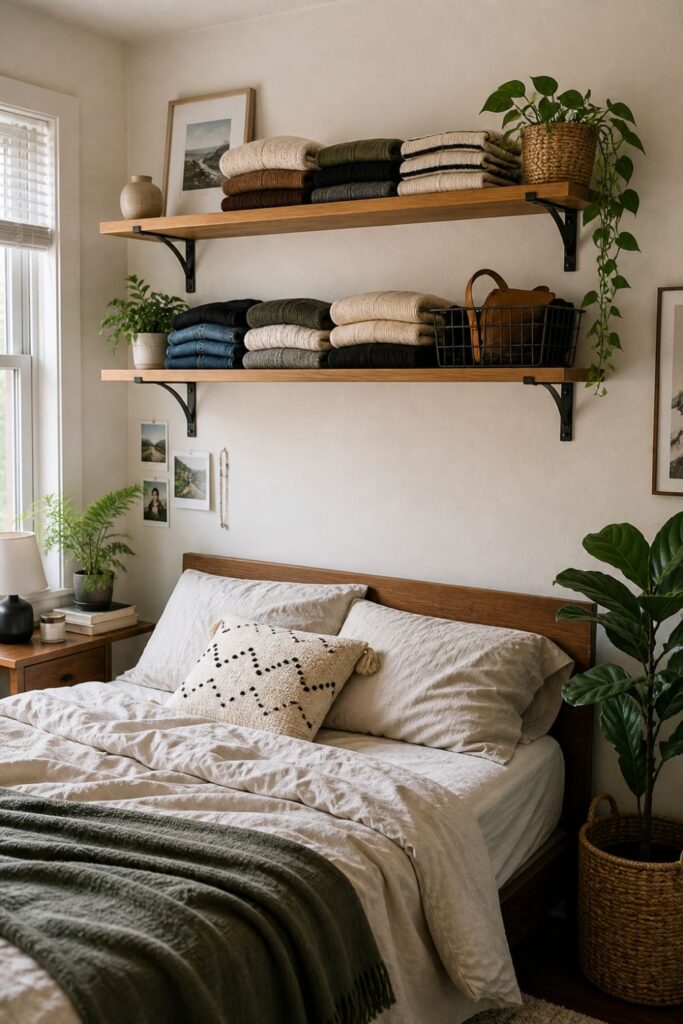
Floating shelves turn blank walls into practical storage. Install them above your bed, along an empty wall, or even above a doorway if the ceiling height allows. Folded sweaters, jeans, and accessories stack neatly on shelves and stay visible so you actually wear what you own.
The key is keeping shelves organized rather than cramming them full. Use shelf dividers or small bins to separate categories. If you want a cleaner look, line the shelves with folded clothes arranged by color. Avoid placing heavy items on shelves that are not properly anchored, and check weight limits before you load them up.
Read More: 20 Small Kitchen Storage Ideas Without Cabinets for Small Spaces and Open Shelving
5. Repurpose a Bookshelf Into Open Storage
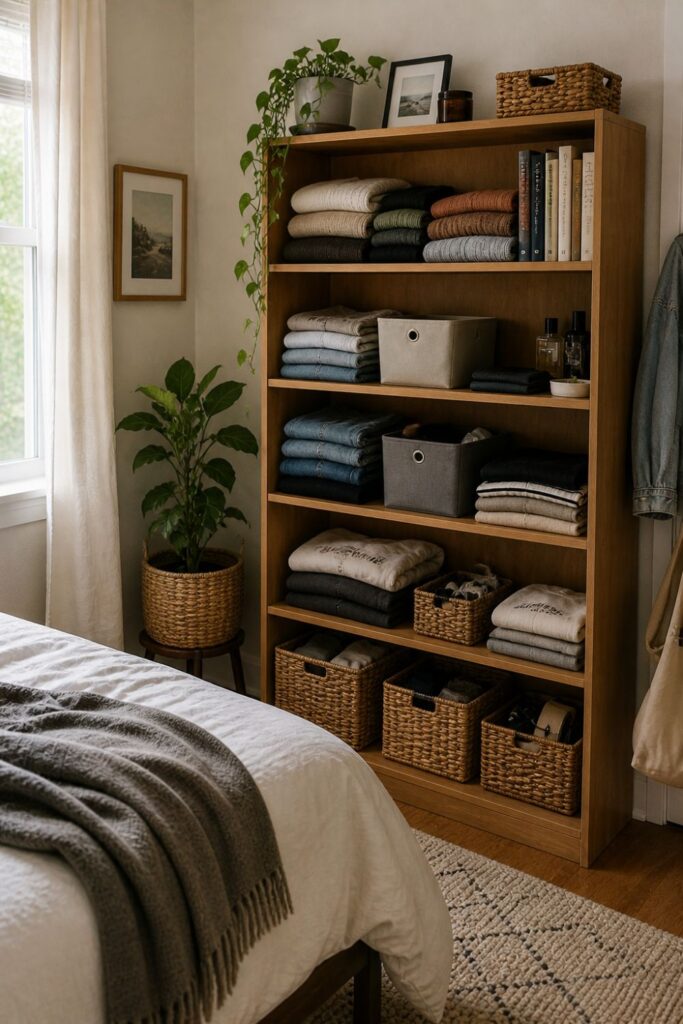
A standard bookshelf can become a surprisingly effective clothing storage unit. Folded pants, sweaters, and t-shirts stack neatly on the shelves, while baskets on lower shelves hide smaller items like socks and accessories. A bookshelf with adjustable shelf heights gives you flexibility for different item sizes.
Position the bookshelf against a wall where it will not block movement. If you want a more finished look, fabric bins or woven baskets on the shelves keep things tidy while adding texture to the room. This approach works especially well if you prefer your clothes hidden but accessible.
6. Invest in a Storage Ottoman or Bench
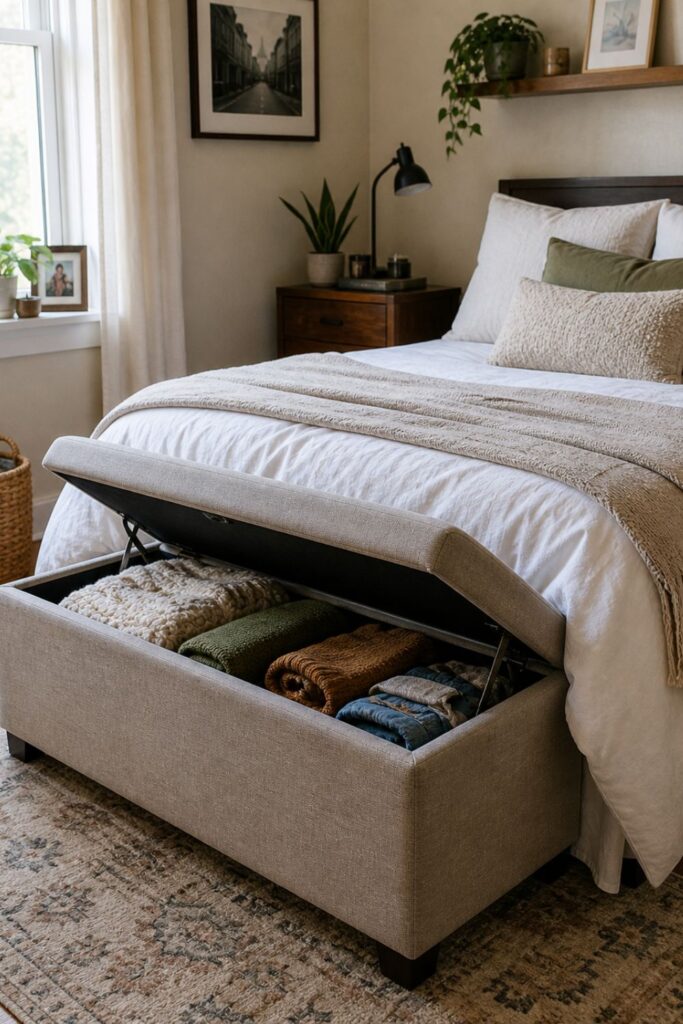
A storage bench at the foot of your bed serves two purposes. It gives you a place to sit while putting on shoes and provides hidden storage for blankets, off-season clothes, or accessories. Ottomans work similarly and can double as a coffee table if you have a studio apartment where the bedroom and living area share space.
Look for pieces with hinges that stay open on their own so you are not fighting the lid while digging for a sweater. If you go with an ottoman, choose one with a flat, sturdy top that can hold a tray or serve as extra seating when needed. Avoid overstuffing it, as the lid needs to close properly to function as a surface.
7. Hang an Over-the-Door Organizer
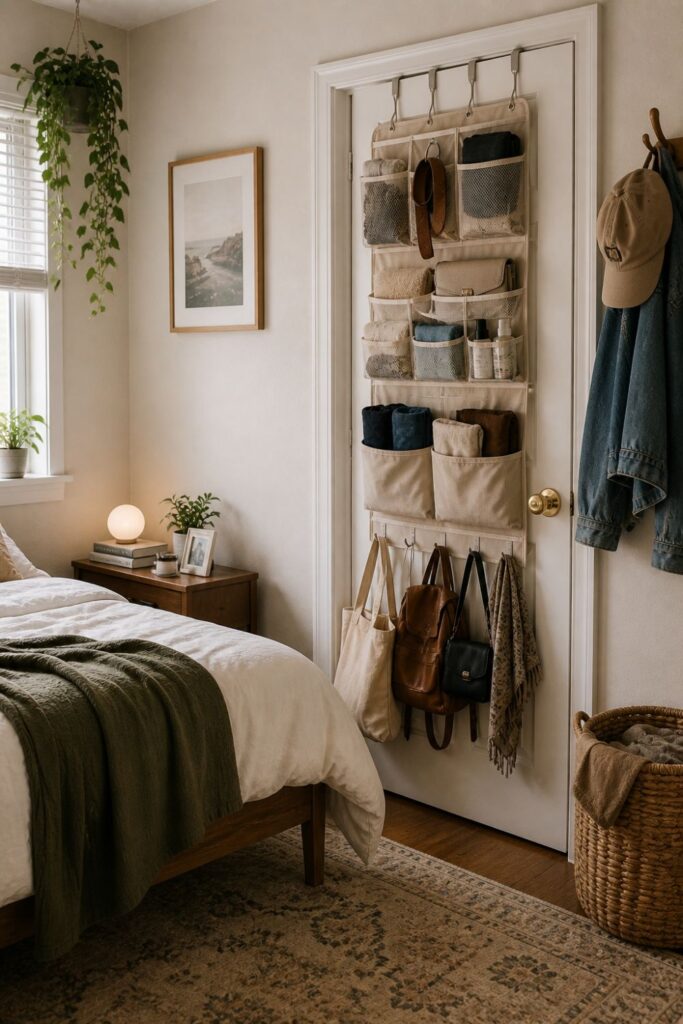
The back of your bedroom door is probably empty, which makes it perfect for storage. Over-the-door organizers with clear pockets work well for shoes, accessories, and small items like scarves and belts. Fabric versions with larger pockets can hold folded t-shirts or workout clothes.
Make sure the organizer you choose does not interfere with the door closing fully. If you have a hollow door, lightweight organizers are safer since heavy loads can strain the hinges. For solid doors, you can add a few adhesive hooks at different heights to create a custom hanging system.
8. Use a Garment Rack With a Cover
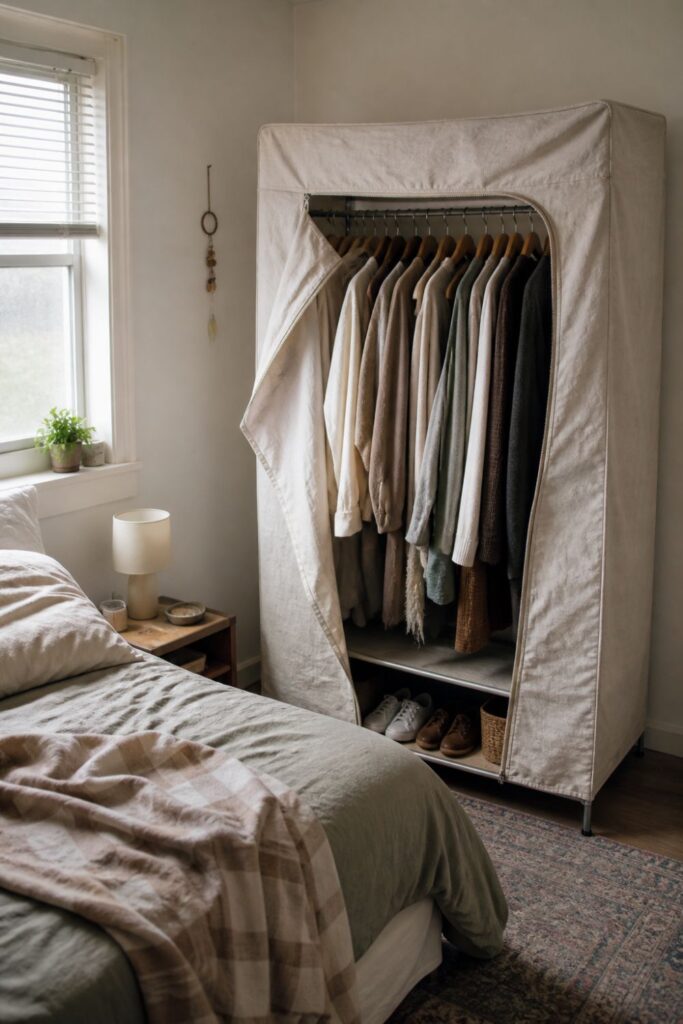
If you like the convenience of a clothing rack but do not want your wardrobe on display, a covered garment rack solves that problem. These freestanding units come with a fabric zip cover that keeps clothes dust-free and hides them from view. They work well in shared spaces or if you prefer a minimalist bedroom look.
Covered racks come in various widths, so measure your available space before buying. The cover material should be breathable to prevent mustiness. Some models include side pockets for shoes and accessories, which adds functionality without requiring extra furniture.
9. Build a DIY Pipe Clothing Rack That Outlasts Store-Bought Options
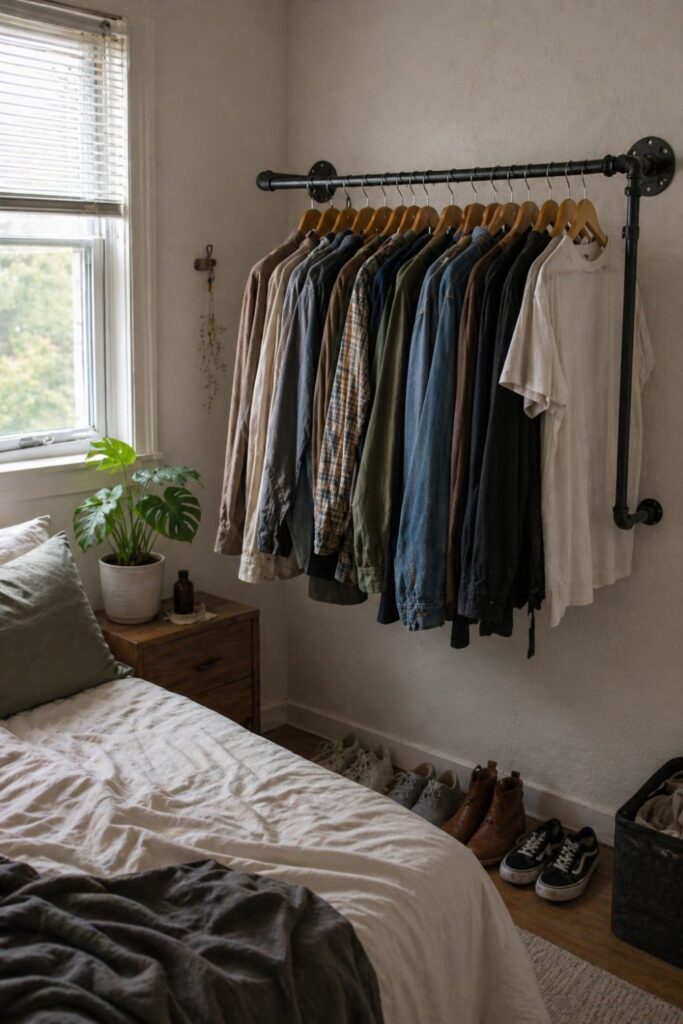
Most store-bought clothing racks wobble, rust, or collapse under a full winter wardrobe. Galvanized iron pipe from the hardware store solves all of these problems for roughly the same price. Buy two floor flanges, a ten-foot length of half-inch pipe, two elbow joints, and two end caps. Cut the pipe to your desired length, assemble an L-shape that extends from the wall, and mount the flanges into studs at both ends.
What makes this a standout solution is the weight capacity. A properly mounted pipe rack holds fifty pounds or more without sagging, while most retail racks fail at twenty-five pounds. Paint the pipe matte black for an industrial look, or spray it white to blend into the wall. The real insider tip: wrap the horizontal bar with cotton rope where hangers rest. This prevents the metal-on-metal clatter every time you move a garment, and it keeps wooden hangers from developing dark marks.
10. Add Hooks for Bags, Scarves, and Accessories
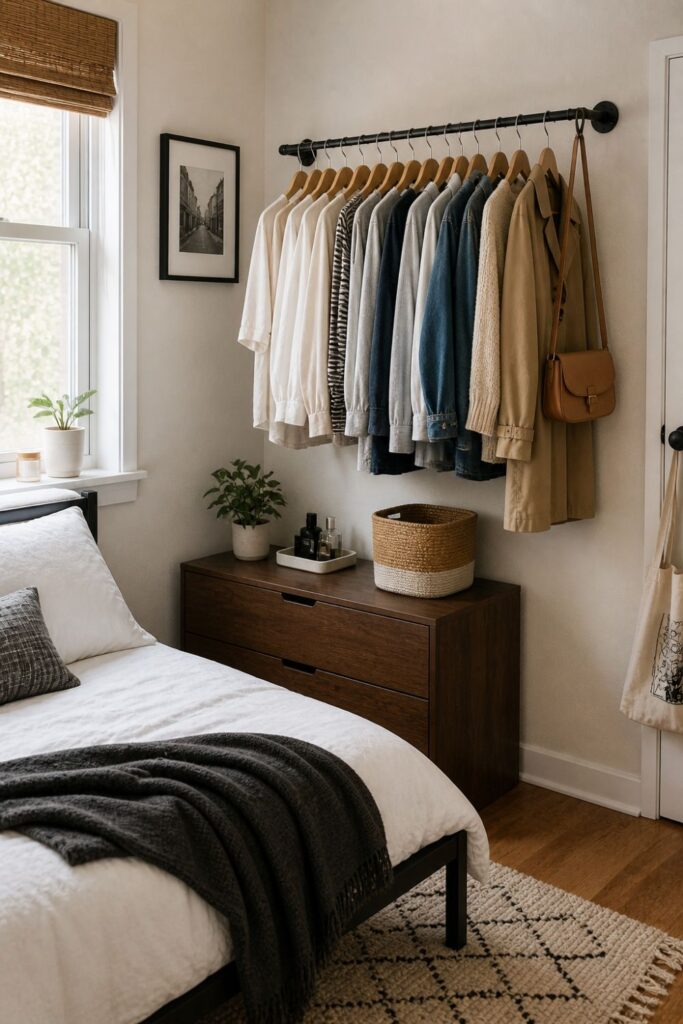
A row of wall hooks takes up almost no space but creates immediate storage for bags, robes, scarves, and tomorrow’s outfit. Install them at varying heights if you have multiple users, or cluster them in a vertical line to save horizontal wall space.
For renters, adhesive hooks rated for heavier weights offer a damage-free option, though they work best on smooth painted surfaces rather than textured walls. If you own your space, a wooden strip with pegs screwed into it creates a more finished look and holds more weight than individual adhesive hooks.
11. Choose a Bed Frame With Built-In Drawers
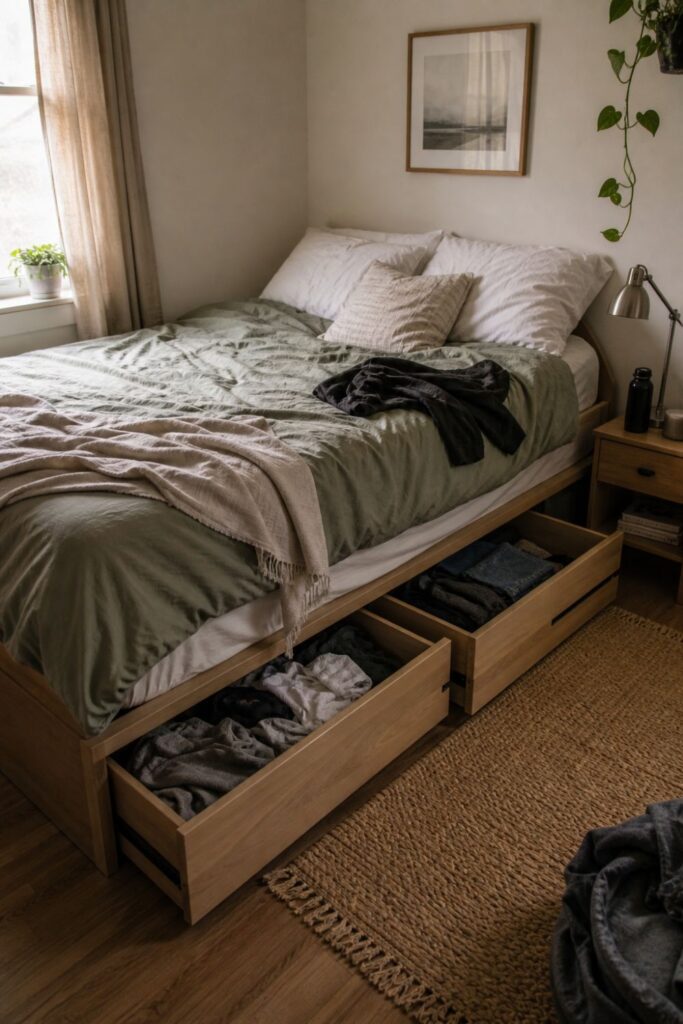
If you are in the market for a new bed, a frame with built-in drawers eliminates the need for separate under-bed bins. The drawers slide out smoothly and keep clothes cleaner than open containers. This setup works especially well for storing everyday items like pajamas, workout clothes, and extra sheets.
Platform beds with storage often cost more than basic frames, but they save you from buying additional furniture. Check that the drawers open fully rather than stopping halfway, and make sure they glide smoothly even when full. If the bed goes against a wall, look for models with drawers on both sides or at the foot of the bed.
12. Stack Storage Cubes for Modular Organization
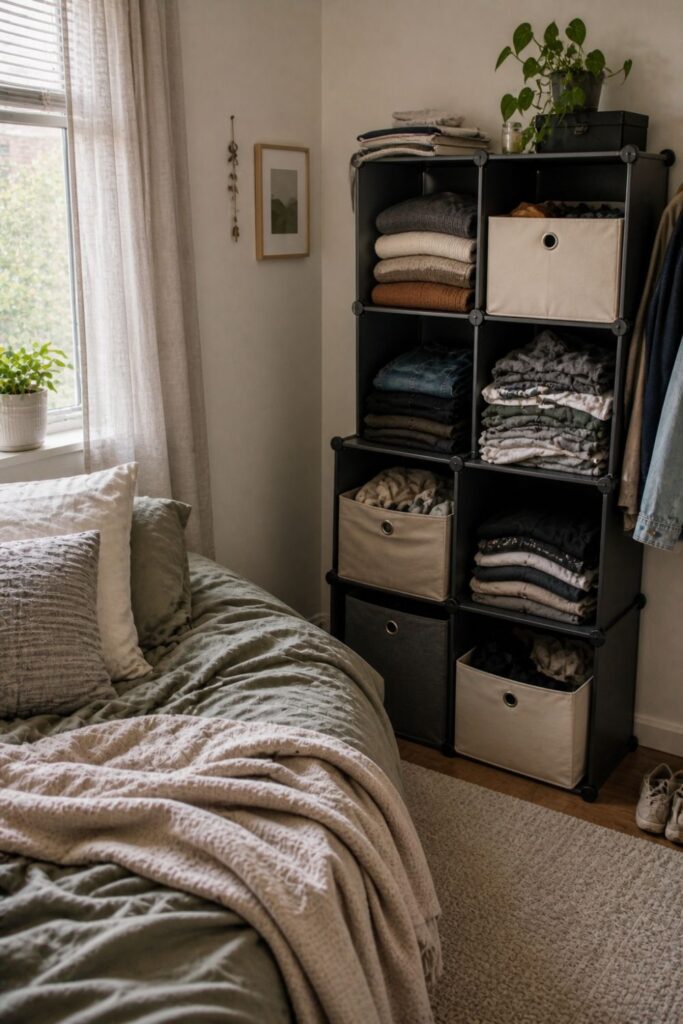
Wire or fabric storage cubes stack to create custom shelving that fits your exact space. You can build a tall narrow unit for a corner, or a wide low one that doubles as a surface for a lamp or plant. Fabric bins slide into the cubes to hide clutter while keeping items accessible.
The modular nature means you can reconfigure the layout if you move or your needs change. Secure tall units to the wall with brackets to prevent tipping, especially if you have children or pets. This is one of the most budget-friendly storage solutions and works in almost any space.
13. Use a Ladder Shelf for Display Storage
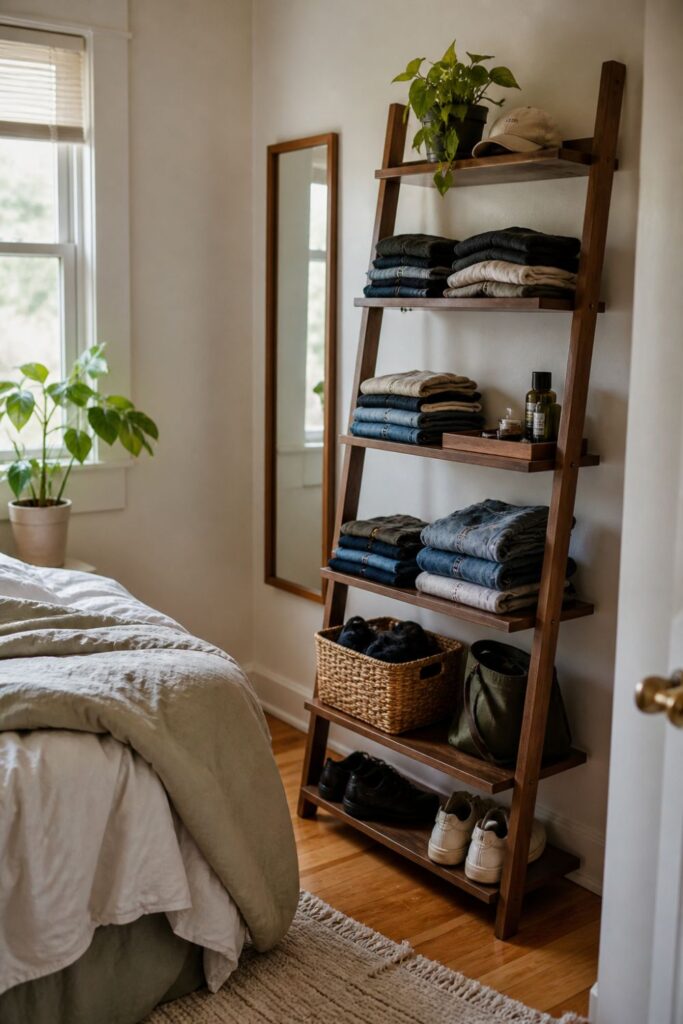
A leaning ladder shelf adds vertical storage without the permanence of wall-mounted shelves. The graduated design means wider items go on bottom shelves while smaller items sit up top. Folded clothes, baskets, and even shoes fit well on ladder shelves.
Place the ladder against a sturdy wall where it will not get bumped when you walk by. These shelves work best for items you grab daily rather than deep storage. The open design means everything is visible, so keep it styled and organized to avoid a cluttered look.
14. Cut Your Wardrobe in Half With a Capsule System
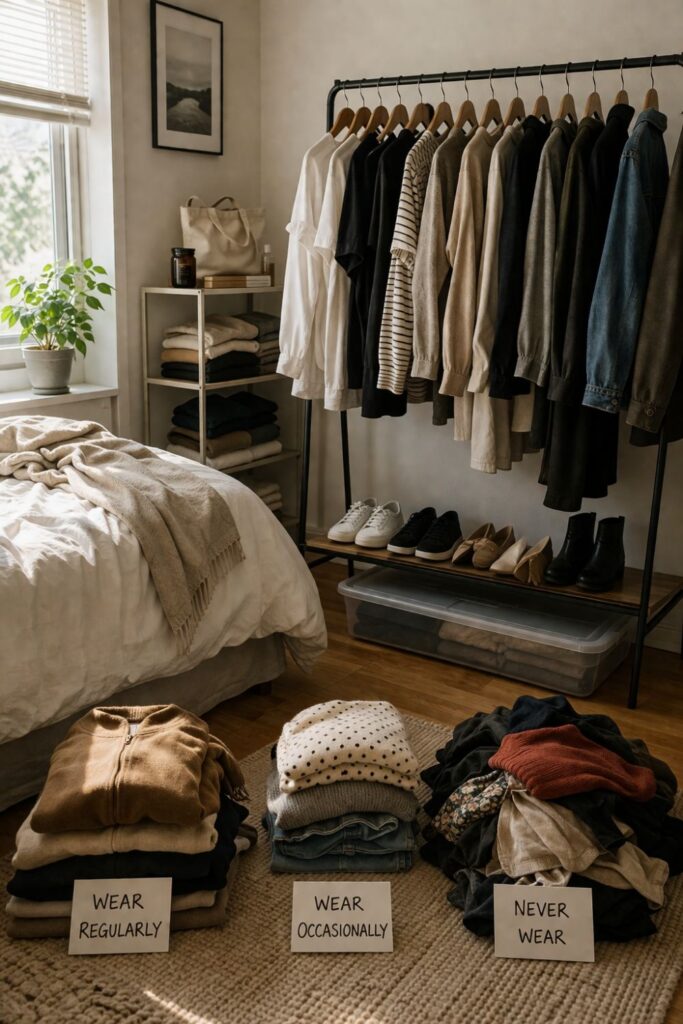
Here is a counterintuitive truth: the less clothing you own, the easier every storage method becomes. A capsule wardrobe means limiting yourself to roughly thirty to forty pieces that all work together. This includes tops, bottoms, dresses, and outerwear, but excludes underwear, workout clothes, and special occasion items. The constraint forces better purchasing decisions and eliminates the morning decision fatigue that comes from staring at a packed rack of clothes you never wear.
Start your capsule by pulling everything out and sorting into three piles: wear regularly, wear occasionally, and never wear. Be brutally honest about the occasional pile. If you have not touched something in two seasons, it goes. Store off-season capsule pieces in one under-bed bin, keeping only current-season items in your daily storage. The unexpected benefit: when you stop buying clothes to fill a nonexistent closet, you often save enough within a few months to invest in one truly quality storage piece that lasts for years.
15. Hide Open Storage With a Ceiling-Mounted Curtain
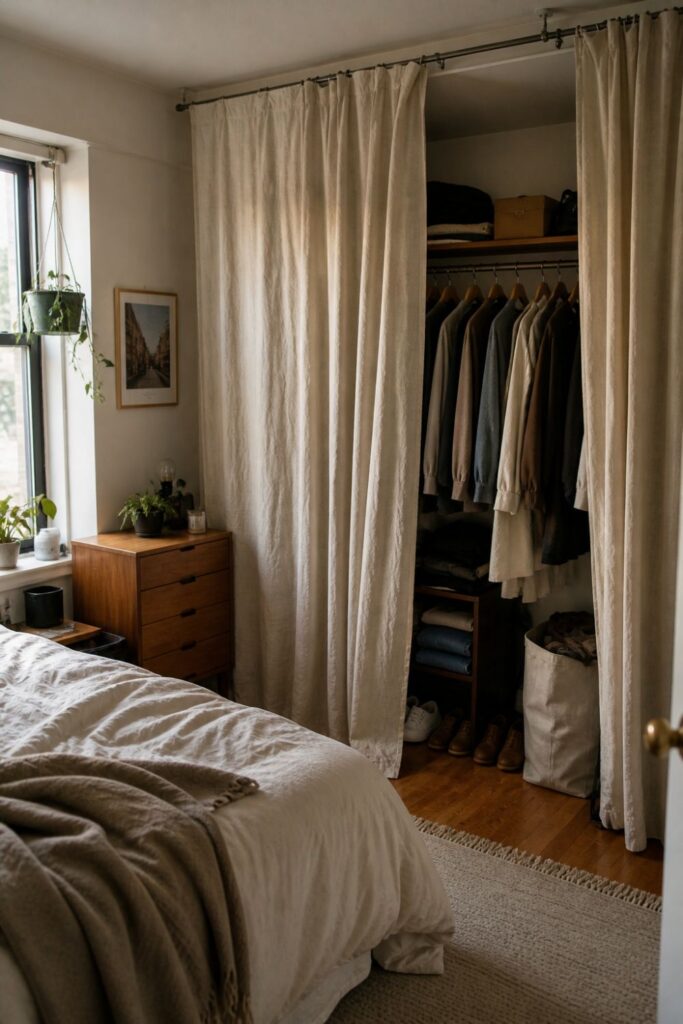
If your clothing rack or bookshelf feels too exposed, a ceiling-mounted curtain rod with a simple fabric panel creates the illusion of a closet. This works well in studios where the bedroom area is visible from the living space, or if you simply prefer not seeing your clothes all the time.
Choose a lightweight fabric that moves easily and matches your room’s color scheme. The curtain does not need to be floor-to-ceiling unless you want full coverage. Even a partial curtain that covers the front of a rack makes the room feel more organized and less like a dressing area.
16. Use Vacuum Storage Bags for Bulky Items
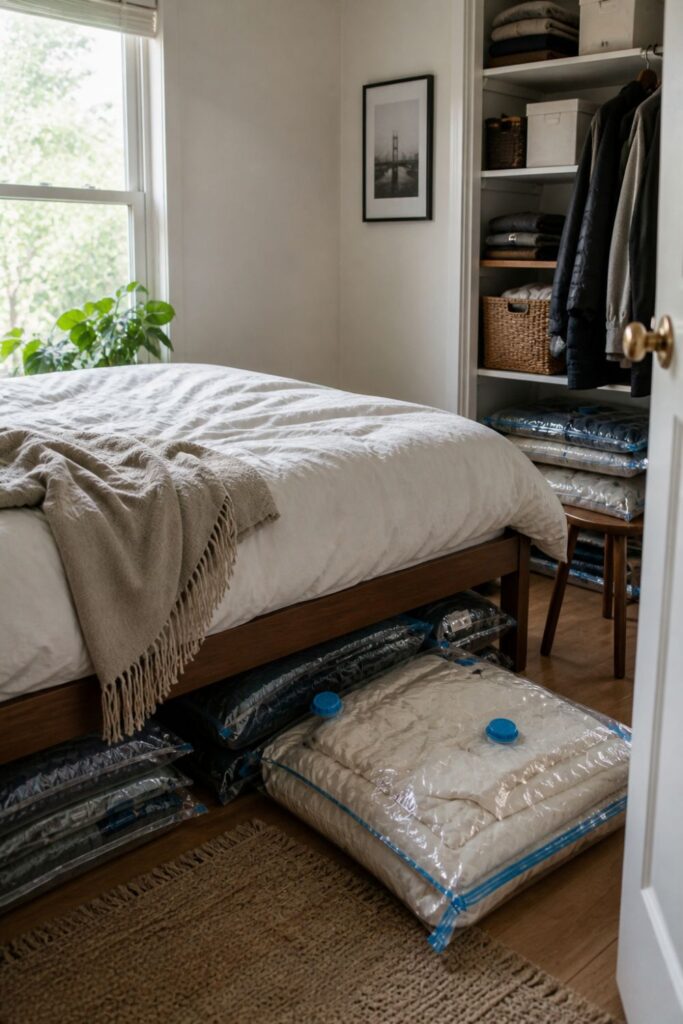
Winter coats, comforters, and extra pillows take up enormous amounts of space. Vacuum storage bags compress these items to a fraction of their original size, making them easy to slide under a bed or stack on a high shelf. They also protect contents from dust and moisture.
Only use these bags for items you do not need regular access to, since unsealing and resealing them is a small project. Label each bag clearly so you know what is inside without having to open it. Avoid overfilling the bags, as this prevents them from sealing properly.
17. Reclaim the Dead Space Behind Your Bed
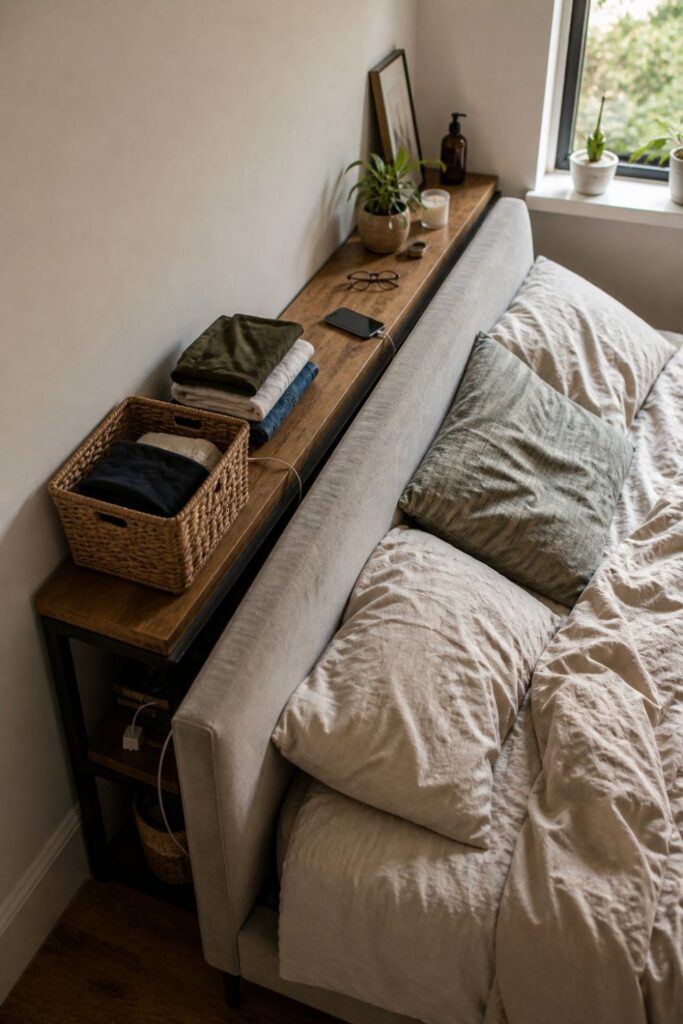
Most people push their bed flush against the wall and forget about the narrow gap behind the headboard. With a slim console table or a custom-cut shelf board, that six-to-eight-inch strip becomes surprisingly useful. Slide the table behind the bed, and suddenly you have a narrow ledge for small baskets, a charging station, your glasses, and tomorrow’s clothes laid out flat. If your bed frame has a solid headboard, mount a shallow ledge shelf directly to it at shoulder height for the same effect without needing wall space.
This idea shines in narrow bedrooms where floor space is too tight for nightstands. Use the ledge for items you reach for daily, and keep a small basket on the floor directly below it for bulkier things like an extra blanket. One practical warning: do not store liquids or anything that could leak and drip onto your mattress. A spilled water glass at two in the morning turns this clever hack into a very bad idea.
18. Repurpose a Vintage Armoire
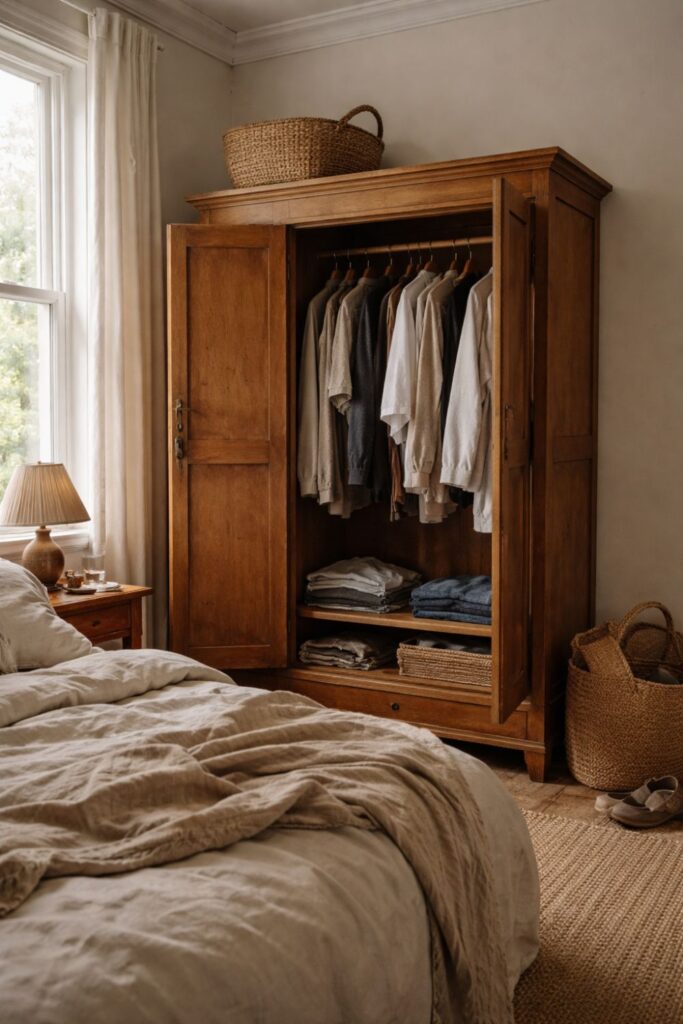
An armoire offers enclosed clothing storage with character. Vintage and secondhand stores often have solid wood armoires at reasonable prices, and a coat of paint can transform one to match your decor. Unlike modern wardrobes, armoires typically include both hanging space and drawers.
Measure your doorway before buying, as armoires can be surprisingly large. Check that doors open fully without hitting your bed or other furniture. If the interior layout does not suit your needs, add a second hanging rod or install small shelves to customize the space.
19. Use Drawer Dividers for Small Items
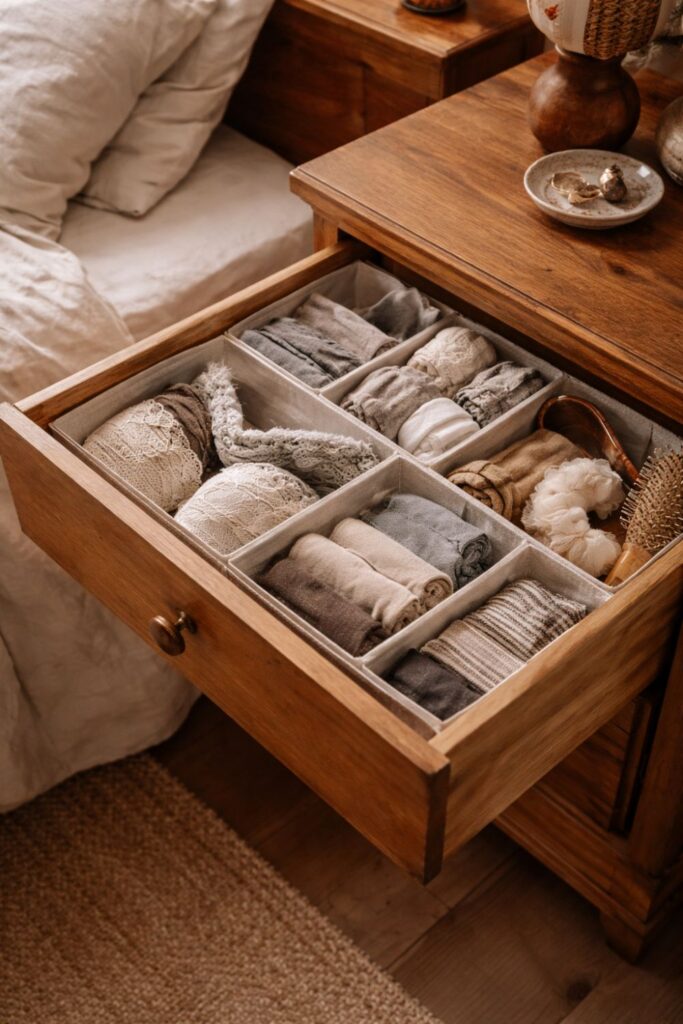
Whether you are using a dresser, storage bench, or bins, drawer dividers keep small items organized. Spring-loaded dividers adjust to fit various drawer widths and create separate compartments for socks, underwear, and accessories. This prevents the dreaded drawer jumble that makes finding anything a challenge.
For deeper drawers, stackable organizers create multiple levels of storage. If you are using fabric bins without rigid sides, consider inserting a piece of cardboard to give the divider something to press against. The small effort of installing dividers saves significant time every morning.
20. Install Corner Shelves for Extra Space
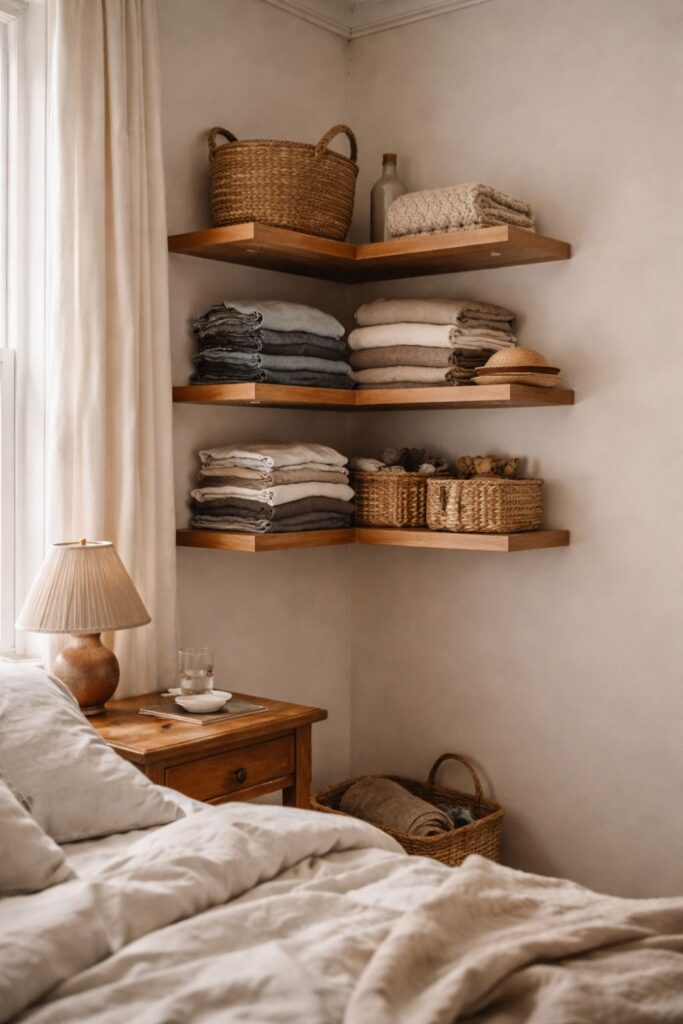
Corners are often overlooked in small bedrooms, but they offer valuable storage potential. Floating corner shelves or a small corner shelving unit can hold folded clothes, accessories, or decorative storage boxes. The triangular shape fits neatly where standard furniture cannot go.
Install shelves at staggered heights rather than all at the same level for visual interest and better access to different item sizes. Keep heavier items on lower shelves for stability. Corner shelves work particularly well for displaying shoes or handbags you want to keep visible.
21. Store Shoes in a Vertical Rack
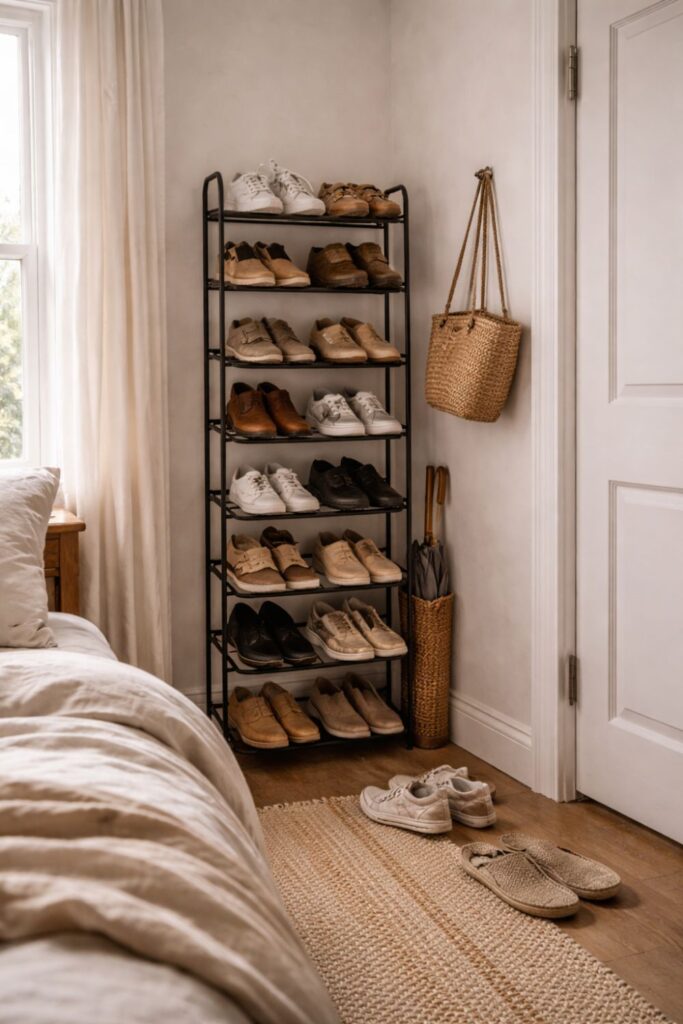
Shoes create clutter faster than almost anything else. A vertical shoe rack, whether freestanding or over-the-door, keeps pairs organized and off the floor. Look for racks with angled shelves that display shoes clearly while using minimal depth.
If floor space is extremely limited, a hanging shoe organizer on the back of your door works well. For a more finished look, a slim cabinet-style shoe rack hides shoes behind a door. Store out-of-season shoes in bins under the bed and keep only current pairs in your daily storage area.
22. Mount a Pegboard for Flexible Accessory Storage
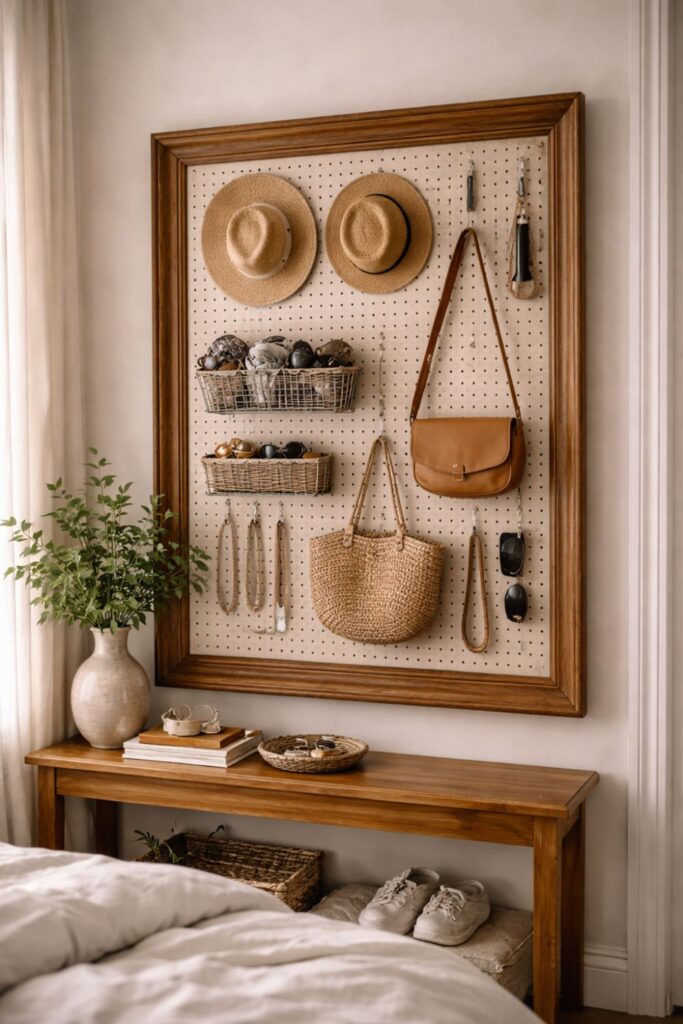
Pegboards are not just for garages and craft rooms. A two-foot by three-foot pegboard mounted on an empty wall creates a fully customizable storage system that evolves with your needs. Use hooks for handbags and hats, small wire baskets for scarves and belts, and shelf attachments for sunglasses and jewelry trays. The real advantage is flexibility: when your accessory collection changes, your storage reconfigures in minutes without drilling new holes.
Mount the pegboard inside an old wooden picture frame for a polished look that does not read as hardware-store industrial. Paint the board to match your wall color so it blends in, or go bold with a contrasting shade if you want it as a design feature. For renters, a pegboard leans against the wall on a narrow console table rather than mounting, giving you the same hook-and-basket system without a single screw hole. Pro tip: trace the outline of each item onto the board with a marker so you remember exactly what belongs where, which also makes missing items immediately obvious.
23. Rotate Seasonal Clothing to Free Up Space
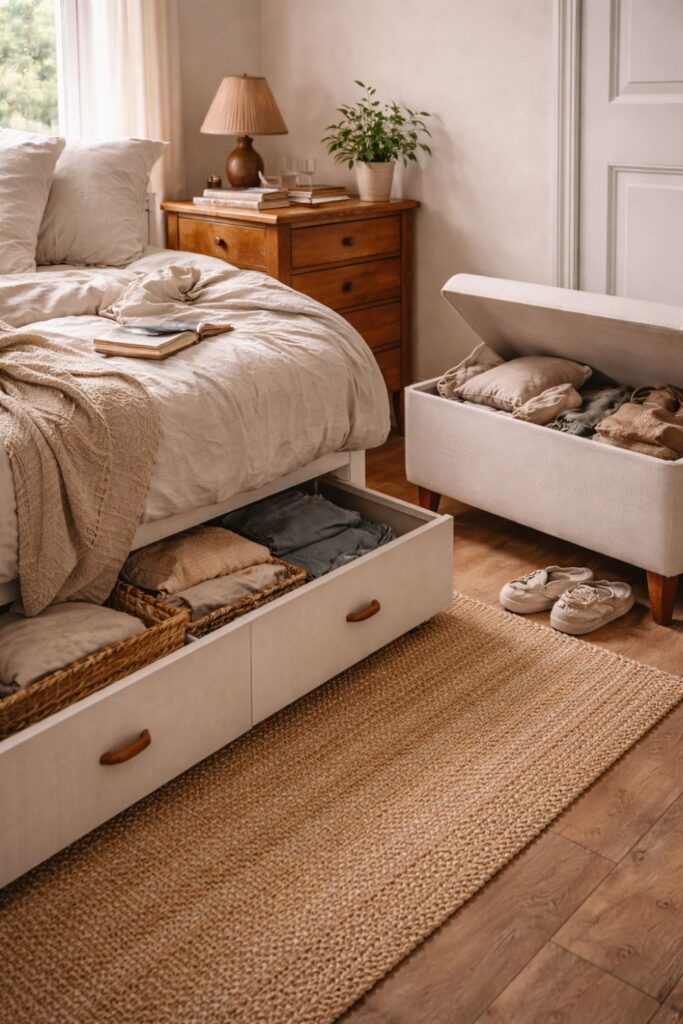
The most effective storage systems fail if you try to store everything you own in one small room. Seasonal rotation means keeping only current-season clothes in your daily storage area while storing off-season items in bins, vacuum bags, or a separate space. Twice a year, swap everything out.
This practice immediately cuts your visible wardrobe in half, which makes every storage method work better. It also helps you notice which pieces you actually wear. If you skip certain items for two seasons in a row, it might be time to donate them and free up even more space.
Organizing a small bedroom without a closet takes creativity, but it is far from impossible. The key is choosing a few methods that work for your specific space rather than trying every idea at once. Start with the basics: a place to hang clothes, a place for folded items, and hidden storage for things you rarely need. From there, add solutions based on what your room still lacks. With the right setup, your closet-free bedroom can feel just as organized as one with ample built-in storage.
Frequently Asked Questions
How do I store clothes in a small bedroom without a closet?
Start with a combination of hanging storage and hidden storage. A freestanding clothing rack handles items that wrinkle, while bins under the bed store off-season clothes. Add floating shelves or a repurposed bookshelf for folded items. The goal is distributing your clothes across multiple storage types so no single area becomes overwhelmed.
What is the cheapest way to store clothes without a closet?
The most budget-friendly approach uses items you may already have. A basic clothing rack costs between twenty and forty dollars. Under-bed storage can use plastic bins you already own, or even sturdy cardboard boxes covered with fabric. Wall hooks and tension rods are inexpensive and require no professional installation. Focus on buying one quality piece at a time rather than outfitting the entire room at once.
How do renters store clothes without drilling into walls?
Renters have plenty of options that do not require drilling. Freestanding clothing racks need no wall attachment. Command hooks and adhesive strips hold lightweight items on smooth walls. Tension rods fit between walls for hanging space. Under-bed storage, bookshelves, and storage benches require no installation. Over-the-door organizers hang on existing doors. If you want wall shelves, look for leaning ladder shelves that rest against the wall rather than mounting to it.
How much clothing storage do I need for a small bedroom?
Most people need approximately four to six linear feet of hanging space and two to three shelves worth of folded storage. The exact amount depends on how many clothes you own and how willing you are to reduce your wardrobe. A capsule wardrobe with thirty to forty pieces requires significantly less storage than a full collection of a hundred items or more. Measure your available wall and floor space before buying storage furniture.
What should I avoid when storing clothes without a closet?
Avoid storing clothes in damp areas or direct sunlight, as both can damage fabric. Do not use cardboard boxes for long-term storage, since they attract pests and transfer odors to clothing. Avoid overloading any single storage method, which leads to wrinkles and makes finding items frustrating. Finally, do not buy storage containers before measuring your space. A beautiful armoire that blocks your door from opening creates more problems than it solves.
Can I create a closet in a room that does not have one?
Yes, you can create a functional closet area using a combination of a clothing rack, wall-mounted rod, or wardrobe unit combined with a curtain to define the space. A corner closet setup uses two walls to create an L-shaped storage zone that feels like a built-in. Add a mirror and a small stool, and you have a functional dressing area that serves the same purpose as a traditional closet.

1 thought on “23 No Closet Storage Ideas for Small Bedrooms That Actually Work”