
You walk into your apartment living room after a long day, drop your bag on the floor, and sink into the couch. The space feels cramped, the lighting is harsh, and somehow, despite all the Pinterest boards and shopping trips, it still doesn’t feel like home. If this sounds familiar, you are not alone.
Most apartment dwellers struggle with the same challenge: how do you make a small living room feel cozy without it becoming cluttered? The internet is full of advice, but much of it skips over the real problems renters face. Limited square footage, rental restrictions, tight budgets, and the fear of making a small space feel even smaller are just a few of the hurdles.
The good news is that creating a cozy aesthetic in a small apartment living room is absolutely possible, and it does not require a massive budget or a complete overhaul. This guide breaks down 31 practical, renter-friendly Small Living Room Ideas Apartment Cozy Aesthetic that address the frustrations real people face and offer solutions that actually work.
Quick Answer: To create a cozy aesthetic in a small apartment living room, focus on warm lighting (2700K bulbs and layered light sources), soft textures (throws, rugs, cushions), a cohesive warm color palette, multifunctional furniture with hidden storage, and strategic use of mirrors to reflect light. The key is layering elements that add warmth without adding visual clutter.
Key elements for a cozy small living room:
- Warm, dimmable lighting with multiple sources (overhead, lamps, sconces)
- Large area rug to anchor the space and add softness underfoot
- Textural layers like knit throws, velvet cushions, and linen curtains
- Warm, cohesive color palette with neutral bases and earthy accents
- Strategic mirrors to bounce light and create visual depth
The ideas below go beyond the generic tips you have seen everywhere. Each one addresses a specific challenge of small-space living, from finding seating that doesn’t overwhelm the room to creating warmth in a rental with white walls you cannot paint. Whether you are starting from scratch or refreshing what you have, these strategies will help you build a living room that feels genuinely cozy and functions beautifully for everyday life.
1. Start with a Large Area Rug That Fits
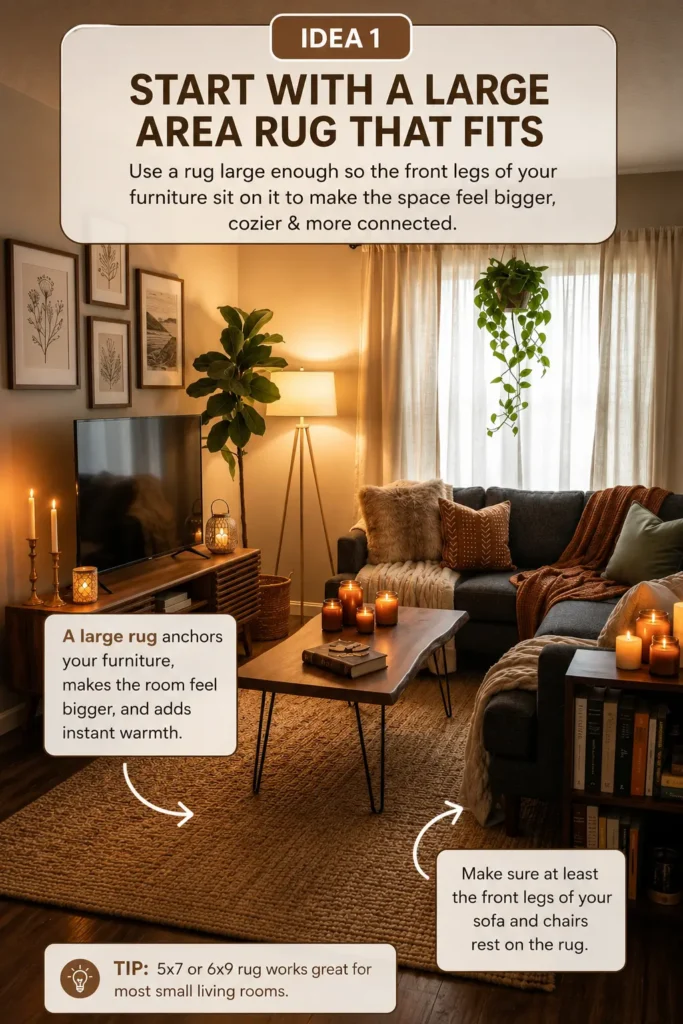
One of the most common mistakes in small living rooms is choosing a rug that is too small. A tiny rug floating in the middle of the room visually shrinks the space and makes furniture feel disconnected. Instead, choose a rug large enough so that at least the front legs of your sofa and chairs rest on it. In most small living rooms, a 5×7 or 6×9 foot rug works well.
For a cozy aesthetic, opt for natural materials like wool, cotton, or jute in warm tones. A vintage Moroccan rug, a flat-weave kilim, or a soft shag rug all add texture and warmth underfoot. If you are on a budget, retailers like Rugs USA, Ruggable, and even IKEA offer affordable options that look expensive. One practical tip: if you have carpet, layer a rug over it anyway. A low-pile rug over apartment carpeting adds texture and defines your seating zone.
2. Swap Harsh Overhead Lighting for Warm, Layered Light
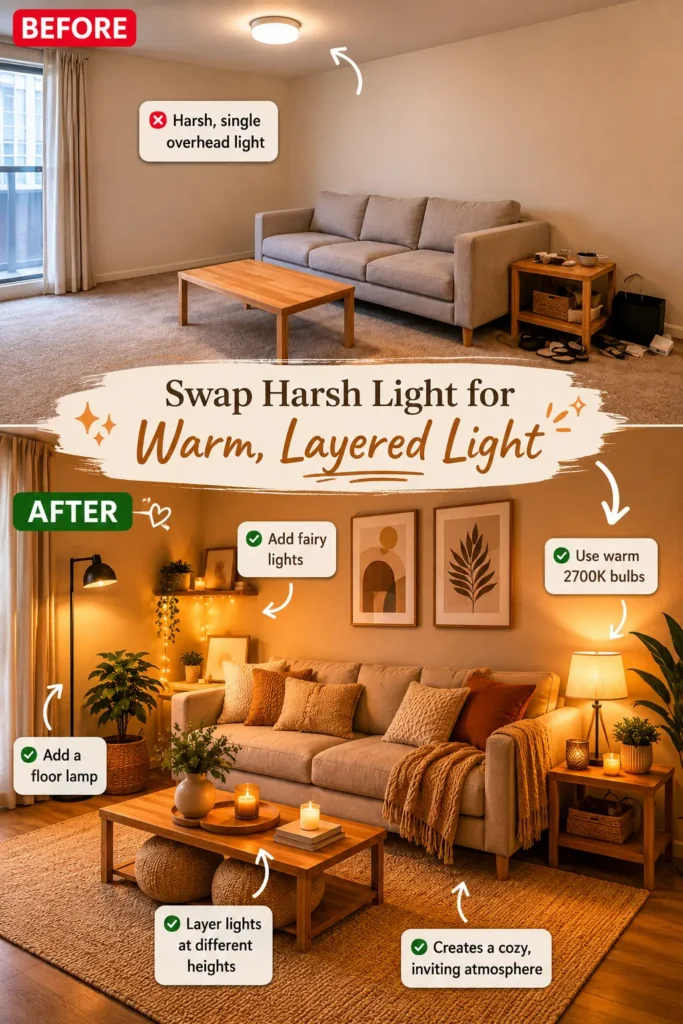
Nothing kills a cozy vibe faster than a single bright overhead light. The first upgrade you should make is switching your overhead bulb to a warm 2700K LED. This simple swap costs under ten dollars and instantly changes how your room feels. Next, add layered lighting at different heights.
A floor lamp in a corner, a table lamp on a side table, and a string of fairy lights or LED candles create a warm, inviting glow. Designers call this ‘layering light’ and it is the single most effective way to make a small space feel cozy. If you are a renter and cannot hardwire sconces, plug-in wall sconces are widely available and take minutes to install. One micro-insight: put your overhead light on a dimmer switch. Even basic plug-in dimmers cost around fifteen dollars and let you adjust brightness for different moods.
3. Choose a Cohesive Warm Color Palette
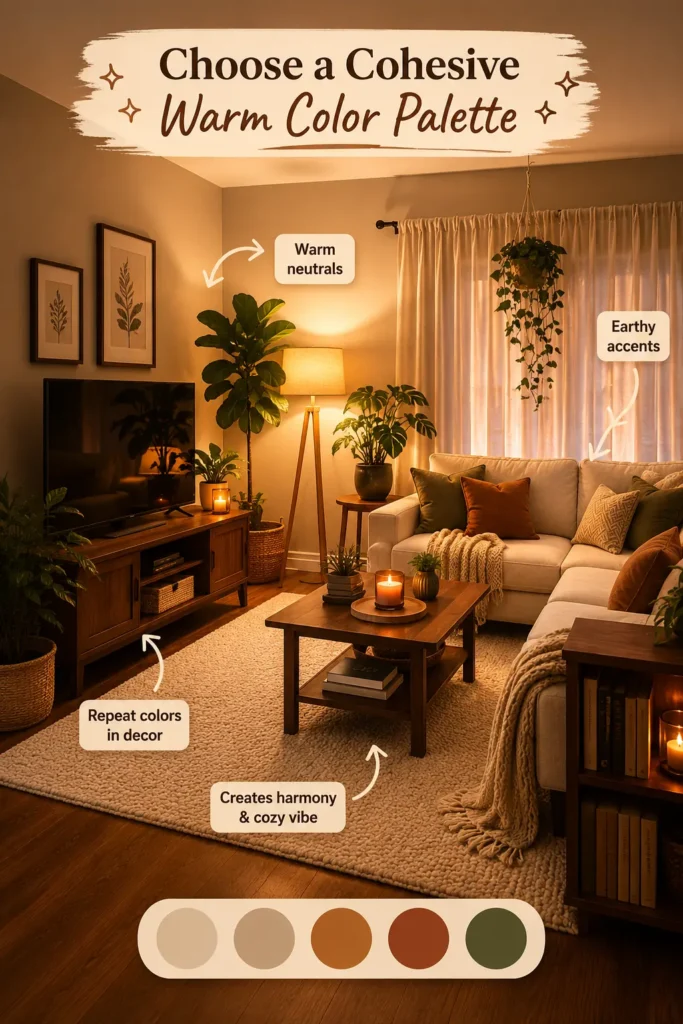
A cohesive color palette is what separates a curated, cozy room from a space that feels chaotic. Start with a base of warm neutrals like cream, oatmeal, taupe, or warm gray. Then add one or two accent colors in earthy tones like terracotta, olive green, rust, or mustard. Finally, bring in deeper tones through textiles and small decor pieces.
The key is repetition. If your accent color is olive green, repeat it in your throw pillows, a plant pot, a book on the shelf, and maybe a vase. This creates visual rhythm and makes the room feel intentional. One mistake to avoid: mixing too many bright, saturated colors in a small space. It creates visual noise that makes the room feel cluttered even when it is tidy. Stick to muted, earthy tones for a calm, cozy feel.
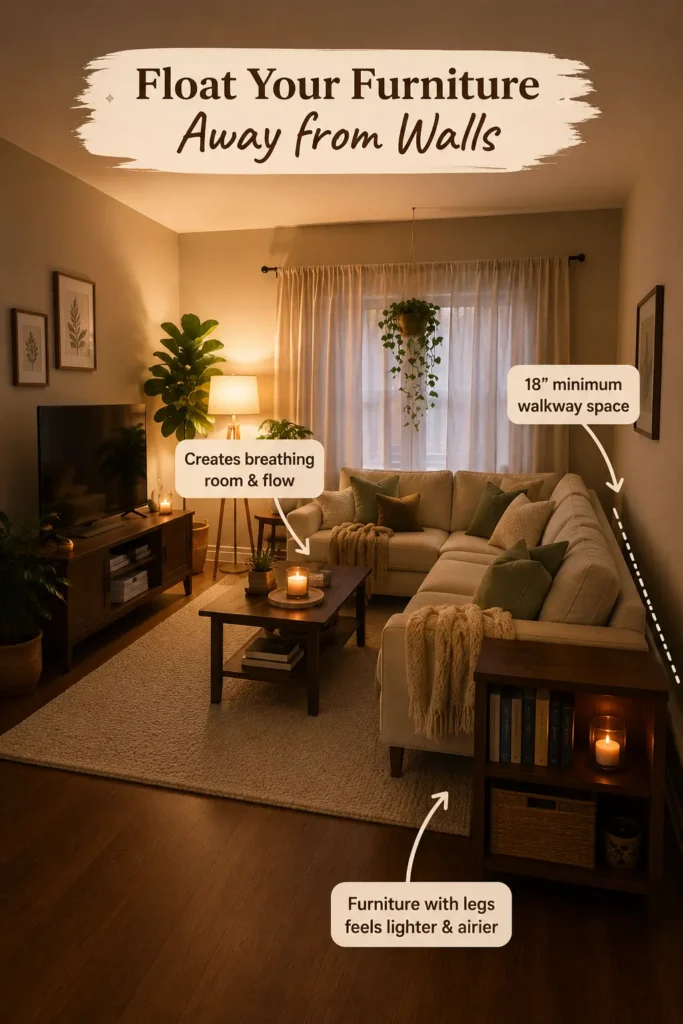
4. Float Your Furniture Away from Walls
It sounds counterintuitive, but pushing all your furniture against the walls can actually make a small room feel smaller. Floating your sofa even a few inches away from the wall creates breathing room and makes the layout feel more intentional. If you have an open-plan studio, floating the sofa with its back to the sleeping area can create a visual divide between zones.
The key is leaving enough walkway space behind. Eighteen inches is the minimum for comfortable passage. If you have a narrow room, try placing the sofa against one wall and floating just the accent chairs. This creates a conversational grouping in the center while maintaining flow around the edges. One micro-insight: use furniture with legs. Pieces raised off the floor create more visual space and make the room feel airier than boxy, floor-hugging designs.
5. Use Mirrors to Bounce Light and Expand Space
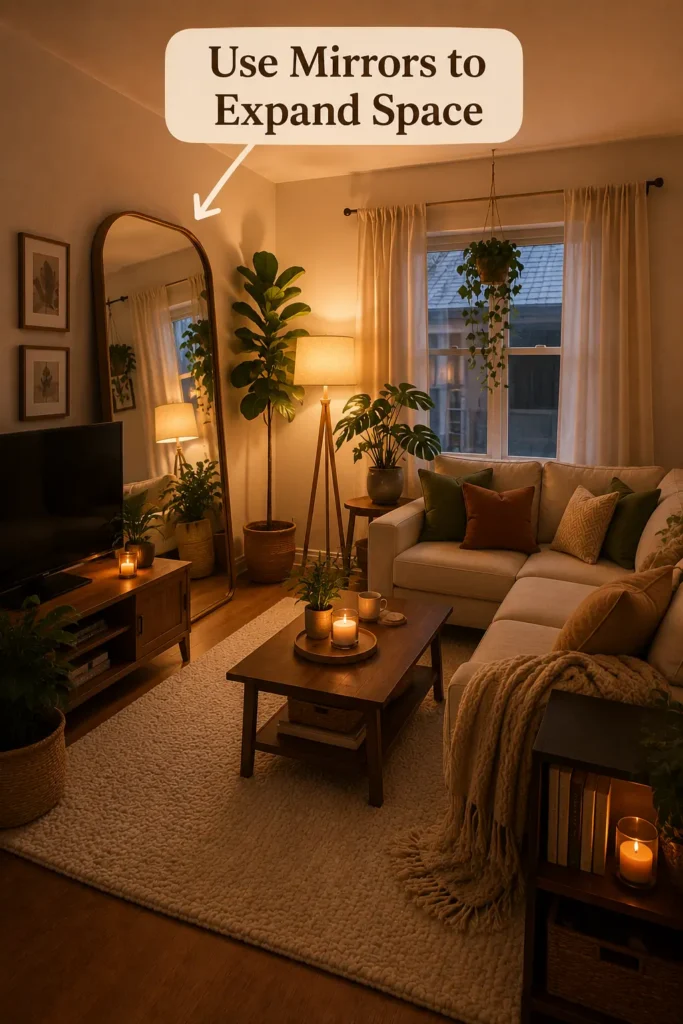
Mirrors are the oldest trick in the book for a reason: they work. A large mirror opposite or adjacent to a window reflects natural light deep into the room, making it feel brighter and more spacious. In a small living room, one oversized mirror has more impact than several small ones.
For a cozy aesthetic, choose a mirror with a warm-toned frame like natural wood, brass, or rattan. Lean a full-length mirror against a wall for a casual, relaxed feel, or hang a round mirror above the sofa as a focal point. One micro-insight: place a mirror where it will reflect something attractive, like a plant, a piece of art, or a light fixture. Avoid positioning it to reflect clutter or an unattractive view.
6. Invest in One Statement Piece of Furniture
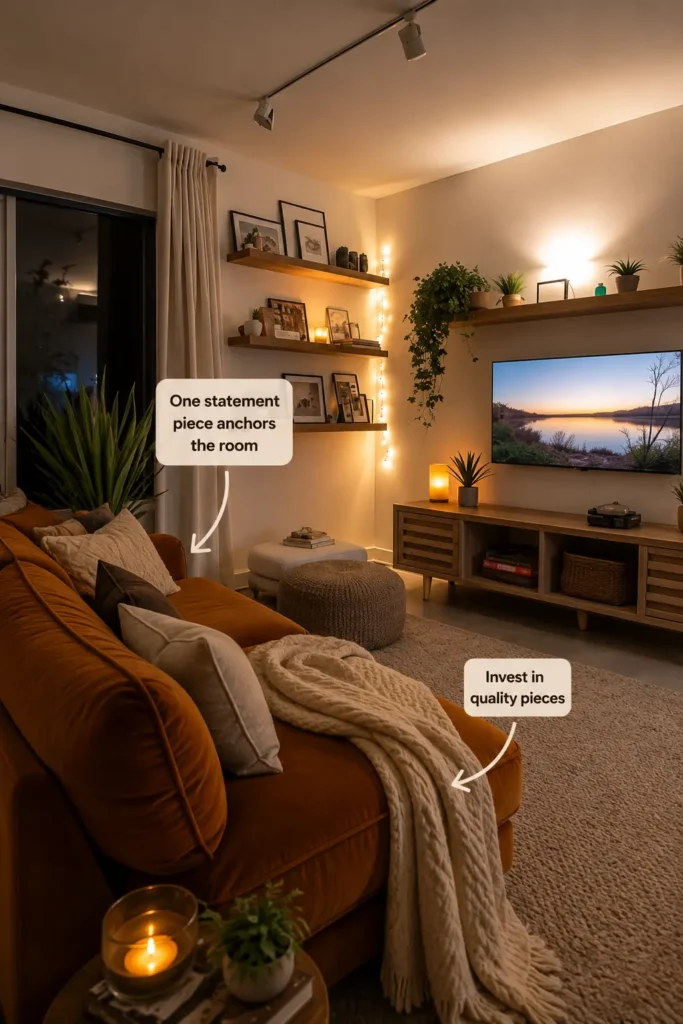
In a small space, every piece of furniture matters. Instead of filling the room with average pieces, invest in one standout item that anchors the room. This could be a curved velvet sofa, a beautiful midcentury armchair, or a sculptural coffee table. One exceptional piece elevates everything around it.
Designers often recommend choosing the largest sofa that fits your space rather than settling for a tiny loveseat. A full-size sofa with clean lines makes the room feel grown-up and intentional, not cramped. Keep the surrounding pieces simpler to let your statement piece shine. One budget-friendly tip: scour Facebook Marketplace, estate sales, and thrift stores for quality vintage pieces. A well-made older sofa reupholstered in a fabric you love often costs less than a new budget sofa and lasts far longer.
7. Add Texture with Throws, Pillows, and Layers
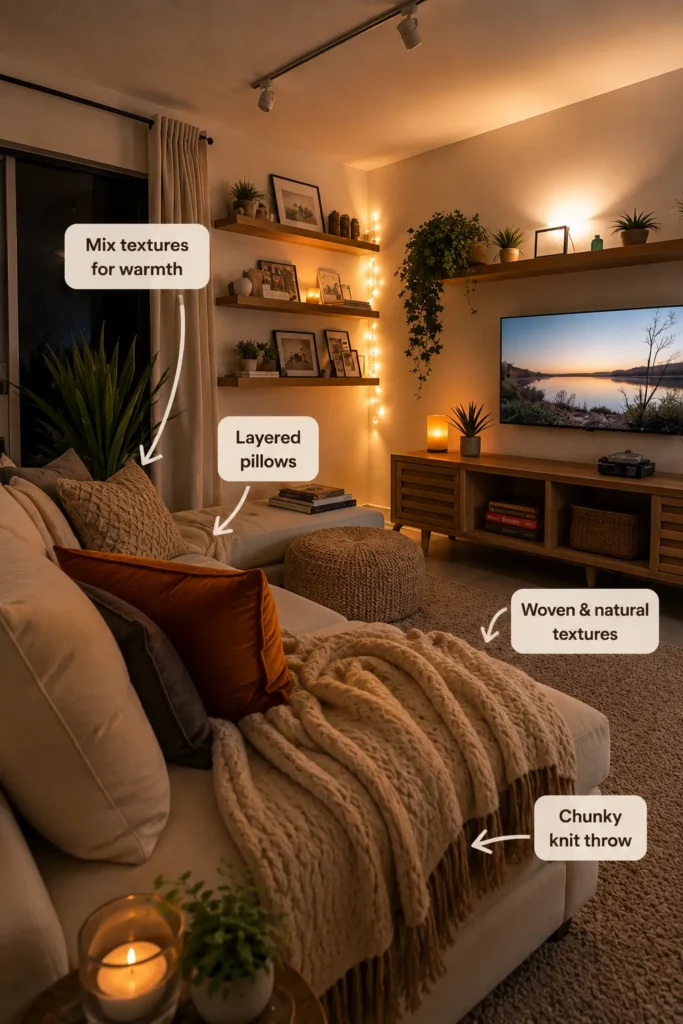
Texture is what makes a room feel cozy. A space can have the perfect layout and color scheme but still feel cold if everything is smooth and hard. Layer different textures through chunky knit throws, linen or velvet pillows, a woven basket, a sheepskin draped over a chair, and curtains in a natural fabric.
The key is variety. Mix rough with smooth, matte with shiny, soft with structured. A leather sofa becomes cozy with a chunky wool throw and a few linen pillows. A velvet chair gets grounded with a jute rug underneath. One mistake to avoid: buying all your textiles from the same store in matching sets. It creates a showroom feel. Instead, collect pieces over time in complementary tones and textures for a more lived-in, personal look.
8. Choose Multifunctional Furniture with Storage
In a small apartment, every piece of furniture should earn its keep. An ottoman with hidden storage houses blankets and remotes. A coffee table with a lower shelf holds books and baskets. A media console with cabinets hides cables and gaming equipment. A sleeper sofa turns the living room into a guest room when needed.
When shopping, ask yourself: does this piece do more than one thing? Nesting tables tuck away when not needed. A console table behind the sofa can hold lamps and decor while doubling as a workspace. A storage bench by the window becomes seating and a place to stash shoes. One micro-insight: look for furniture with soft-close hinges and quality hardware. Cheap storage pieces that are hard to open and close tend to become clutter magnets because you avoid using them.
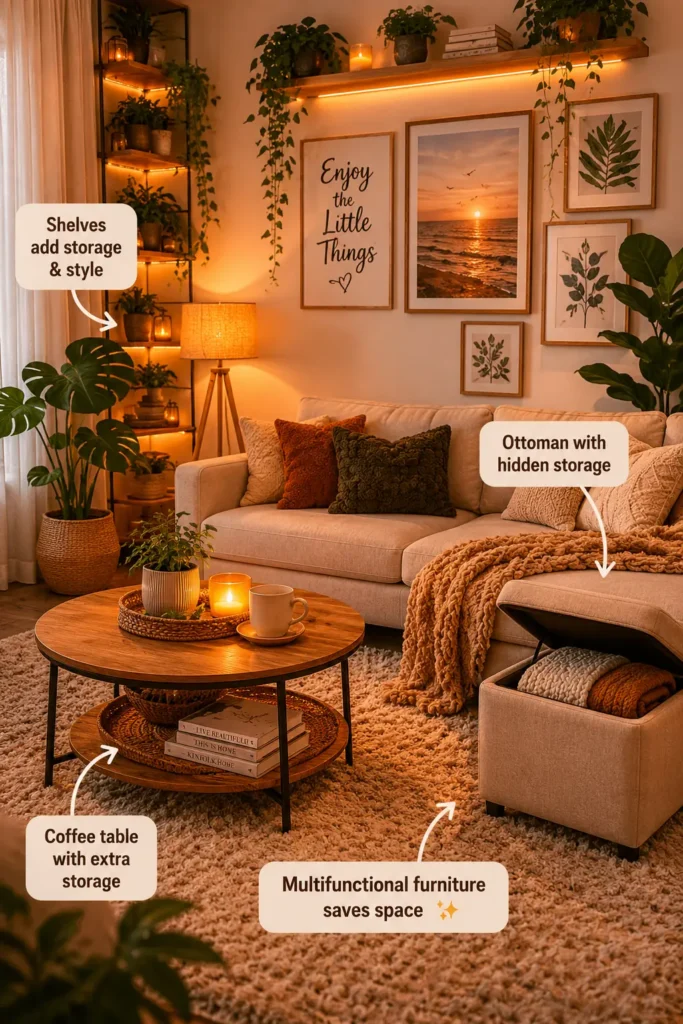
9. Hang Curtains High and Wide
Curtains hung just above the window frame cut the wall in half and make the ceiling feel lower. Instead, mount your curtain rod as close to the ceiling as possible and extend it six to twelve inches beyond each side of the window. This tricks the eye into seeing taller windows and higher ceilings, which makes the entire room feel larger.
For a cozy aesthetic, choose curtains in a warm, natural fabric like linen or cotton in a solid neutral tone. If you want pattern, keep it subtle like a soft stripe or a tone-on-tone texture. Let the curtains puddle slightly on the floor for a relaxed, romantic feel, or hem them to just skim the floor for a cleaner look. One renter-friendly tip: use command hooks or tension rods if you cannot drill holes. Many modern options are strong enough to support light to medium-weight curtains.
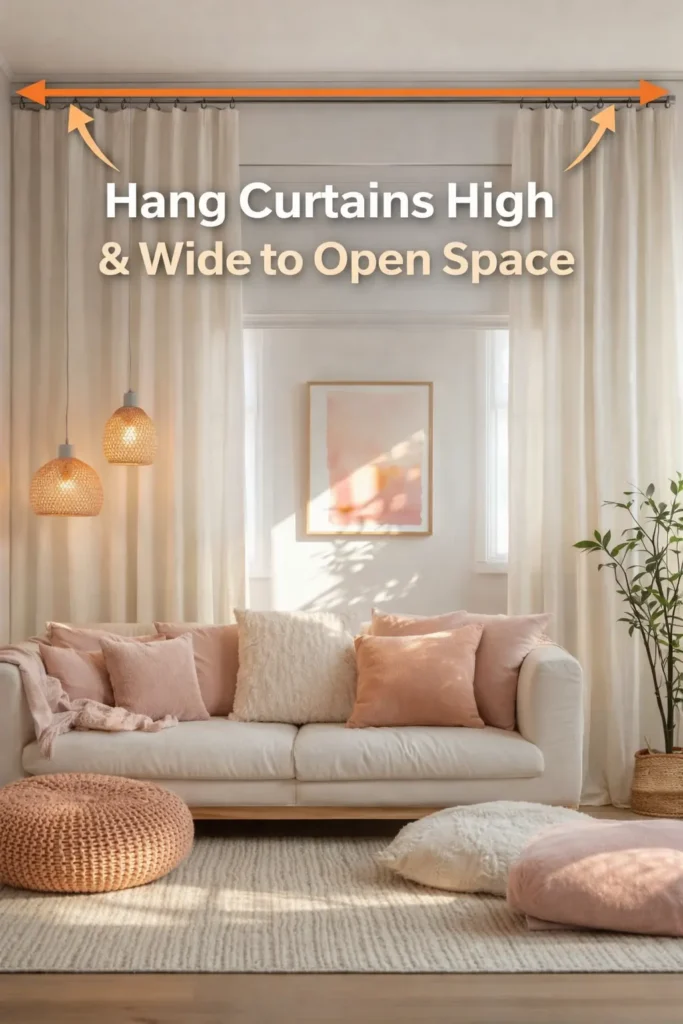
10. Create a Gallery Wall with Personal Meaning
A gallery wall adds personality and visual interest to a small living room without taking up floor space. Mix framed art, personal photographs, small shelves with objects, and even a textile piece for variety. The key is cohesion: stick to a consistent frame color or style, and keep the overall color palette of the pieces in harmony with your room.
In small spaces, gallery walls work best on one focal wall. Above the sofa, above a console table, or on the wall opposite the entry are all good spots. Before hanging, lay the arrangement out on the floor to get the spacing right. Two to three inches between frames is the sweet spot. One micro-insight: include at least one piece with personal meaning, a travel photo, a child’s drawing, a vintage find. It makes the wall feel like yours, not a catalog page.
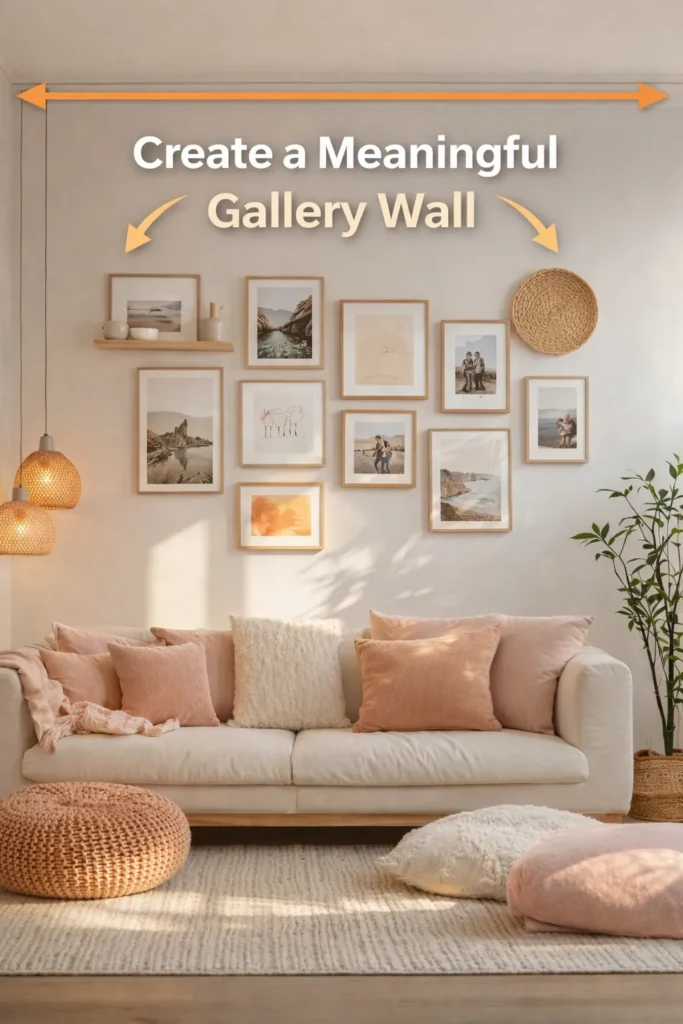
11. Use Vertical Space with Wall Shelves
When floor space is limited, look up. Wall-mounted shelves draw the eye upward, add storage and display space, and make a room feel taller. Floating shelves above the sofa, a bookshelf mounted above a desk, or a narrow ledge for framed photos all add function without consuming precious square footage.
Keep shelves styled but not cluttered. A mix of books, small plants, a candle, and one decorative object per shelf looks curated. Use the higher shelves for items you access less often and keep everyday items at eye level. One practical tip: in rentals, use floating shelves that mount with a single bracket or keyhole hanger to minimize wall damage. When you move, a little spackle and paint make the holes disappear.
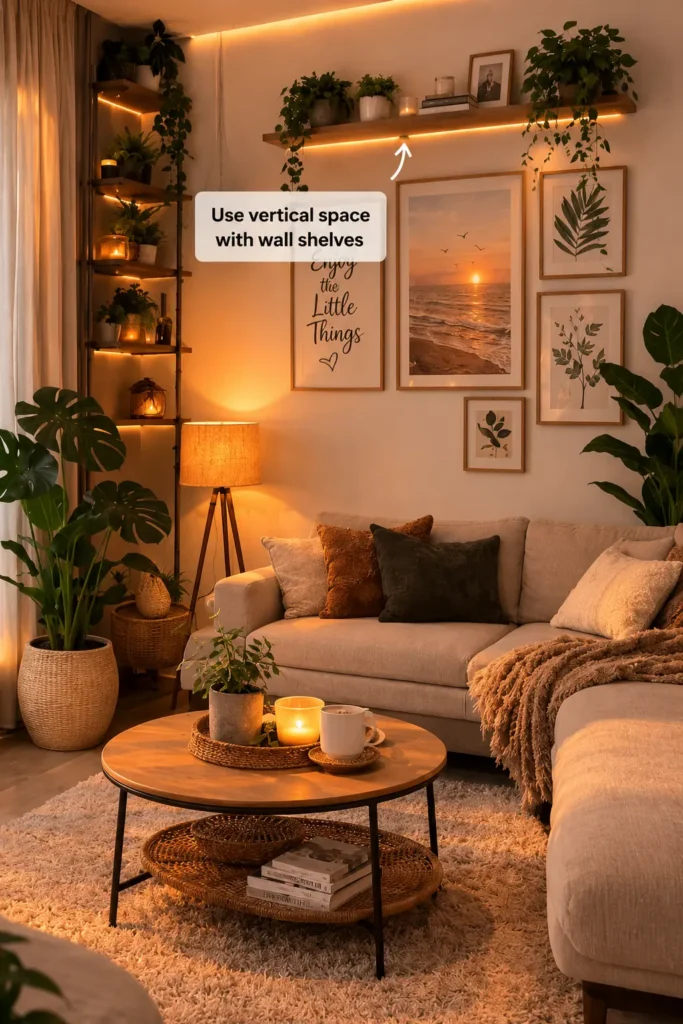
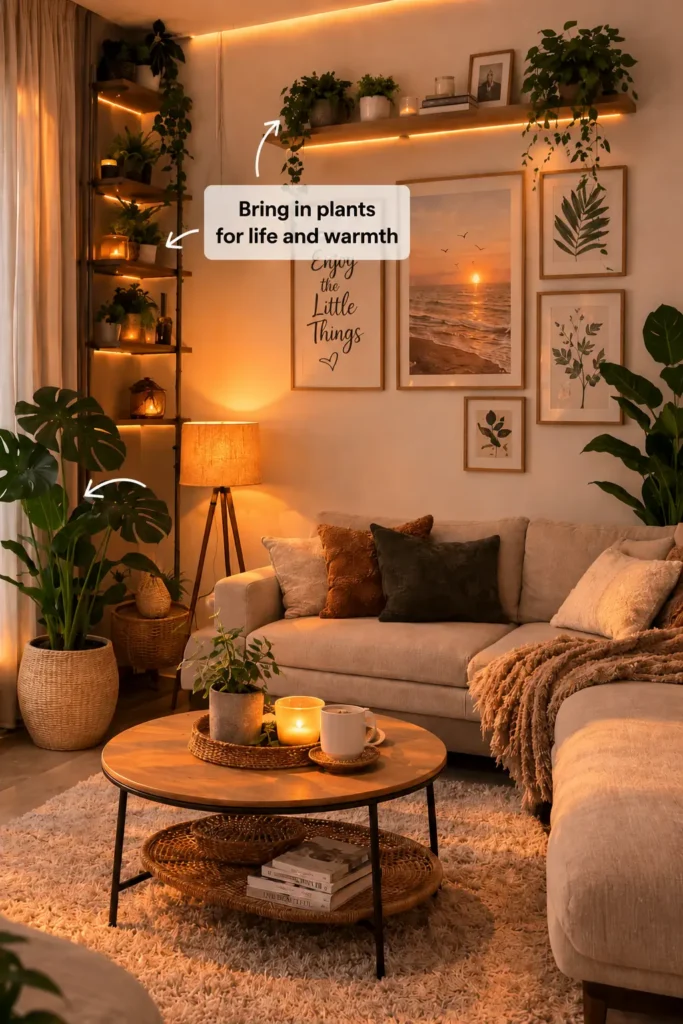
12. Bring in Plants for Life and Warmth
Plants are one of the easiest and most affordable ways to add life and coziness to a small living room. A tall fiddle leaf fig in a corner, a trailing pothos on a shelf, a small snake plant on a side table, or a hanging macrame planter all bring in natural color and texture.
If you do not have a green thumb, choose hardy varieties like pothos, snake plants, ZZ plants, or spider plants. These tolerate low light and irregular watering. For a cohesive look, choose pots in tones that match your palette: terracotta, natural ceramic, white, or woven baskets. One micro-insight: group plants in odd numbers, three on a shelf, five on a windowsill. It looks more natural and visually appealing than even groupings.
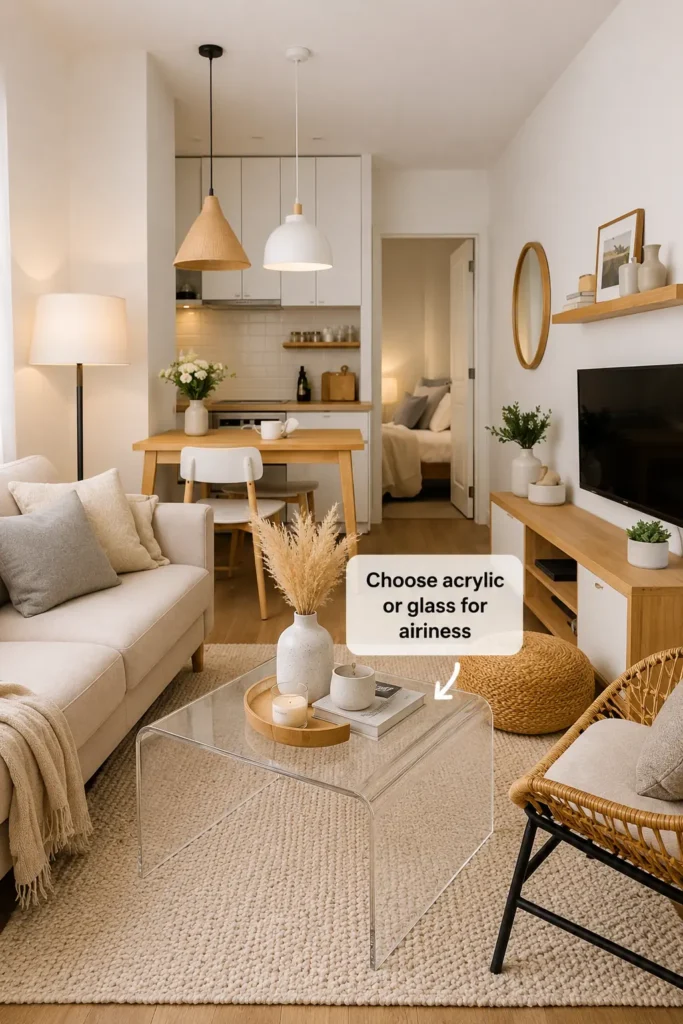
13. Choose Acrylic or Glass for Visual Airiness
Acrylic and glass furniture pieces virtually disappear in a room, making them perfect for small spaces. A lucite coffee table, an acrylic side table, or a glass console table provides function without visual weight. They pair beautifully with heavier pieces like a solid sofa or a chunky knit throw, creating balance.
A waterfall-style lucite coffee table is a favorite among small-space designers because it has no legs to navigate around and it lets the rug beneath show through. Glass tabletops with slim metal frames are another airy option. One thing to note: clear surfaces show fingerprints and dust, so they require slightly more frequent cleaning. Keep a microfiber cloth handy for quick wipes.
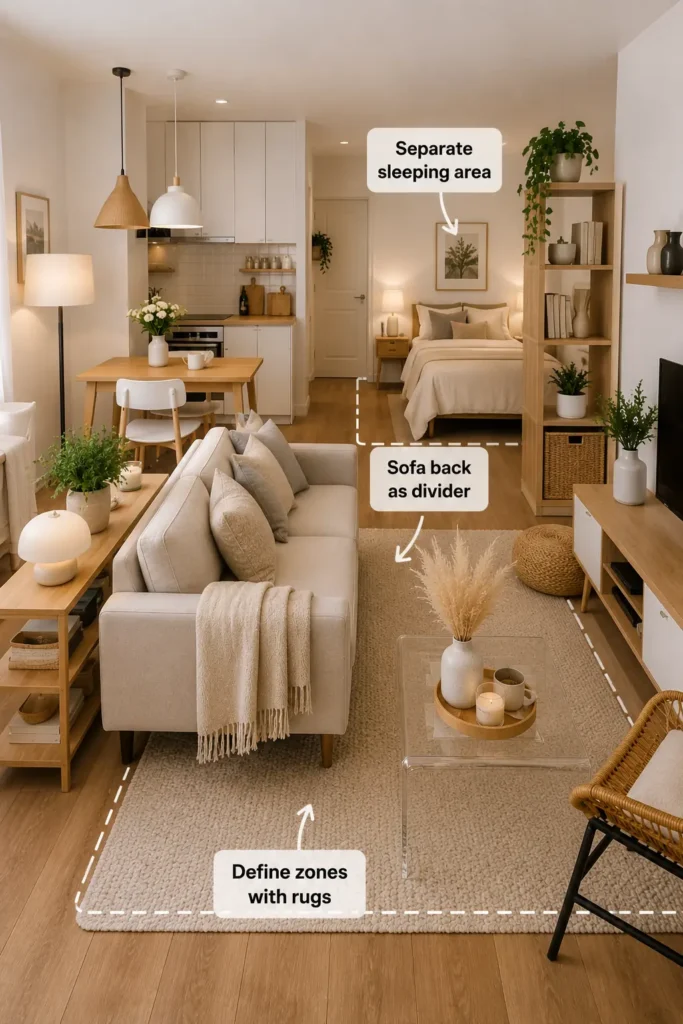
14. Define Zones with Rugs and Furniture Placement
In a studio apartment or open-plan space, defining zones is essential. The living area should feel distinct from the sleeping area, dining nook, or workspace. An area rug is the most effective tool for this: it visually anchors the seating group and says ‘this is the living room.’
Back your sofa with its back toward the sleeping area to create a natural divider. A console table behind the sofa adds storage and reinforces the boundary. A bookshelf placed perpendicular to the wall can act as a partial room divider while maintaining an open feel. One micro-insight: leave a clear pathway between zones. If you have to navigate an obstacle course to get from the couch to the kitchen, the layout needs adjusting.
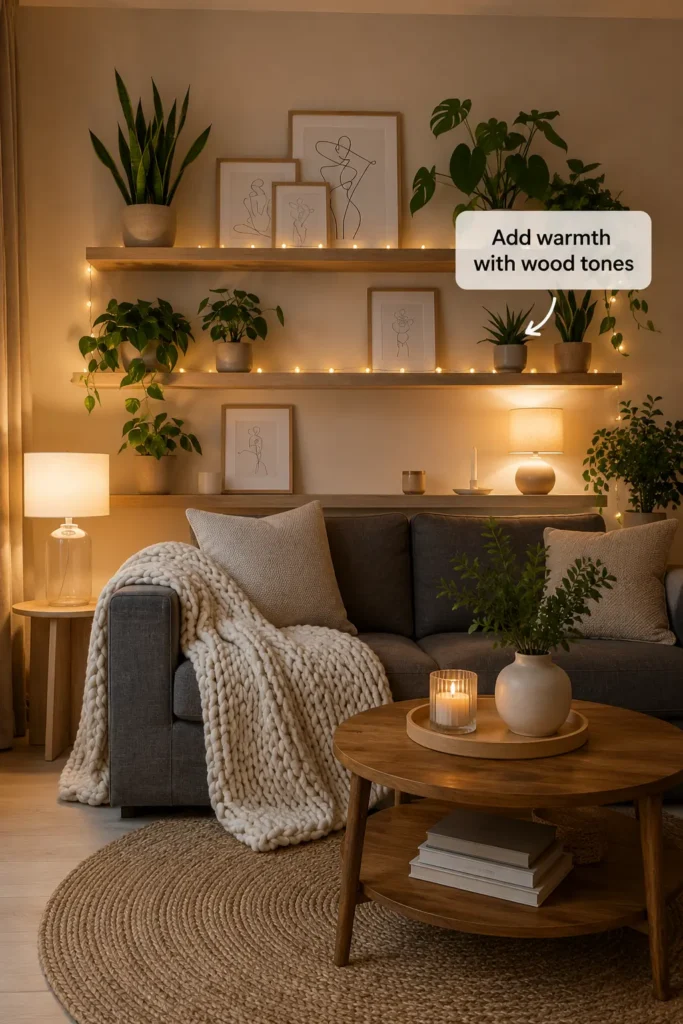
15. Add Warmth with Wood Tones
Wood tones add instant warmth to any space. A walnut coffee table, oak shelving, a bamboo ladder for throws, or even wooden picture frames bring in natural material that softens the room. Mixing wood tones is perfectly fine; a warm oak table paired with darker walnut frames and a light pine tray looks collected and organic.
If your rental has cold, generic finishes like laminate flooring or white walls, wood tones become even more important. They add the warmth that the architecture lacks. One budget tip: if you cannot afford solid wood furniture, look for pieces with wood veneer on visible surfaces. They offer the same warm look at a fraction of the cost.
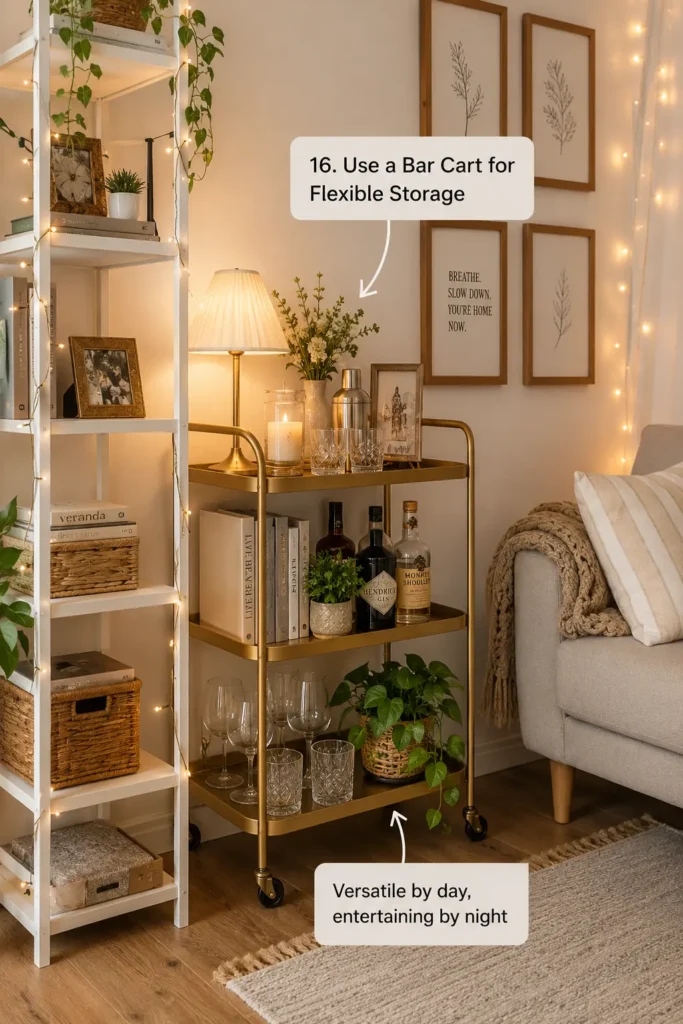
16. Use a Bar Cart as Flexible Storage
A bar cart is one of the most versatile pieces you can own in a small apartment. By day, it holds books, plants, and a lamp as a decorative display. By night, it rolls out to become a drink station when friends visit. When not needed, it tucks into a corner or against a wall, taking up minimal space.
Choose a cart with a warm metal finish like brass or copper, or go for natural wood. Style it with a mix of practical and decorative items: a cocktail shaker, a small vase with flowers, a few beautiful glasses, and a framed photo. One micro-insight: even if you do not drink alcohol, a bar cart works beautifully as a coffee station, a plant stand, or a nightstand alternative.
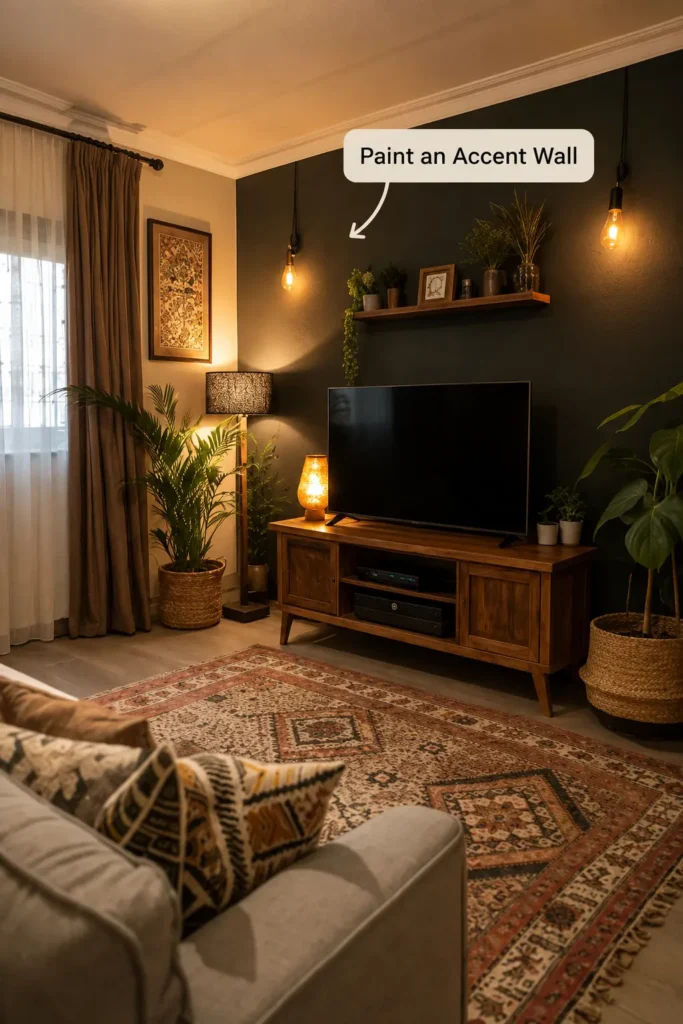
17. Paint an Accent Wall (Even in a Rental)
If your landlord allows painting, an accent wall in a warm, moody color can transform a small living room. Deep olive, warm terracotta, dusty rose, or a rich navy create depth and coziness. Paint the wall behind the sofa or the wall with the fireplace to create a natural focal point.
If painting is not an option, peel-and-stick wallpaper has come a long way. Modern versions go up easily, come down cleanly, and look surprisingly high-end. Choose a subtle texture, a soft pattern, or even a mural-style print for one wall. One renter tip: before applying any peel-and-stick product, clean the wall thoroughly with rubbing alcohol. Dust and grease are the main reasons these products fail to adhere properly.
18. Curate Your Accessories Ruthlessly
In a small space, every object is on display, which means clutter shows up fast. The solution is not to buy more storage bins. It is to own less stuff. Go through your living room with a critical eye and remove anything that is not beautiful, meaningful, or useful.
Keep only items that tell your story: a vase from your grandmother, a book you actually reread, a candle that smells like your favorite season. Group small items on a tray to contain them, and limit tchotchkes to a few curated pieces rather than scattered collections. One insight from real apartment dwellers: rotating decor seasonally keeps the room feeling fresh without buying new things. Store off-season items under the bed or in a closet.
19. Consider a Sectional for Maximum Seating
A common misconception is that sectionals are too big for small spaces. In reality, a well-chosen sectional can be the most efficient use of space. A small L-shaped sectional tucked into a corner provides more seating than a sofa and two chairs, and it creates a natural conversational grouping.
Look for sectionals with low backs and slim arms to keep the visual weight down. Some apartment-sized sectionals are as compact as 76 inches on each side. If you frequently host, a sectional with a pull-out bed or storage chaise adds even more function. One thing to measure carefully: the depth. A shallow-depth sectional (around 34 inches) seats just as many people as a deep one but takes up far less floor space.
20. Mount the TV on the Wall
A TV on a stand consumes valuable floor space and adds visual bulk. Mounting it on the wall frees up the surface beneath for storage, decor, or simply open space. In a small living room, every square foot of floor matters, and wall-mounting recovers a surprising amount of it.
If you have a media console below the TV, choose one with closed storage to hide cables, remotes, and gaming equipment. A floating media console takes up even less visual space. One micro-insight: when mounting, place the center of the TV at eye level when seated, typically around 42 inches from the floor. Too high and you will strain your neck. Use a cable cover painted to match the wall for a clean, seamless look.
21. Add a Touch of Vintage or Secondhand
Vintage and secondhand pieces add character that new furniture simply cannot replicate. A worn leather armchair, a brass floor lamp from the 1960s, or a wooden trunk used as a coffee table all bring soul and history to a small living room. These pieces become conversation starters and make the space feel unique.
Good sources include estate sales, Facebook Marketplace, thrift stores, and flea markets. Look for solid wood construction, quality upholstery, and interesting details. One practical tip: reupholstering a vintage chair in a modern fabric gives you a one-of-a-kind piece that fits your color scheme perfectly. Reupholstery costs vary but often compare favorably to buying a new quality chair.
22. Incorporate Scent as a Design Element
Cozy is not just a visual experience. It is sensory. The way a room smells has a powerful effect on how comfortable it feels. A signature scent, whether from candles, essential oil diffusers, or incense, adds an invisible layer of warmth to your living room.
Choose scents that feel cozy and inviting: vanilla, sandalwood, cedar, cinnamon, or fresh linen. Place a candle on the coffee table, a diffuser on a shelf, and consider reed diffusers for consistent, low-maintenance fragrance. One safety note: if you have pets, research which essential oils are safe for them. Some, like tea tree and eucalyptus, can be harmful to cats and dogs.
23. Use Baskets for Hidden Storage
Baskets are the small-space dweller’s best friend. They hide clutter, add texture, and fit into shelves, under tables, and beside the sofa. Use woven baskets for throws and pillows, wire baskets for magazines, and lidded baskets for items you want completely out of sight like remotes, chargers, and gaming controllers.
Choose baskets in natural materials like seagrass, rattan, or water hyacinth for a warm, organic feel. Keep a consistent tone throughout the room for a cohesive look. One micro-insight: label the inside of basket lids with what is inside. It sounds trivial, but it saves time when you are looking for the TV remote or that specific charging cable.
24. Choose a Round Coffee Table for Better Flow
In a small living room, sharp corners on a coffee table create awkward navigation and bruised hips. A round or oval coffee table solves this by improving traffic flow and making the space feel softer. Round tables also work better in tight seating arrangements because they allow more walking space around the edges.
Look for a table around 30 to 36 inches in diameter for most small spaces. A pedestal base takes up less floor space than four legs and allows you to pull up extra seating easily. One practical tip: choose a coffee table with a lower shelf or internal storage to maximize function. A round ottoman with a tray on top serves as both coffee table and extra seating.
25. Add a Reading Nook in an Unused Corner
Even the smallest living room usually has an underused corner. Transform it into a cozy reading nook with a comfortable armchair, a small side table for a cup of tea, a floor lamp, and a soft throw. This creates a dedicated spot for relaxation and adds another layer of function to the room.
If space is really tight, a small papasan chair, a butterfly chair, or even a thick floor cushion can serve as reading seating. A wall-mounted reading lamp saves the floor space a lamp would occupy. One micro-insight: place the reading nook near a window if possible. Natural light makes it more inviting during the day, and the view provides a sense of spaciousness.
26. Style Your Coffee Table Intentionally
A coffee table is a focal point in any living room, and in a small space, it gets a lot of visual attention. Style it with three to five items arranged in a small vignette: a stack of books, a candle, a small plant or vase, and perhaps a decorative tray. This creates interest without clutter.
Keep the items low so they do not block sightlines across the room. A small stack of beautiful books adds color and personality. A live plant or fresh flowers bring life. One practical insight: leave enough clear surface space for everyday function. You need room for a drink, a remote, and your phone. A fully styled table that leaves no usable space looks pretty in photos but frustrates in real life.
27. Consider Black Accents for Definition
Black accents add depth and definition to a cozy living room. A black floor lamp, black picture frames, a black metal coffee table base, or black window trim create contrast that makes other colors pop. In a room full of warm neutrals, black keeps the palette from feeling washed out.
The key is balance. Too much black in a small space feels heavy, but used sparingly as an accent, it adds sophistication. Try one or two black elements and see how they ground the room. One tip: matte black finishes feel warmer and cozier than glossy black in a small, intimate space.
28. Use Sconces to Free Up Surface Space
When you do not have room for side tables and table lamps, wall sconces are the answer. They provide warm, ambient lighting at eye level while freeing up valuable surface space. Plug-in sconces require no hardwiring and can be installed in minutes.
Choose sconces with warm metal finishes, fabric shades, or organic shapes for a cozy feel. Position them at seated eye level, about 42 to 48 inches from the floor. Swing-arm sconces are particularly versatile because they adjust for reading light or ambient glow. One renter tip: look for sconces with a cord cover that matches your wall color, or paint the cord cover yourself for a seamless look.
29. Keep a Cohesive Design Motif
A cohesive motif is what makes a small room feel designed rather than decorated. Choose one element to repeat: a color, a shape, a material, or a pattern. For example, curved lines repeated in a rounded sofa, circular mirrors, and arched shelves create visual harmony. A natural materials theme with wood, rattan, linen, and wool feels earthy and calm.
The repetition creates a sense of order that makes the room feel intentional. Walk through your space and identify what motifs already exist, then lean into them. One common mistake: mixing too many styles. A midcentury sofa, a farmhouse coffee table, a bohemian rug, and an industrial lamp can coexist, but it takes skill. In a small space, a more cohesive approach almost always looks better.
30. Make Peace with the Size and Embrace Coziness
The most important idea on this list is also the hardest: stop fighting your small living room and start embracing it. A small space has advantages that large rooms do not. It is easier to make cozy. It costs less to furnish and decorate. It forces you to be intentional about what you own. And it can feel like a sanctuary in a way that vast, open spaces rarely do.
Lean into the intimacy. Use warm, dark colors if you love them. Create a space that feels like a hug, not a ballroom. The best small living rooms are not trying to be big. They are confidently, beautifully small. One final insight from designers: the most charming small spaces often belong to people who stopped trying to follow rules and started trusting their own instincts about what feels good to live in.
31. Edit and Refresh Seasonally
The final step in maintaining a cozy small living room is regular editing. Over time, clutter creeps in. New purchases arrive without old ones leaving. Decorative objects lose their meaning. Set a calendar reminder every three months to reassess your space. Remove what no longer serves you, rearrange what remains, and consider one small update: a new pillow cover, a different candle scent, or a rotated piece of art.
This seasonal refresh keeps the room feeling current without requiring a full redesign. It also prevents the slow accumulation of stuff that makes small spaces feel cramped. One practical habit: follow the ‘one in, one out’ rule. Every time you bring something new into the living room, something old leaves. It is simple, but it works.
Quick Reference: Cozy Elements at a Glance
Use this table to quickly compare the key elements for creating a cozy small living room and identify which ideas fit your space and budget best.
| Element | Best For | Key Tip | Budget |
| Large Area Rug | Defining zones, adding softness | Front legs of furniture on rug | $$ |
| Warm Layered Lighting | Creating ambiance instantly | Use 2700K bulbs throughout | $ |
| Textile Layers | Adding warmth and texture | Mix rough and smooth textures | $$ |
| Mirrors | Expanding visual space | Place opposite windows | $$ |
| Multifunctional Furniture | Small studios, dual-purpose needs | Every piece must earn its keep | $$$ |
| Wall Shelves | Vertical storage, display | Draws eye upward | $ |
| Plants | Adding life and color | Choose hardy low-light varieties | $ |
Creating a cozy aesthetic in a small apartment living room is less about buying the right things and more about making intentional choices. Every piece of furniture, every textile, every light source should earn its place by adding comfort, function, or beauty to your daily life. The ideas in this guide are starting points, not rules. Take what resonates, adapt it to your space and budget, and leave the rest.
The most cozy living rooms are not the ones that look perfect in photos. They are the ones that feel right when you are sitting on the couch on a Sunday morning with a cup of coffee, surrounded by things you love, in a space that genuinely feels like home. Start with one or two ideas from this list, build from there, and trust that your small living room can become the warm, inviting retreat you have been wanting.
Frequently Asked Questions
Q: How do I make my small apartment living room cozy on a tight budget?
A: Start with the biggest impact for the lowest cost: swap your overhead bulb to a warm 2700K LED, add a cozy throw blanket and a few textured pillows, and rearrange furniture for better flow. Thrift stores and Facebook Marketplace are excellent sources for affordable rugs, side tables, and vintage decor. Focus on lighting and textiles first, as these create the most coziness per dollar spent.
Q: What colors make a small living room look bigger and cozier?
A: Warm, light neutrals like cream, oatmeal, soft taupe, and warm gray make a room feel open while still cozy. For a moodier feel, deep earth tones like olive green, terracotta, and warm navy create an enveloping, intimate atmosphere. The key is avoiding cold, stark whites and instead choosing tones with warm undertones. Accent with deeper shades in textiles and decor rather than on every wall.
Q: Should I use big or small furniture in a small living room?
A: Counterintuitively, a few appropriately scaled larger pieces usually work better than many small ones. One full-size sofa and a medium rug anchor the room and make it feel intentional. Many tiny pieces create visual clutter. The key word is ‘appropriately scaled’: measure your space and choose the largest rug, sofa, and coffee table that fit comfortably while leaving walking room. Furniture with exposed legs also helps maintain visual airiness.
Q: How do I make a rental living room feel cozy without painting?
A: Focus on elements you can control: lighting (warm bulbs, lamps, fairy lights), textiles (rugs, curtains, throws, pillows), furniture placement, and accessories. Peel-and-stick wallpaper is a renter-friendly way to add color or pattern to one wall. Large art or a gallery wall adds personality without paint. Curtains hung high and wide transform windows. These changes make a dramatic difference and are completely reversible when you move.
Q: What is the best lighting for a cozy small living room?
A: Layered lighting at multiple heights creates the coziest atmosphere. Start with a warm overhead bulb on a dimmer. Add a floor lamp in one corner, a table lamp on a side table, and accent lighting like fairy lights or LED candles. Avoid relying solely on overhead lighting, especially cool-toned or fluorescent bulbs. Warm light at eye level, from table lamps and sconces, creates the most inviting glow.
Q: How do I prevent my cozy living room from feeling cluttered?
A: The line between cozy and cluttered is thin. Stick to a cohesive color palette so everything feels connected. Use hidden storage like baskets and ottomans to contain everyday items. Edit your decor regularly and follow the ‘one in, one out’ rule. Leave clear surfaces on tables for daily use. And remember: negative space is not empty space. It is breathing room that makes the cozy elements stand out.
Q: What size rug should I use in a small living room?
A: Choose a rug large enough that at least the front legs of your sofa and all chair legs sit on it. For most small living rooms, a 5×7 foot or 6×9 foot rug works well. A rug that is too small makes the room feel choppy and smaller than it is. When in doubt, go larger. The rug should anchor your seating area and create a defined zone within the room.
Q: Can I make a studio apartment living room feel cozy?
A: Absolutely. In a studio, defining zones becomes even more important. Use an area rug to anchor the living area, float your sofa with its back toward the sleeping area, and use lighting to differentiate zones. A room divider, bookshelf, or curtain can create separation while maintaining an open feel. The same cozy principles apply: warm lighting, soft textures, a cohesive palette, and curated decor make a studio feel like home.
