
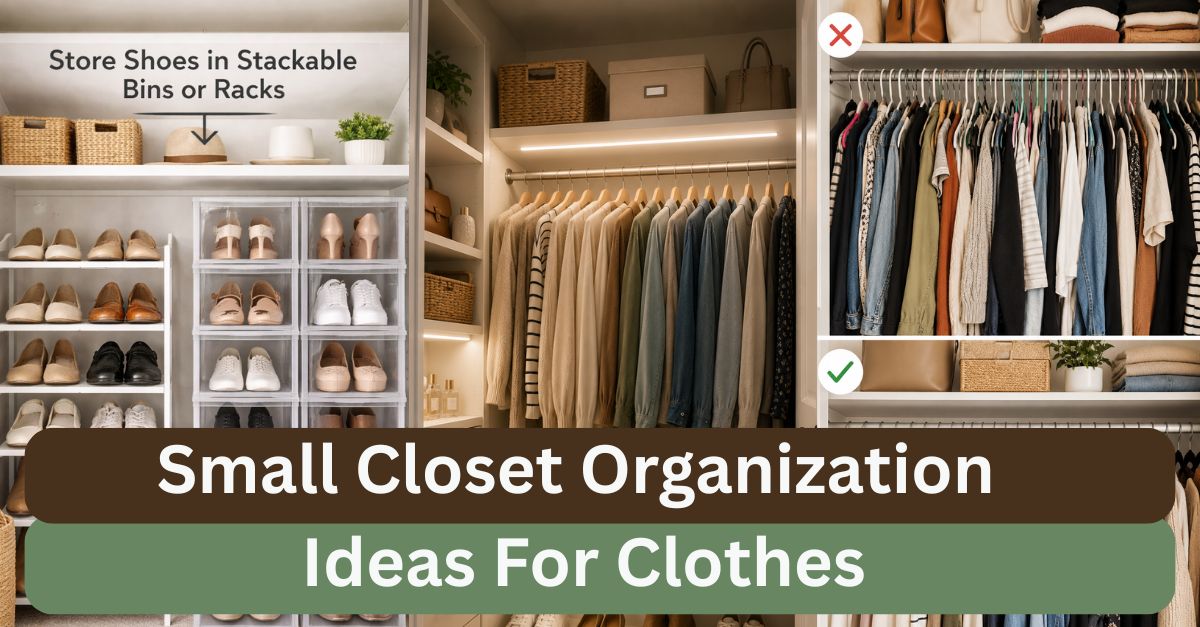
If you have ever opened your closet door only to feel instantly overwhelmed by the mess inside, you are not alone.
Small closets are one of the most common frustrations people face in their homes, especially when the pile of clothes seems to grow faster than the space available.
Many people find themselves wearing the same few items simply because everything else is buried out of sight.
The good news is that you do not need a walk-in closet or an expensive renovation to create a system that works.
With a few smart changes to how you store, fold, and arrange your clothes, you can transform even the tiniest closet into a space that feels open, functional, and easy to maintain.
In this guide, you will find practical small closet organization ideas for clothes that work in real homes, on real budgets, for real people.
What Are the Best Small Closet Organization Ideas For Clothes?
The best small closet organization ideas for clothes focus on maximizing vertical space, using slim hangers, adding a second rod, folding bulky items, storing off-season clothing elsewhere, and using the back of the door for extra storage. Key strategies include decluttering first, grouping clothes by category, using clear labeled bins, and choosing drawer dividers to keep small items tidy.
- Switch to slim velvet hangers to fit more on the rod
- Install a double hanging rod to double your vertical space
- Use the back of the door for shoes, accessories, or small items
- Fold sweaters and bulky items instead of hanging them
- Store off-season clothes in bins under the bed or on the top shelf
Below, we break down each idea in detail, along with practical tips to help you implement them in your own closet. Whether you are a renter who cannot drill holes, someone on a tight budget, or simply looking for a smarter way to arrange what you already own, these ideas will help you reclaim your space.
Small Closet Organization Ideas For Clothes Practical Examples
1. Start With a Complete Closet Reset
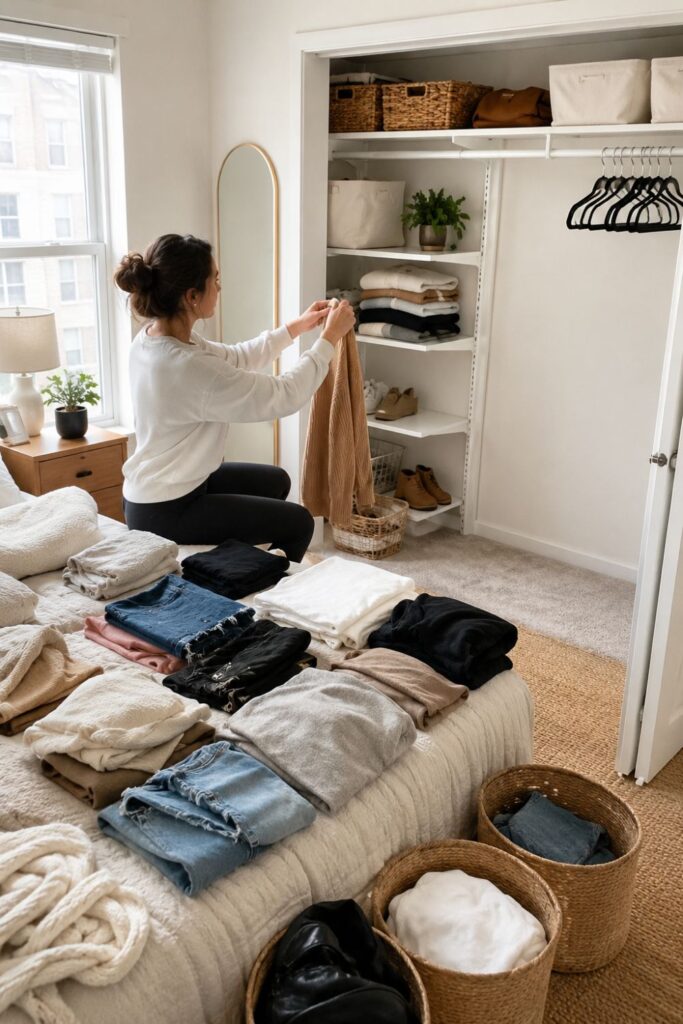
Before you buy a single organizer or hanger, pull every item out of your closet and place it on your bed or floor. This forces you to see exactly what you own and confront the true scope of the clutter. Most people are surprised by how much they have accumulated over time. A full reset also gives you the chance to wipe down shelves, sweep the floor, and assess the actual dimensions of your space with a clear eye.
Work through your pile quickly. Touch each item once and decide immediately whether to keep, donate, or discard it. If you have not worn something in the past year and it does not hold special value, let it go. The more you remove now, the less you will need to organize later. Starting with less always makes the entire process feel more manageable.
2. Declutter Using the Three-Pile Method
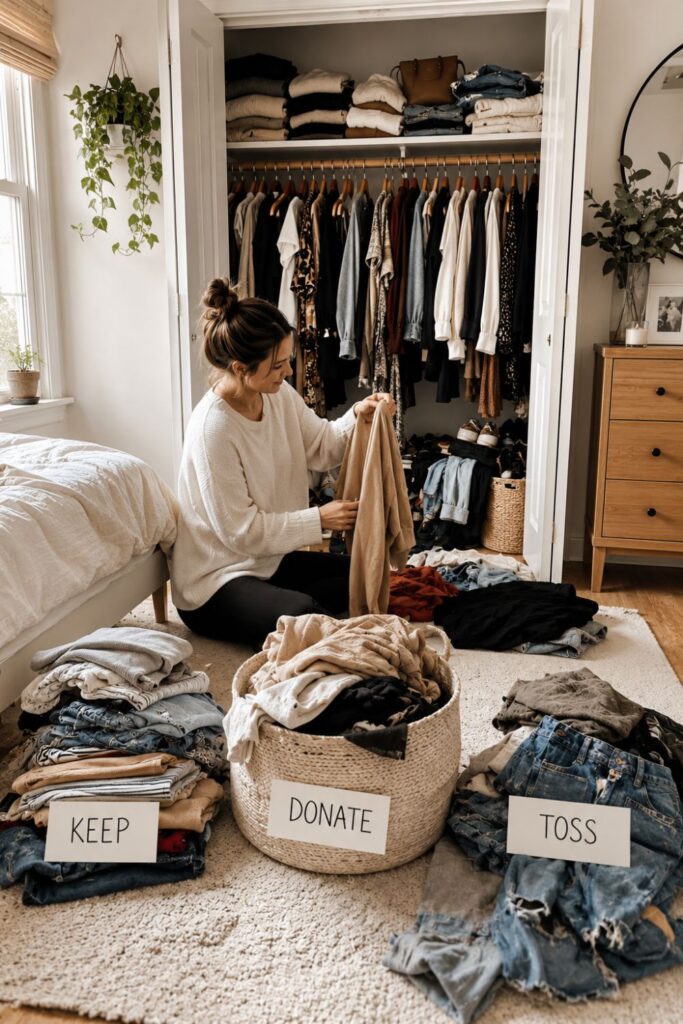
The three-pile method is the simplest way to sort through a large wardrobe without getting stuck on decisions. Create three distinct areas labeled Keep, Donate, and Toss. As you evaluate each piece, ask yourself whether it fits, whether you have worn it recently, and whether it still matches your current style and lifestyle.
Be especially honest about items with tags still attached, pieces that need repairs you have been putting off, and duplicates of similar items. Most small closet owners find they can remove thirty to fifty percent of their clothes in this first pass. That reduction alone often solves the overcrowding problem before any organizing even begins.
3. Use Slim Velvet Hangers to Maximize Rod Space
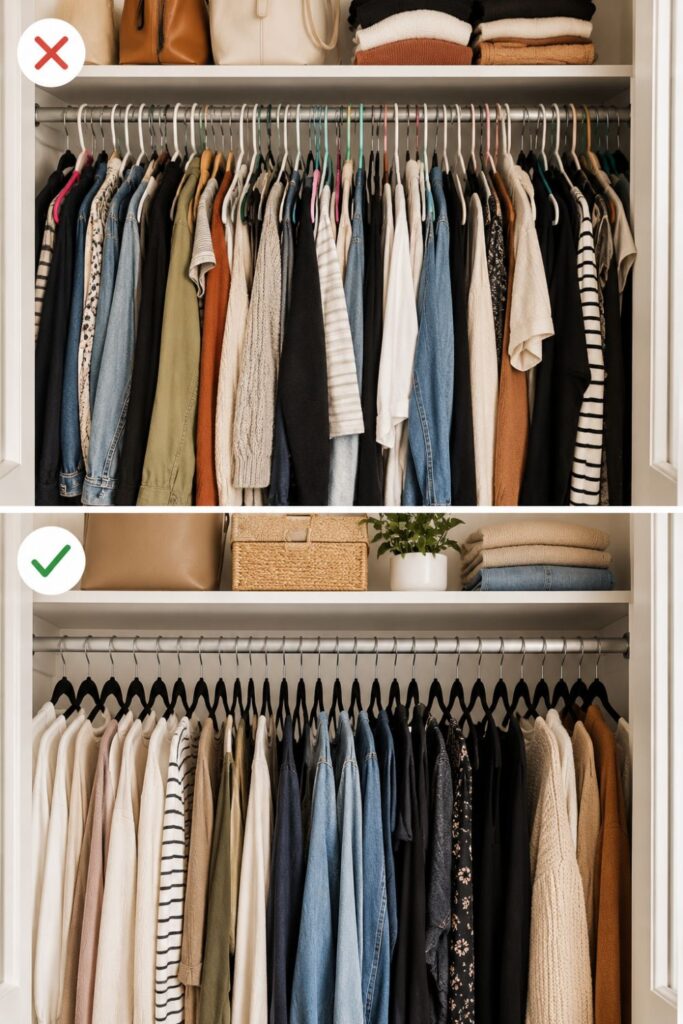
Bulky plastic and wooden hangers consume far more rod space than most people realize. Switching to slim velvet hangers can increase your hanging capacity by thirty percent or more. The thin profile means more garments fit side by side, and the velvet texture prevents clothes from slipping off onto the floor.
Stick with one color and style throughout your closet for a cleaner look. Black velvet hangers are the most popular choice because they blend into the background and make your clothes stand out. Avoid wire hangers from the dry cleaner entirely. They bend easily, leave rust marks on shoulders, and create an unkempt appearance that works against your organizing efforts.
Read more: 15 Dust Free Decor Ideas Above Kitchen Cabinets
4. Install a Double Hanging Rod
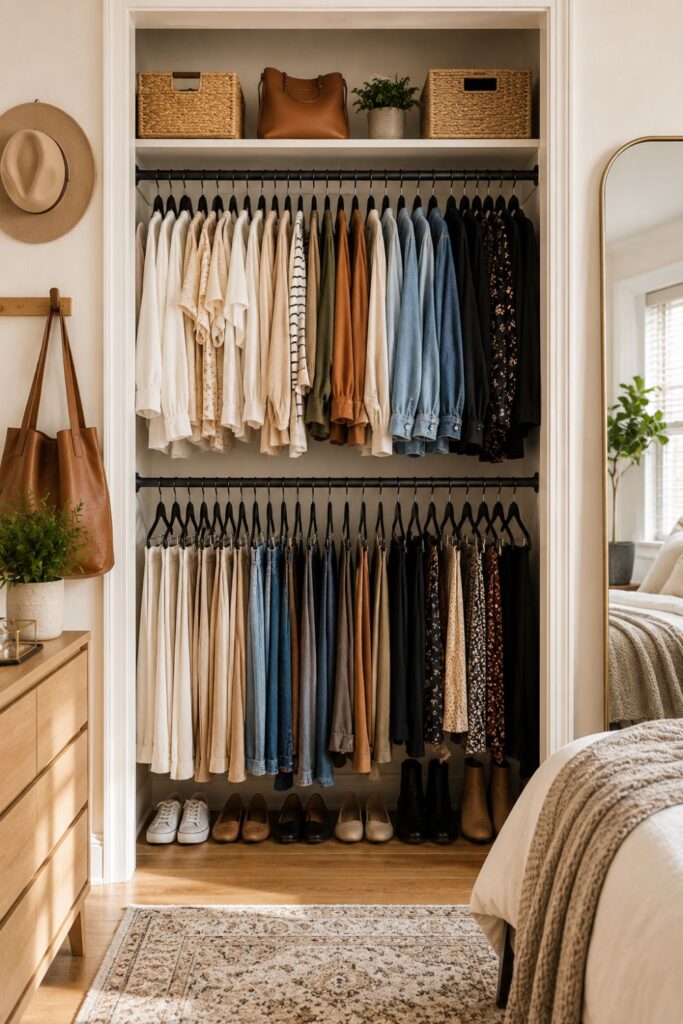
One of the most impactful changes you can make in a small closet is adding a second hanging rod below the first. This instantly doubles your vertical hanging space and allows you to separate shorter items like shirts and blouses on top from pants and skirts below. Before purchasing, measure the length of your longest hanging items to make sure both levels will work without bunching.
Adjustable tension rods work well for lightweight items and require no drilling, making them renter-friendly. For heavier loads, a wall-mounted double rod system provides better stability. If you share the closet with a partner, consider assigning one rod to each person to prevent morning mix-ups and keep both sides of the wardrobe organized independently.
5. Add a Small Dresser Inside the Closet
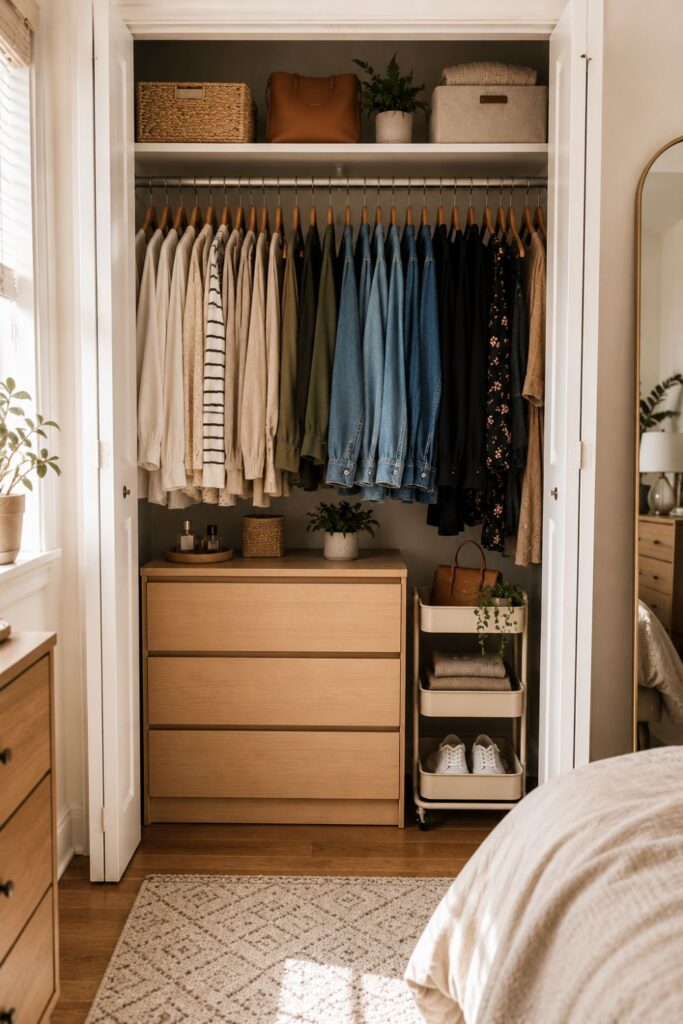
If drawer space in your bedroom is limited, sliding a low dresser into the closet underneath your hanging clothes can be a practical solution. Dressers provide enclosed storage for items like underwear, socks, pajamas, and workout clothes that do not need to hang. Choose a piece that is short enough to fit comfortably under your hanging rod with clearance for clothes to drape naturally.
IKEA dressers like the MALM or RASKOG utility carts are popular choices because of their compact dimensions and affordable prices. If floor space is truly tight, look for narrow three-drawer units designed specifically for closet use. Just remember to remove drawers before moving the dresser into place, then reinstall them once the unit is positioned.
6. Fold Sweaters Instead of Hanging Them
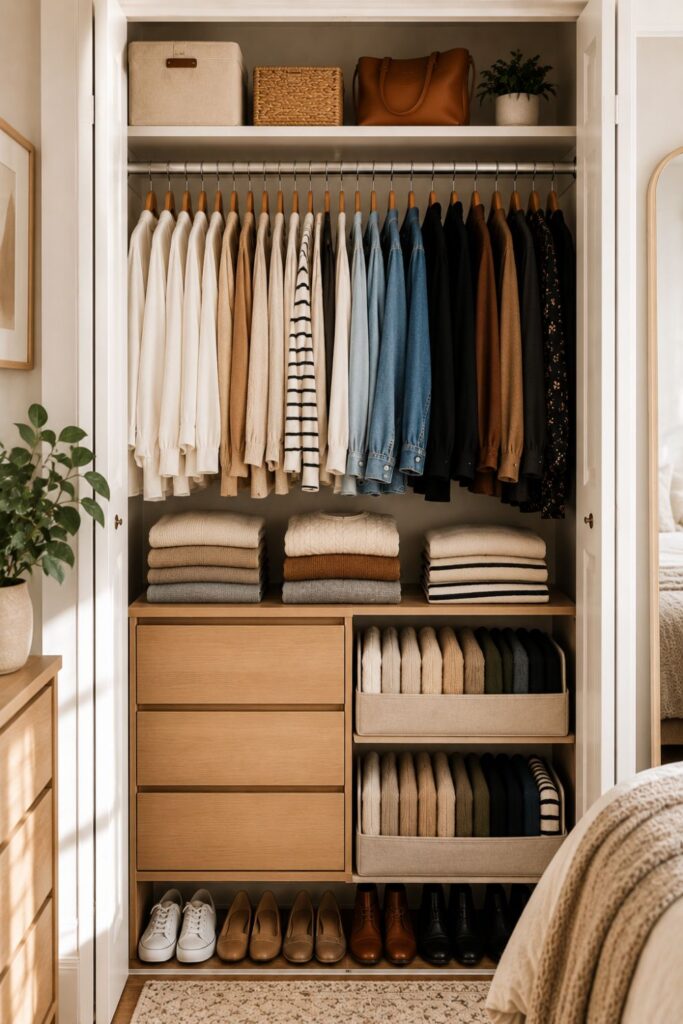
Sweaters and knits should almost always be folded rather than hung. Hangers stretch out the shoulders over time, creating those unsightly bumps that never quite go away. Folded sweaters also take up less vertical space, which is valuable when every inch of a small closet counts.
If you have shelf space, stack sweaters with the heaviest at the bottom and lighter ones on top to prevent compression damage. For drawer storage, file folding is the better method. Stand each sweater upright like a book so you can see every piece at a glance without digging through a pile and disrupting the whole stack.
7. Use File Folding for Drawer Items
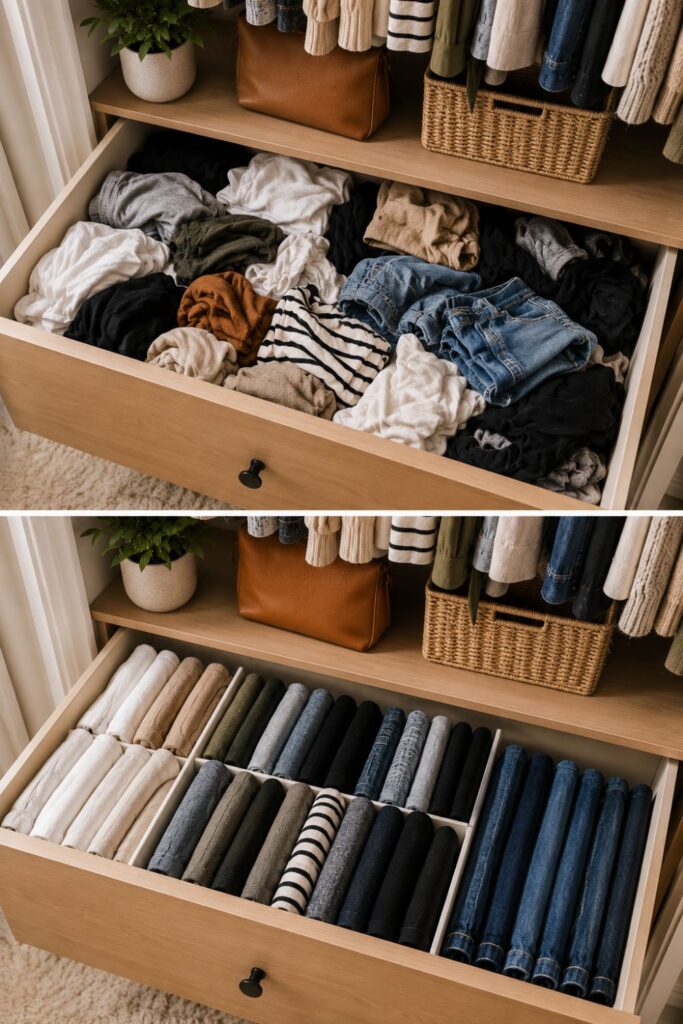
File folding, often associated with the KonMari method, transforms chaotic drawers into neatly organized compartments. Instead of stacking clothes flat, you fold each item into a compact rectangle and stand it upright in the drawer. This approach works beautifully for t-shirts, jeans, leggings, and even pajamas.
The real advantage is visibility. When every item stands on edge, you can open a drawer and immediately see all your options without lifting a single stack. Start with one drawer to get the folding technique down. Once you see how much space it saves and how easy it makes getting dressed, you will want to convert every drawer in your closet.
8. Organize Clothes by Category
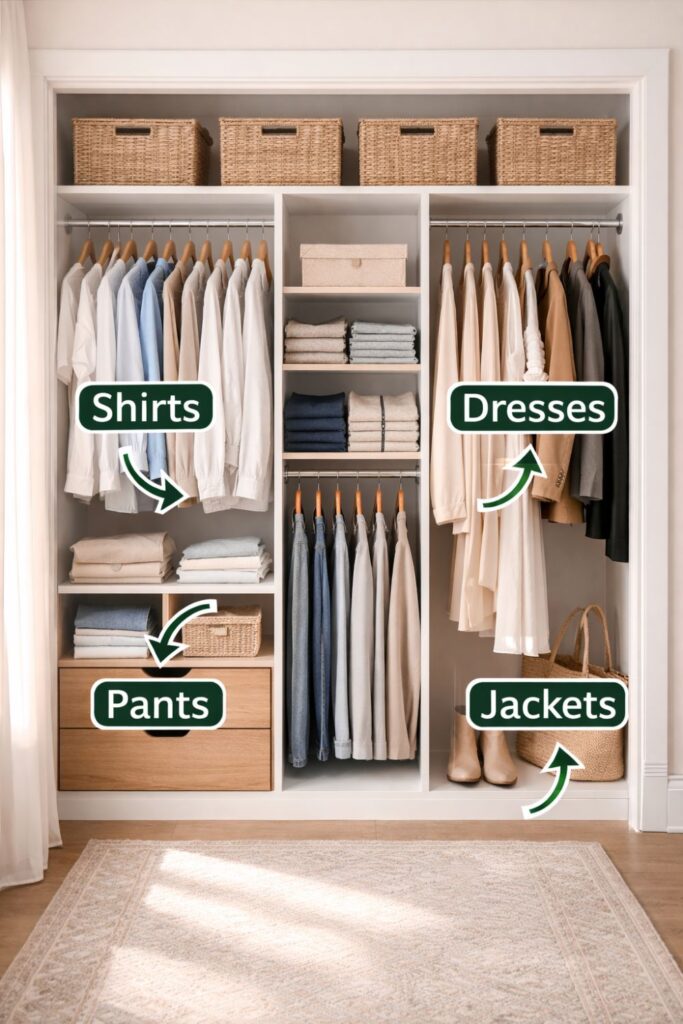
Grouping similar items together is one of the simplest ways to make a small closet more functional. Hang all your shirts in one section, pants in another, dresses together, and jackets in their own area. When everything has a clear zone, you spend less time hunting and more time getting dressed.
Within each category, arrange items by sleeve length or occasion for even faster decision-making. Keep everyday pieces at eye level and move special-occasion items to the back or upper shelves. If you share a closet, assign each person a clear half or third so boundaries stay obvious and maintenance becomes easier over time.
9. Color-Code Your Hanging Clothes
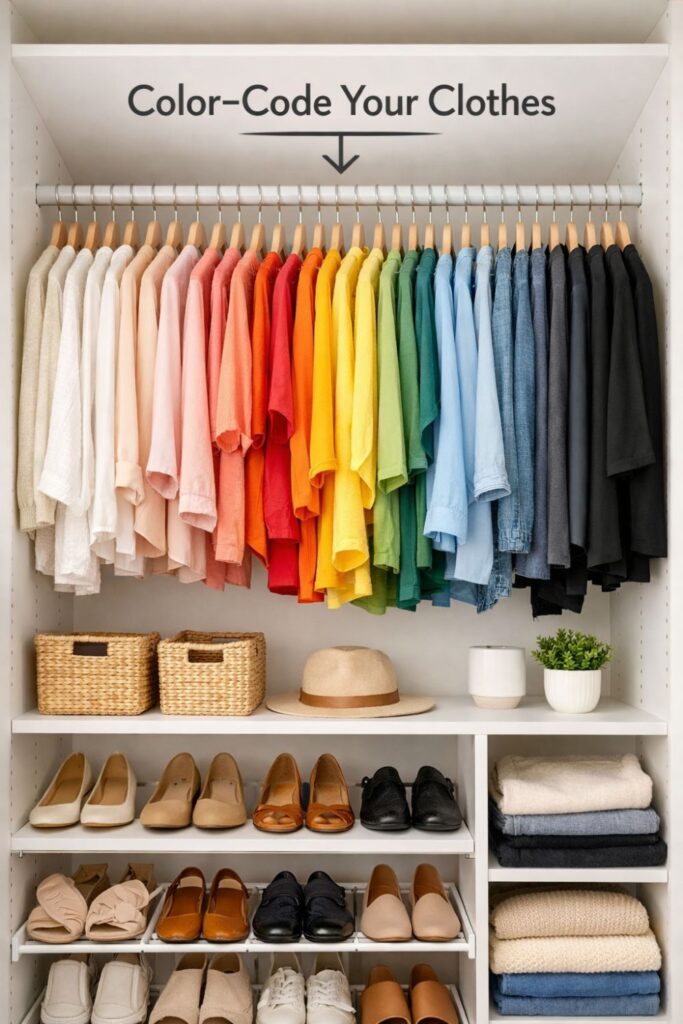
Arranging clothes by color within each category adds a visual layer of organization that makes your closet feel more polished and intentional. Go light to dark within each group, or follow the rainbow spectrum from white through red, orange, yellow, green, blue, and black. The exact order matters less than consistency.
Color coding has a practical benefit beyond aesthetics. It helps you spot gaps and redundancies at a glance. If you own twelve black tops but no neutral beige, the visual pattern makes that imbalance obvious. It also speeds up your morning routine because your eye naturally gravitates toward the color you are in the mood to wear.
10. Use the Back of the Closet Door
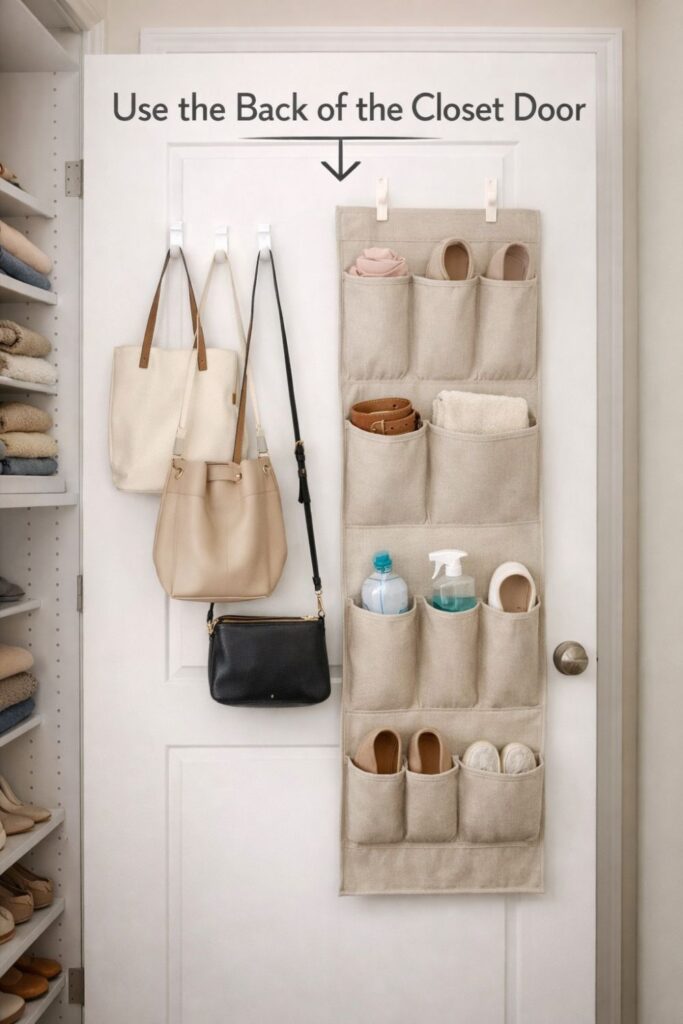
The back of a closet door is one of the most underused storage surfaces in most homes. An over-the-door organizer with clear pockets can hold shoes, scarves, belts, accessories, or even cleaning supplies. For a cleaner look, choose a fabric organizer in a neutral color that blends with your closet interior rather than a loud patterned version.
If pockets feel too bulky for your space, adhesive hooks or a slim towel bar mounted on the door can hold bags, robes, or tomorrow’s outfit. Command strips and damage-free hooks are ideal for renters because they remove cleanly without leaving marks. Just check the weight limits and avoid overloading any adhesive product.
11. Add Shelf Risers to Double Shelf Space
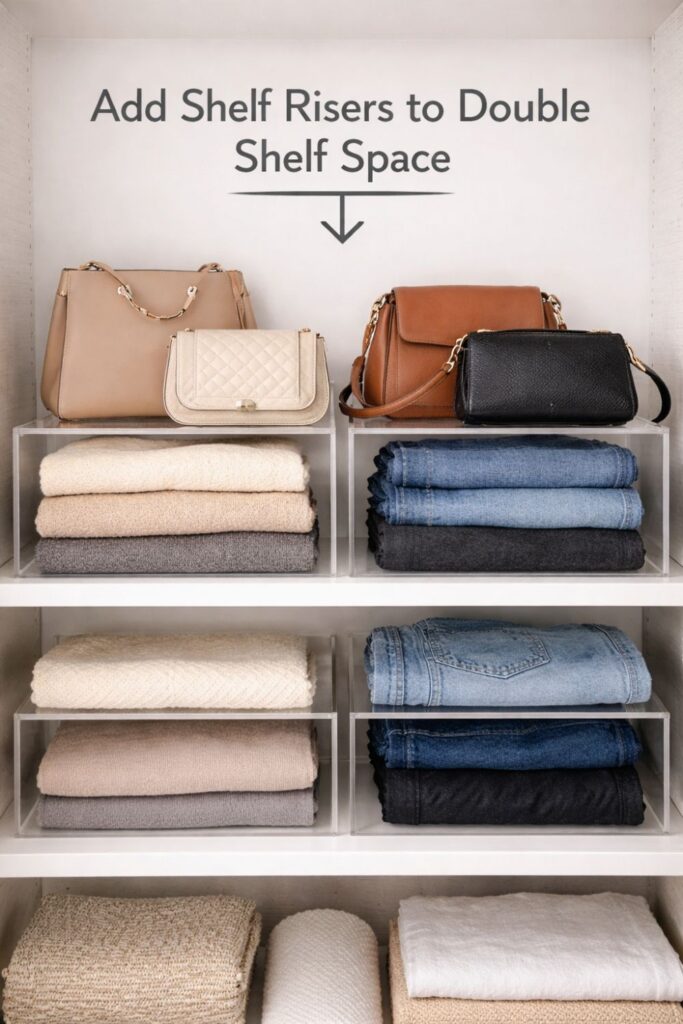
Shelf risers are wire or acrylic stands that create a second level within an existing shelf. They effectively double the usable surface area for folded items like jeans, sweaters, or purses. Instead of one tall stack that topples over every time you grab something, you get two shorter, more stable stacks.
Look for risers that match the depth of your shelf for the cleanest fit. Acrylic versions are nearly invisible and work well in modern spaces, while wire risers offer better airflow and cost less. Use them on both closet shelves and inside dresser drawers for an instant upgrade in usable storage space.
12. Store Shoes in Stackable Bins or Racks
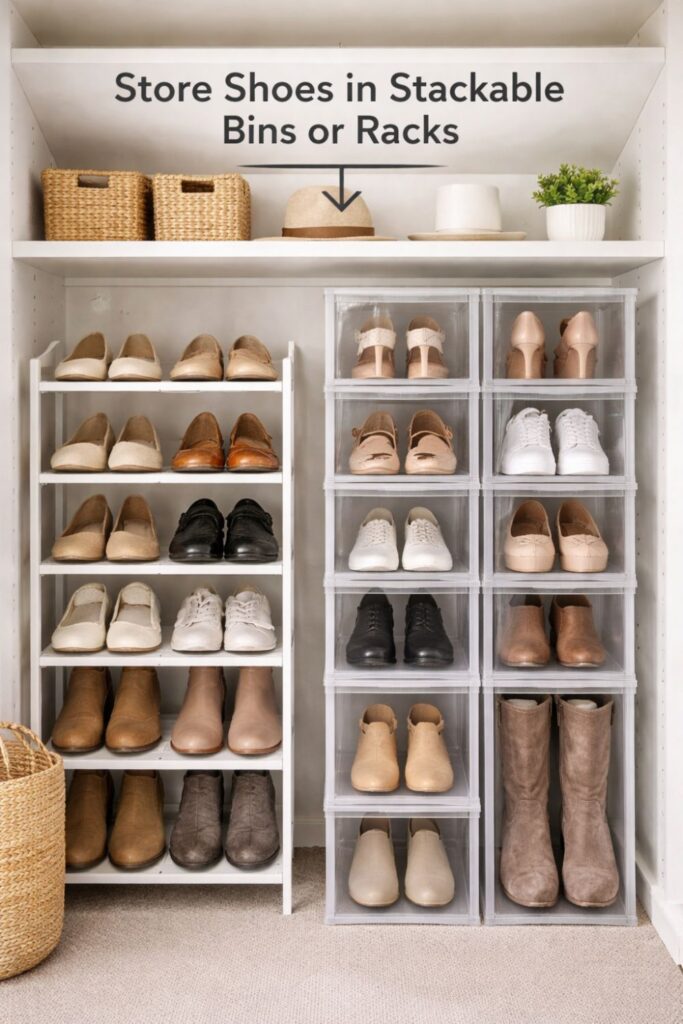
Shoes scattered across the closet floor create visual chaos and make cleaning nearly impossible. A stackable shoe rack or clear drop-front shoe boxes get them off the floor while keeping every pair visible and accessible. If your closet is very narrow, a vertical shoe organizer that hangs from the rod may be your best option.
Store the shoes you wear most often at eye level or within easy reach. Move special-occasion and off-season pairs to the top shelf or back of the closet. Boot owners should use boot shapers or rolled magazines inside tall boots to help them stand upright and maintain their shape over time.
13. Rotate Seasonal Clothing Out of the Closet
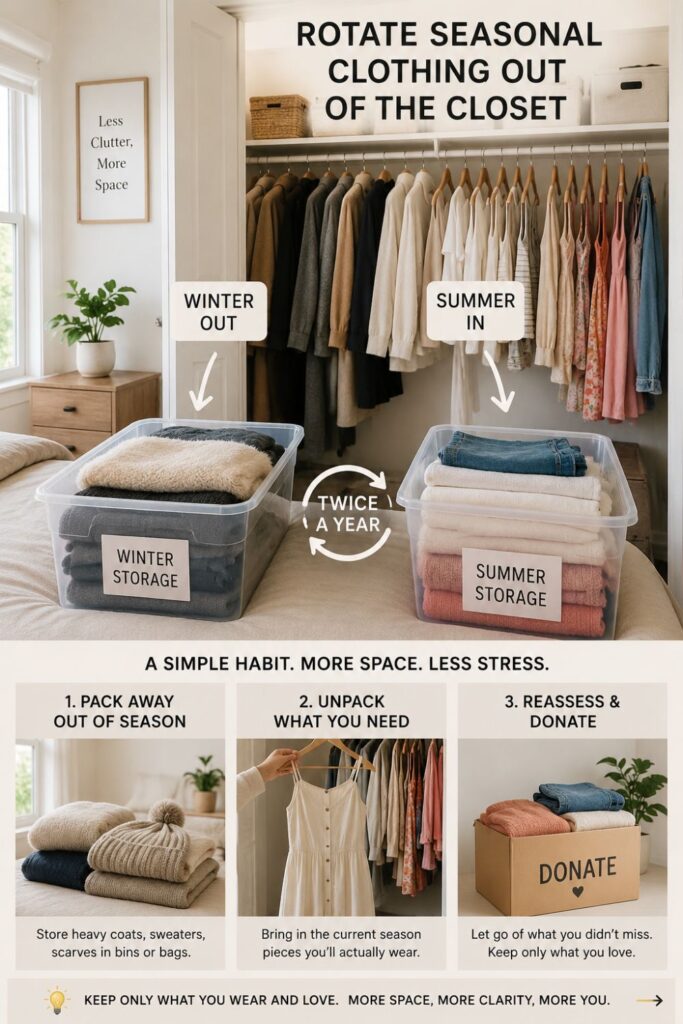
One of the fastest ways to free up space in a small closet is to store away clothes that are out of season. In summer, pack away heavy coats, wool sweaters, and thick scarves. In winter, move sundresses, shorts, and tank tops into storage. Rotating seasonally means you only keep what you are actually wearing within reach.
Switching out your wardrobe twice a year also forces you to reassess what you own. As you pack away one season and unpack another, you will naturally notice which pieces you genuinely missed and which ones you forgot about entirely. Those forgotten items are prime candidates for donation.
14. Store Off-Season Items Under the Bed
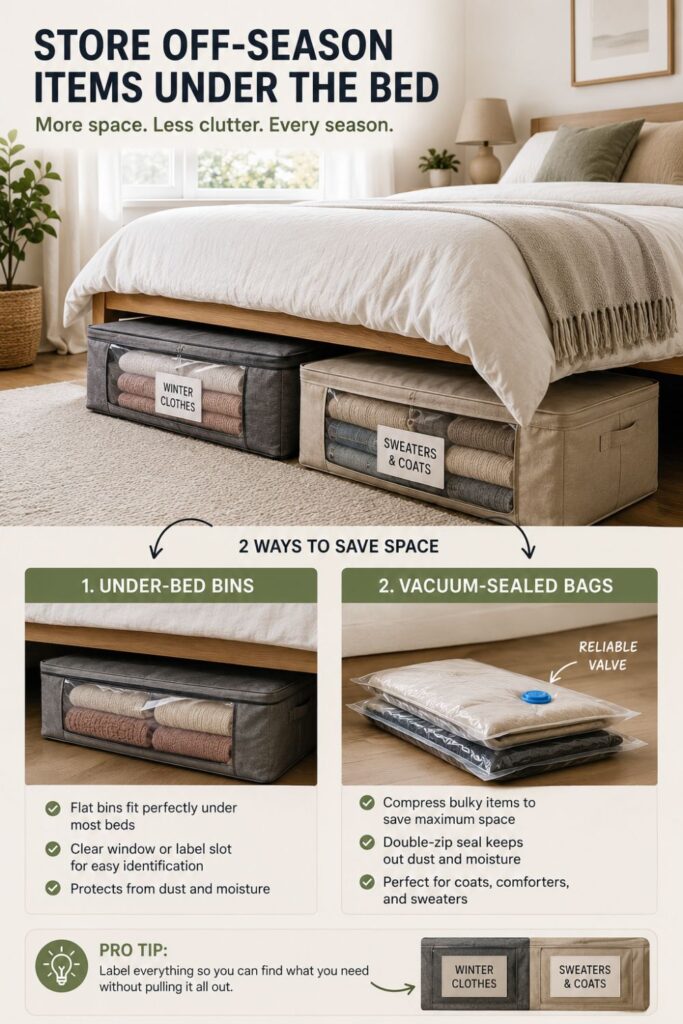
When closet space runs out, the area under your bed becomes valuable real estate for storage. Flat under-bed bins with lids or zippered fabric bags work perfectly for folded seasonal clothes. Look for containers with a clear window or label slot so you can identify contents without pulling everything out.
For maximum space savings, consider vacuum-sealed storage bags. These compress bulky items like winter coats and down comforters into thin, flat packages that slide easily under the bed. Choose bags with a reliable valve and double-zip seal to keep clothes protected from dust and moisture between seasons.
15. Use Clear Bins With Labels for Top Shelves
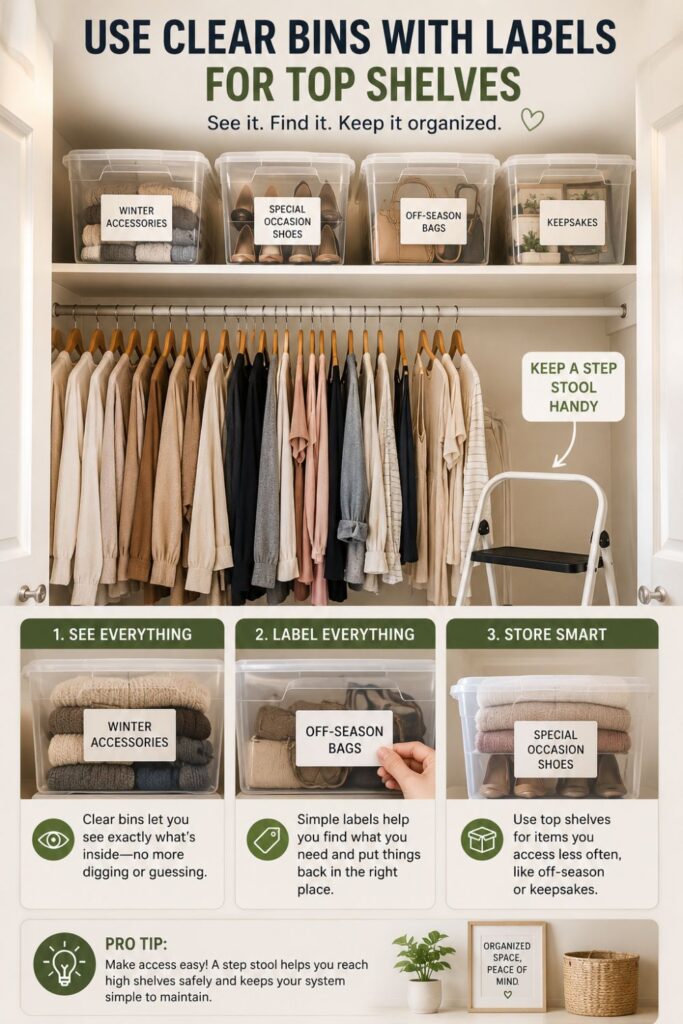
The top shelf of a closet often turns into a black hole where items go to be forgotten. Clear plastic bins solve this problem by letting you see exactly what is inside without unstacking everything. Add simple adhesive labels to the front of each bin for an extra layer of organization.
Reserve top-shelf bins for items you access less frequently, like off-season accessories, special-occasion shoes, or keepsake items. Keep a lightweight folding step stool inside or near the closet so reaching these high spots never feels like a chore. The easier you make access, the more likely you are to maintain the system.
16. Hang Accessories on Wall Hooks
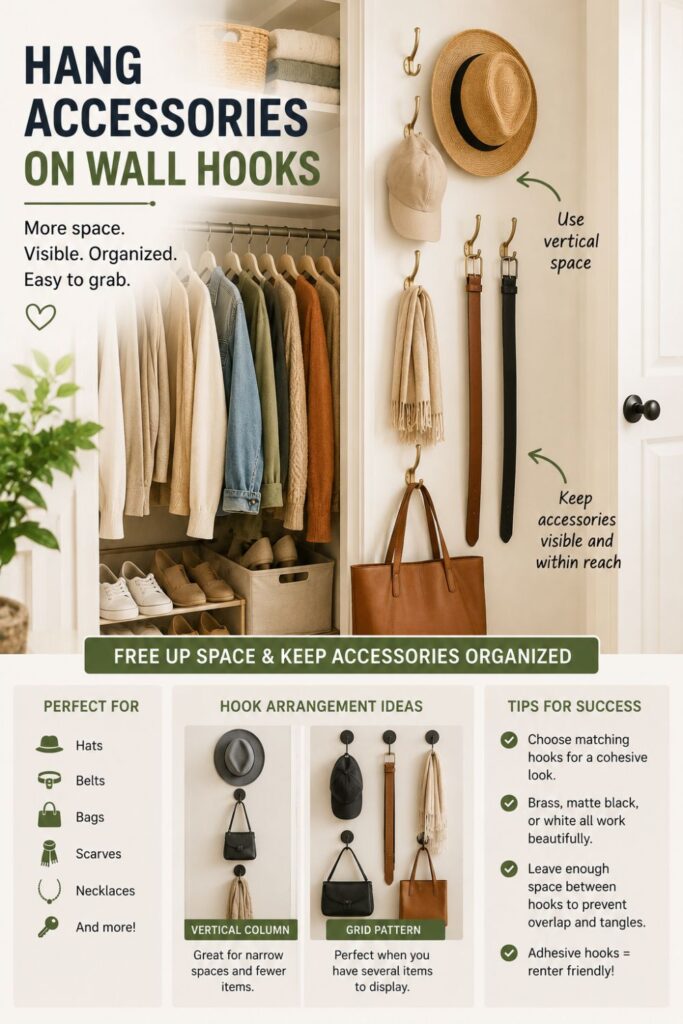
The side walls of a closet are often completely blank and full of potential. Small adhesive hooks or a mounted pegboard can hold hats, belts, bags, and scarves that would otherwise clutter shelves or floor space. This keeps accessories visible so you actually remember to wear them.
For a cohesive look, choose hooks in the same finish or color family. Brass, matte black, or white hooks are widely available and affordable. Arrange them in a vertical column to maximize wall space, or create a small grid pattern if you have several items to display. Just be sure to leave enough space between hooks so items do not overlap or tangle.
17. Store Purses Inside Larger Purses
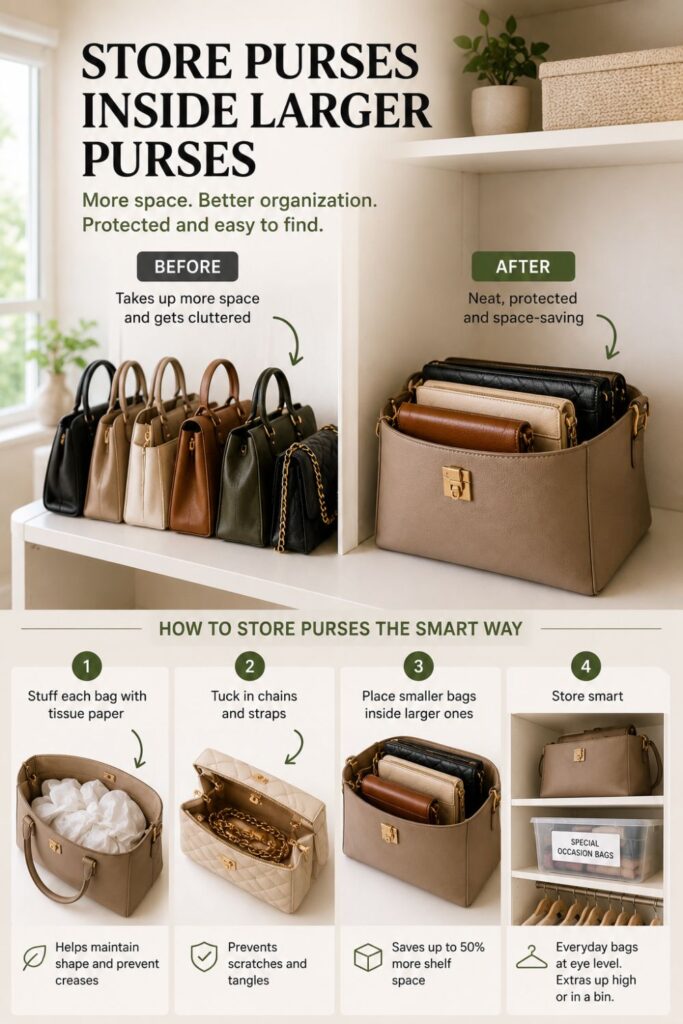
Handbags and purses can consume an surprising amount of shelf space, especially if you line them up individually. A clever workaround is to nest smaller bags inside larger ones. This protects their shape, prevents dust buildup, and reduces the total footprint on your shelf by half or more.
Stuff each bag with tissue paper or a small air pillow to help it hold its shape while stored. Chain-strap bags should have their chains tucked inside to prevent scratching. For bags you use frequently, keep them on a shelf at eye level. Special-occasion clutches and evening bags can be nested and moved to a higher shelf or inside a labeled bin.
18. Use Drawer Dividers for Small Items
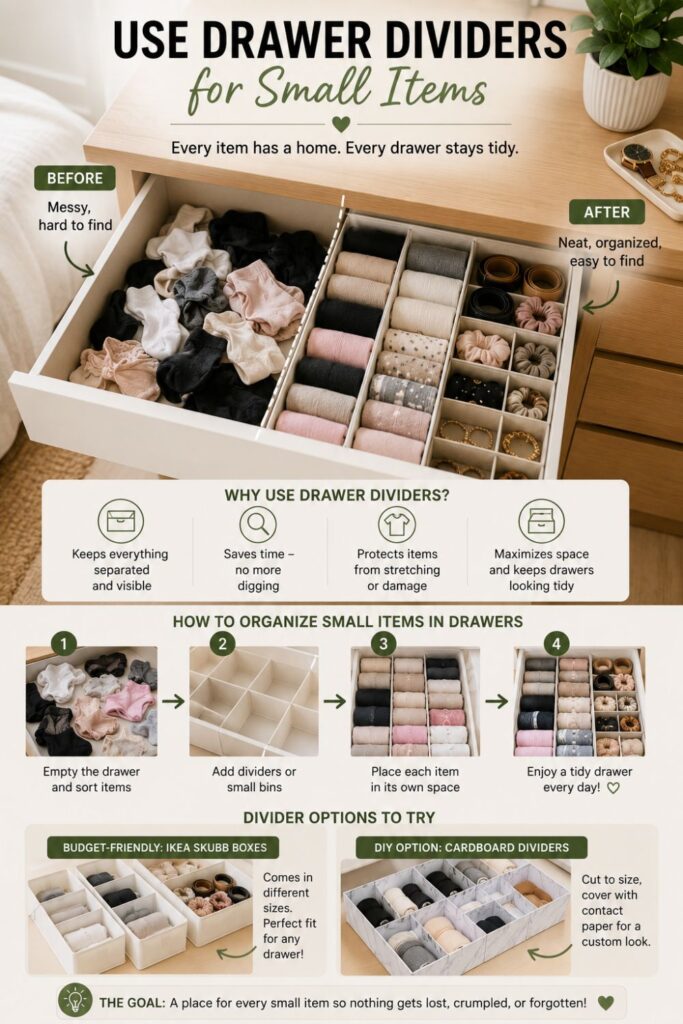
Socks, underwear, and accessories tend to become jumbled messes in drawers without some form of internal structure. Drawer dividers or small fabric bins create dedicated compartments that keep each category separated and tidy. Adjustable dividers are especially useful because you can customize the compartment sizes to fit your specific needs.
IKEA’s SKUBB boxes are a popular budget-friendly option that comes in sets of multiple sizes. For a DIY approach, cut cardboard boxes to size and cover them with contact paper for a finished look. The goal is to create a place for every small item so nothing ends up loose, crumpled, or hiding at the back of the drawer.
19. Add a Donate Bin Inside the Closet
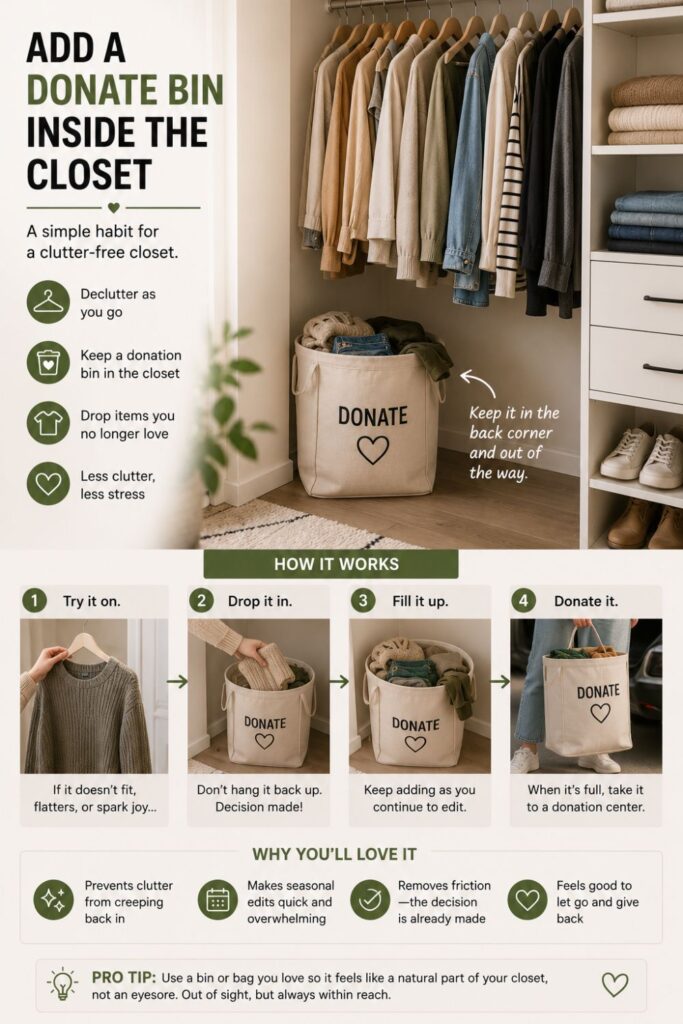
One of the simplest habits that keeps a closet organized long-term is keeping a small donation bin or bag on the floor in the back corner. Whenever you try on something that no longer fits, feels dated, or simply does not spark joy, drop it straight into the bin instead of hanging it back up.
When the bin fills up, take it to your local donation center. This ongoing system prevents clutter from creeping back in and makes seasonal edits feel less overwhelming. It also removes the friction of deciding later. The decision is already made the moment an item goes into the bin.
20. Hang Pants and Jeans to Save Space
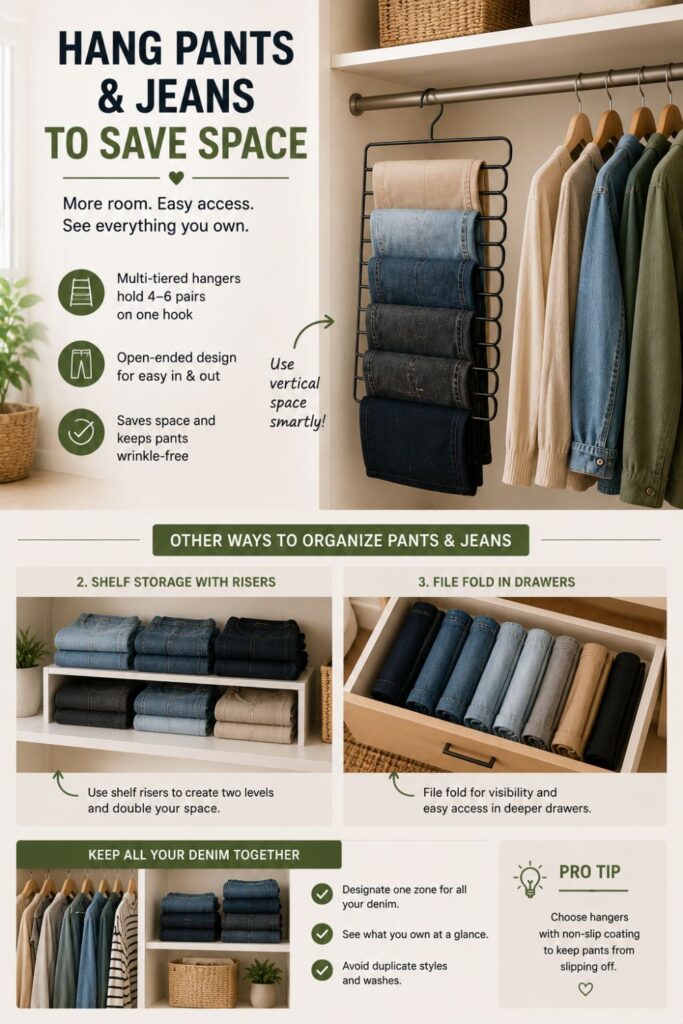
While folding jeans works in drawers, hanging them can actually save space if you use the right tool. Multi-tiered pant hangers hold four to six pairs vertically on a single hook, multiplying your rod capacity without adding bulk. Look for open-ended designs that let you slide pants on and off easily without removing the hanger from the rod.
If you prefer traditional folding, stack jeans horizontally on a shelf using shelf risers to create two levels. File folding also works well in deep drawers. The key is to keep all your denim in one designated zone so you can assess what you own at a glance and avoid buying duplicate styles or washes.
21. Use a Towel Bar for Scarves and Necklaces
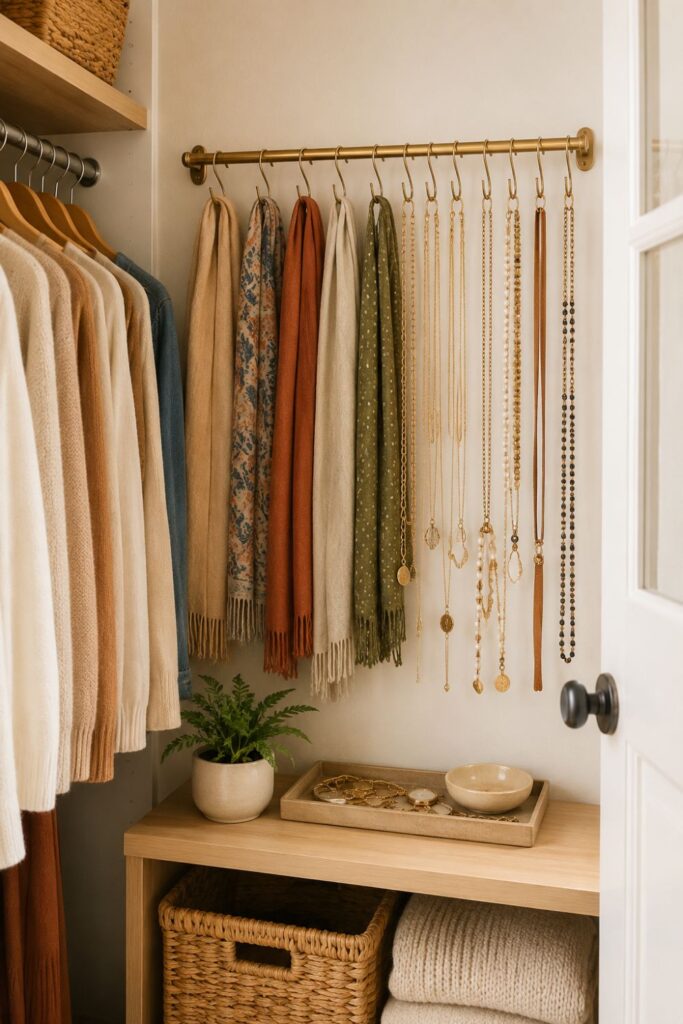
A simple towel bar mounted on an empty closet wall can become an elegant organizer for scarves, necklaces, or belts. Add S-hooks, typically used for shower curtains, to hang items individually without tangles. This setup costs very little and takes up almost no space.
For necklaces, the towel bar approach is especially effective because it prevents the knotting and tangling that happens when chains are tossed in a jewelry box or drawer. You can see every piece at once, which means you are more likely to actually wear what you own. Choose a bar finish that complements your closet hardware for a cohesive look.
22. Try the Backward Hanger Trick
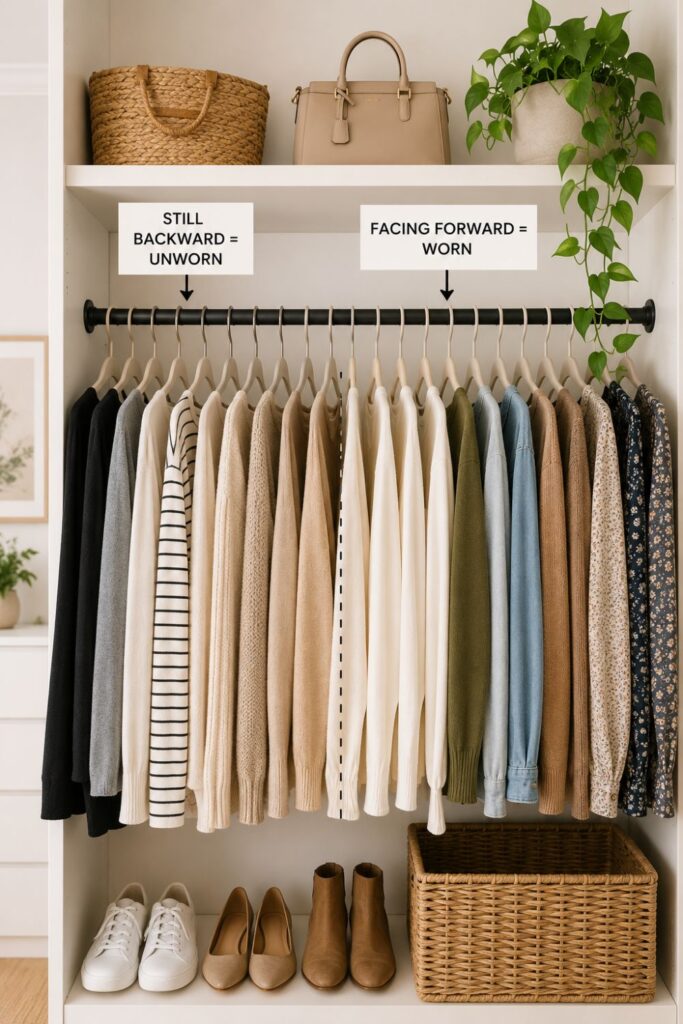
The backward hanger trick is a simple but powerful way to identify which clothes you actually wear. At the start of a season, turn all your hangers so they face backward on the rod. Each time you wear something and wash it, hang it back up the normal way. After three months, any hanger still facing backward reveals an unworn item.
This method removes the guesswork from decluttering. Instead of wondering whether you might wear something someday, you have concrete data. Items that remain unworn after a full season are strong candidates for donation or resale. It is an especially helpful technique for people who struggle with letting go of clothes.
23. Keep a Step Stool Inside or Near the Closet
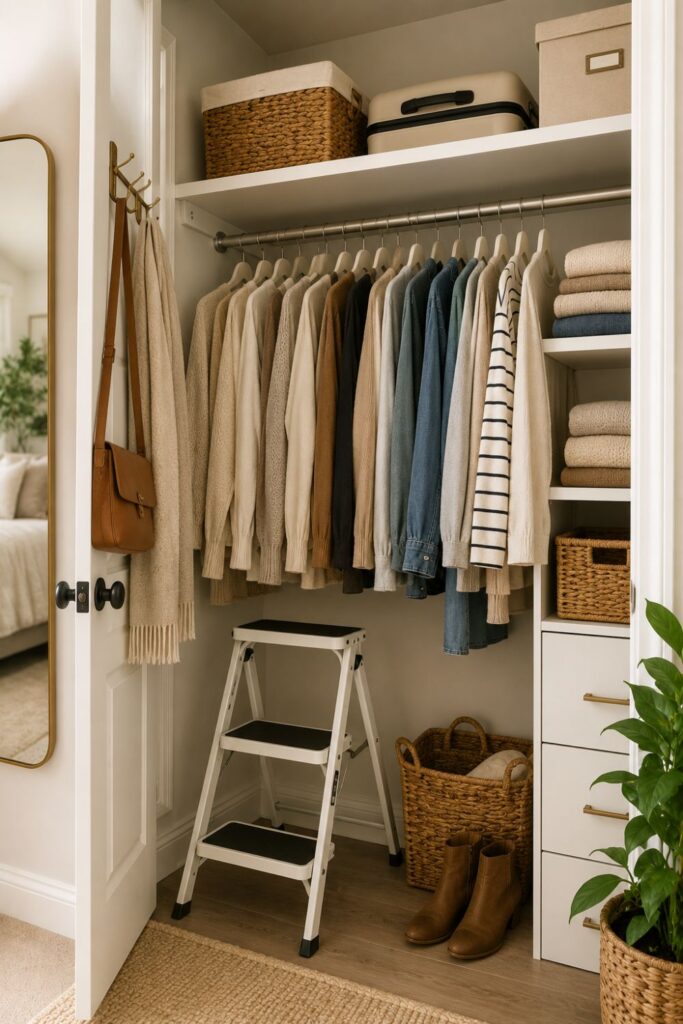
High shelves are often underused simply because they are hard to reach. Keeping a lightweight folding step stool inside the closet or in the adjacent bedroom removes that barrier entirely. A two-step stool is usually sufficient for standard closet heights and stores flat against a wall or behind a door.
When your top shelf is easy to access, you are more likely to use it for active storage rather than dumping rarely used items there. This simple addition can unlock twenty to thirty percent more usable storage space that would otherwise sit empty because of inconvenience.
24. Use Baskets for Bulky Items
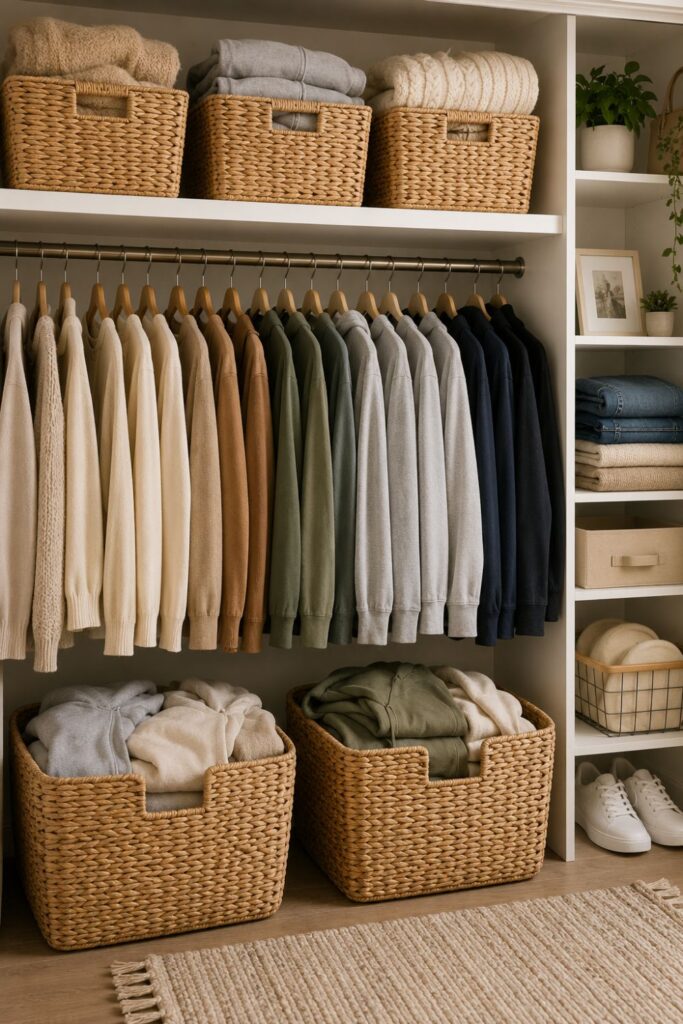
Bulky items like sweatshirts, hoodies, and chunky knitwear are notoriously difficult to store neatly on shelves or rods. Large woven baskets placed on the closet floor or upper shelves corral these pieces into contained, portable units. Choose baskets with handles so you can pull them down easily when needed.
Matching baskets in a neutral material like seagrass, rattan, or white wire create a cohesive look that makes the closet feel organized even when the contents inside are casually folded. For a budget option, check discount stores for uniform plastic bins that offer the same containment at a lower price point.
25. Add LED Lighting to Dark Corners
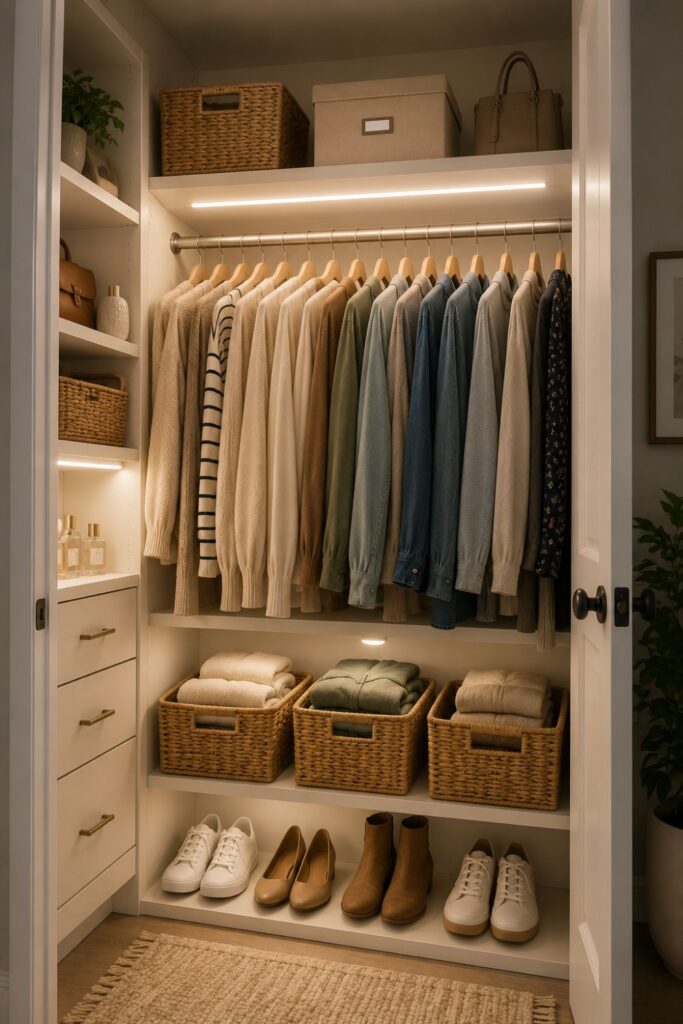
Dim closet lighting makes it harder to see what you own, which leads to wearing the same few items and forgetting about everything else. Battery-powered LED strip lights or puck lights installed under shelves or along the top of the closet frame solve this problem in minutes without any wiring.
Motion-sensor versions are particularly convenient because they turn on automatically when you open the door and off again when you leave. Good lighting not only makes your closet more functional but also makes the space feel larger and more inviting. A well-lit closet encourages you to use the entire space rather than just what is visible at eye level.
26. Consider a Modular Closet System
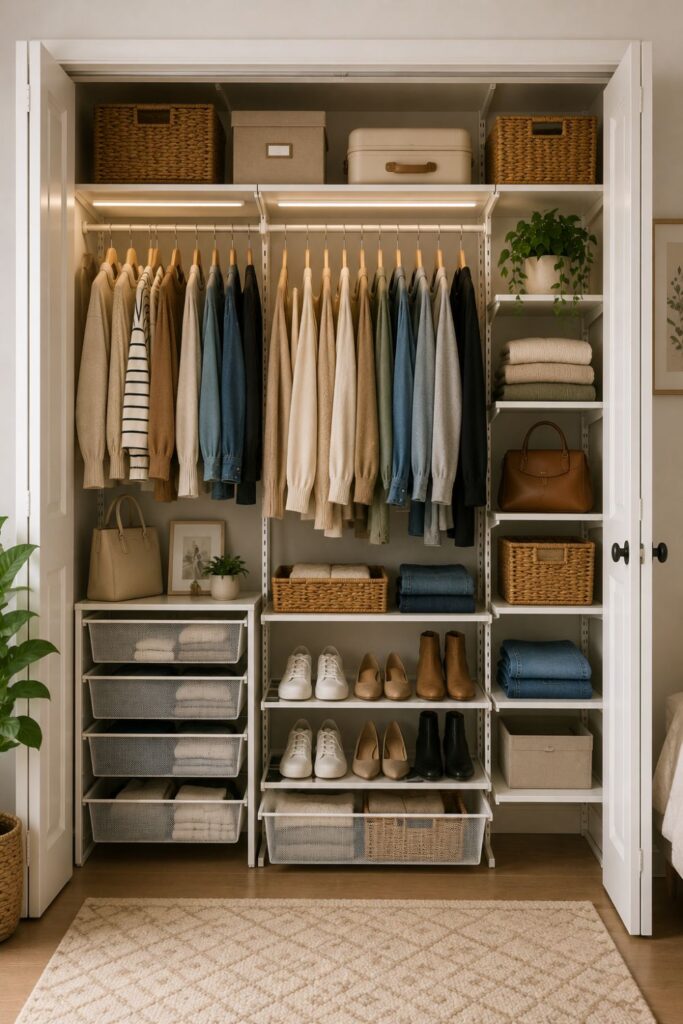
If your closet has no built-in shelving or rods, a modular closet system can transform it from a blank box into a highly functional storage space. Systems like IKEA BOAXEL, Elfa, or ClosetMaid offer customizable combinations of rods, shelves, drawers, and shoe racks that adapt to your specific dimensions and needs.
Measure your closet carefully before purchasing any components. Note the width, depth, and height, as well as the placement of any obstacles like light switches or vents. Start with a basic configuration and expand over time as your needs change. The initial investment pays off in daily convenience and a space that finally feels designed for how you actually live.
Renter-Friendly Ideas That Do Not Require Drilling
Renters often feel stuck with whatever closet setup came with the apartment, but several highly effective organization tools require no permanent changes. Tension rods can create a second hanging level or support lightweight shelves. Adhesive hooks hold accessories, robes, and lightweight bags without damaging walls. Freestanding drawer units and shoe racks use floor space efficiently without any mounting at all.
Over-the-door organizers are another renter staple that adds significant storage without tools. If you crave the look of a built-in system, standalone wardrobe units or clothing racks placed just outside the closet can effectively expand your storage footprint. When you move, everything comes with you to the next place.
Maintain Your Closet With Monthly Maintenance
Even the best-organized closet will drift back into chaos without occasional maintenance. Set a reminder to spend fifteen minutes once a month returning items to their designated zones, straightening stacks, and pulling anything that no longer belongs into the donate bin. Small, regular touch-ups are far easier than starting over from scratch.
Use the changing of seasons as a natural checkpoint to reassess your whole system. Ask yourself what worked well and what felt inconvenient over the past few months. Adjust shelf heights, relocate categories, or swap out organizers as your wardrobe and habits evolve. The best organizing system is one that adapts with you.
Making Your Small Closet Work For You
Organizing a small closet is not about buying the most products or achieving a picture-perfect aesthetic. It is about creating a system that fits your life, your clothes, and your daily habits. Start with these small closet organization ideas for clothes that address your biggest pain points, implement them one at a time, and build from there as you see what works.
With a thoughtful approach and a few smart tools, even the smallest closet can feel spacious, functional, and genuinely pleasant to use every morning. The effort you put in now will save you time, reduce stress, and help you enjoy the clothes you already own.
Frequently Asked Questions
What is the best way to organize a small closet with lots of clothes?
The best approach is to declutter first, then maximize vertical space with a double hanging rod and slim hangers. Fold bulky items, use the back of the door for storage, and rotate seasonal clothes out of the closet. Group remaining items by category and color for easy access.
How do I maximize hanging space in a small closet?
Switch to slim velvet hangers, install a second rod below the first for shorter items, and use multi-tiered hangers for pants. Move bulky or rarely worn items to shelves or drawers to free up rod space for daily essentials.
Should I fold or hang clothes in a small closet?
Hang items that wrinkle easily, like blouses, dresses, and dress pants. Fold bulky items like sweaters, jeans, and t-shirts to save rod space and prevent shoulder bumps. Use drawers for underwear, socks, and pajamas.
How do I store shoes in a small closet?
Use a stackable shoe rack, clear drop-front boxes, or an over-the-door organizer. Store frequently worn shoes at easy-reach height and move off-season or special-occasion pairs to the top shelf or under the bed.
What are renter-friendly small closet organization ideas?
Tension rods, adhesive hooks, over-the-door organizers, freestanding drawer units, and clothing racks all work without drilling. Choose damage-free mounting solutions and portable storage that moves with you.
How do I keep a small closet organized long-term?
Keep a donate bin inside the closet, do monthly fifteen-minute check-ins, and rotate clothes seasonally. Stick to the one-in-one-out rule when buying new clothes, and adjust your system as your needs change.
How do I organize a small closet for two people?
Assign each person a distinct zone or side of the closet. Use separate rods, labeled bins, and clear boundaries to prevent mix-ups. Consider adding a small dresser or external clothing rack if shared space feels too tight.
What is the cheapest way to organize a small closet?
Start by decluttering, which costs nothing. Use cardboard boxes as drawer dividers, repurpose shoe boxes as shelf bins, and switch to slim hangers. Add a tension rod for extra hanging space and use adhesive hooks for accessories.
